Blog

  • ‘It’s 13 minutes of things that have to go right’: Artemis II lands despite faulty heat shield

    ‘It’s 13 minutes of things that have to go right’: Artemis II lands despite faulty heat shield

    [ad_1]

    After nearly 10 days in space, complete with a historic loop around the moon, the four astronauts on NASA’s Artemis II mission faced their most dangerous moment yet: not in deep space, but in the final 13 minutes of their journey home.

    “It’s 13 minutes of things that have to go right,” said NASA’s Artemis II flight director Jeff Radigan on Thursday at a news briefing.

    Before the Orion spacecraft, named Integrity by the crew, ever left the Kennedy Space Center launchpad in Florida on April 1, NASA knew there was a problem. During the unmanned Artemis I mission in 2022, engineers discovered more than 100 locations on the Orion heat shield that had cracked and broken off during reentry.

    Here’s the issue: it’s not supposed to do that. The shield was designed to melt away, not pop off in chunks. Instead, scientists discovered the culprit was a pressure problem buried within the shield itself. As the capsule dipped into the atmosphere, internal layers became scorching hot through a process called pyrolysis, trapping gas.

    When the capsule briefly climbed back out of the atmosphere during its “skip” (meaning skip entry, which is when a spacecraft returning from high speed dips into the earth’s upper atmosphere. It’s the guided maneuver it uses to skip along the layer, closely mirroring a stone “skipping” across a pond, all before it reenters for a final landing. The outer layer hardened and became impermeable. This posed a problem because the gas had nowhere to go. On the second descent, the pressure burst through, taking chunks of the heat shield with it.

    Now you’re wondering, that was Artemis I, surely they would never put four people—commander Reid Wiseman, pilot Victor Glover, and mission specialists Christina Koch and Jeremy Hansen—aboard a ship with such flaws. And you’d be partially right: the Artemis II has, remarkably, an even less permeable shield than the one on Artemis I, meaning the same failure mode was even more likely to occur.

    It’s all about the right angle

    Rather than delay the mission by more than a year to install a redesigned heat shield (as one engineer wanted), NASA flew Artemis II with the same flawed design and simply changed how the capsule returned. The solution was counterintuitive, with NASA instructing the crew to apply more heat more consistently. This shortened the skip phase and maintained higher temperatures throughout the descent, ensuring the outer char layer never cooled sufficiently to trap gas beneath it.

    So these four astronauts, who broke a 56-year-old distance record and became the furthest humans to travel from earth when the mission brought them around the moon, not only had to overcome faulty Outlook problems and smelly toilet issues, but they had to enter the earth’s atmosphere at the right angle, at the right speed, and the right time—and they did it.

    The four astronauts reached speeds of over 24,000 mph, equivalent to traveling across the continental U.S. in about six minutes. The 16.5-foot-wide heat shield reached approximately 5,000 degrees Fahrenheit, about half the temperature of the sun’s visible surface. The steeper, hotter trajectory also gave the capsule less range to maneuver away from bad weather near the Pacific splashdown zone.

    It paid off

    Not everyone was on board with the plan. Former NASA engineer Dr. Charles Camarda had publicly warned that NASA didn’t fully understand the root cause of the cracking and that the modified trajectory amounted to “playing Russian roulette.” But NASA stood by its data. Associate administrator Amit Kshatriya pointed to Artemis I flight data, ground testing, and engineering models as justification, and Glover acknowledged the risk head-on, noting the heat shield and parachutes are systems with zero fault tolerance built in.

    The capsule splashed down safely in the Pacific, capping the first crewed lunar mission since Apollo 17 in 1972.

    [ad_2]

    Source link

  • Fed seeks details on U.S. banks’ exposure to private credit firms

    Fed seeks details on U.S. banks’ exposure to private credit firms

    [ad_1]

    The Federal Reserve is asking major US banks for details about their exposure to private credit following a surge in redemptions from the funds and a rise in troubled loans in the industry, according to people with knowledge of the matter.

    The queries by Fed examiners are intended to assess the level of stress in the private credit industry and the potential for it to spill over to the wider financial system, said the people, requesting anonymity to discuss the work. 

    Among the queries the Fed has been incorporating into its routine oversight process, the central bank has been seeking detail on the debt private credit funds have taken on from banks. In good times, that debt can juice returns and make private credit funds more enticing. In bad times, it risks exposing banks to losses.

    The Treasury Department is also questioning the insurance industry about exposures to private credit, said people with knowledge of those separate discussions.

    Representatives for the Fed and Treasury had no immediate comment.

    The questions are one of the strongest signals yet that US regulators are working to get a handle on the scale of the strains in private credit, which has ballooned to an $1.8 trillion industry marketed first to institutional investors and increasingly now to individuals.

    Private credit, which relies on investor money — rather than bank deposits — to make loans, had been on examiners’ radar for years. They stepped up focus when retail credit funds came under pressure in the recent months and investors rushed to pull cash. 

    Regulatory Push

    A growing chorus of international regulators have been warning about the risks of private credit. Financial Stability Board Chair Andrew Bailey said this week that private credit may be facing more stress after the shock to markets from the Iran war. The Financial Stability Oversight Council said at the end of March that it had discussed recent developments in the private credit sector.

    The Fed’s questioning comes as President Donald Trump’s top financial watchdogs seek to loosen rules for Wall Street lending giants. Part of that deregulation effort is meant to both bolster banks’ ability to lend to private-credit outfits and to have traditional lenders better compete with nonbank firms in areas such as mortgage and small-business loans.

    The move also shows that officials such as Fed Vice Chair for Supervision Michelle Bowman want to balance relaxed rules with more strategic queries from the industry about what they perceive as potential areas of risk, said some of the people.

    Banks have sought to distance themselves from their less regulated nonbank rivals. JPMorgan Chase & Co.’s Jamie Dimon warned that the private credit industry has a lack of transparency and poor valuation standards, but that he didn’t think private credit was a systemic risk, according to his latest CEO letter.

    Wall Street and their private credit peers are deeply intertwined. Credit funds rely on banks to safeguard and custody assets. They also need banks for lines of credit. If private credit portfolios sour, this puts the collateral banks are lending against at risk. 

    Blackstone Private Credit Fund had a debt-to-equity ratio of 0.7 times at the end of 2025, while Blue Owl Credit Income Corp.’s was 0.8 times as of Feb. 28. KKR FS Income Trust’s was about 0.7 times at the end of February.

    Insurance Firms

    The Fed questioning comes on top of another initiative at the Treasury Department to question insurers about their exposure. The regulator has put together a team to handle this, according to people familiar with the matter.

    The Treasury is planning to meet with state regulators, which directly oversee insurers in the US, to discuss emerging risks and outlooks for the sector, the agency said in an April statement. The Treasury also expects to discuss it with international regulators, it said.

    The review is expected to continue over the coming months and some financial firms may hold their own meetings with Treasury, the people said. 

    In the last decade, insurance companies have fueled the rise of nonbank lenders, handing them more influence over vast pools of cash. Private credit players have used that money to make loans to businesses and parked them in complex investment structures.

    [ad_2]

    Source link

  • Smucker’s offers Artemis II crewmembers a lifetime supply of Uncrustables upon splash down

    Smucker’s offers Artemis II crewmembers a lifetime supply of Uncrustables upon splash down

    [ad_1]

    NASA spent months engineering the perfect menu for the Artemis II mission. And the menu is surprisingly tasty: barbecued beef brisket, broccoli au gratin, vegetable quiche, five types of hot sauce, and way, way more. Because bread is banned in space (crumbs can damage precision instruments), there are 58 tortillas. There are cashews and almonds, mango salad and butternut squash, and more than 10 types of beverages, all culminating into 189 unique food items. One item in particular this week was Nutella, which stole the show just moments before the Artemis II astronauts broke a 56-year-old record and became the furthest humans from Earth when it slingshot back from the far side of the moon.

    But perhaps one food item not on the list will be the one that the Artemis II crew will talk about forever: Uncrustables.

    Commander Reid Wiseman, Pilot Victor Glover, and Mission Specialists Christina Koch and Jeremy Hansen have all been promised a lifetime supply of the peanut butter-and-jelly treat upon their splashdown, expected later today.

    “Artemis you rang? we’ve got the crew covered on the OG uncrusted sandwiches from here on out…no joke,” the brand wrote in a now viral Instagram post showing an Uncrustable hovering over the earth, much like photos from the far side of the moon taken aboard the Artemis II.

    When the four astronauts climbed aboard NASA’s Orion spacecraft (which they dubbed Integrity), they embarked on a 10-day journey that will finally see their splashdown tonight, April 10, at around 8:07 in the evening. They knew the food that was aboard the ship—and they made one request for when they landed: the pocket-sized PB&J treat. The Navy confirmed that the recovery vessel, when they make splash down, will have an “abundant amount” of the sandwiches.

    And Smucker’s replied with an even better PR stunt than maybe what Nutella had in the first place.

    The Artemis II crew just traveled 252,756 miles from Earth, breaking the distance record set by Apollo 13 in 1970, and after all that history, what they wanted was a peanut butter and grape jelly sandwich with the crusts cut off.

    The Fortune 500 Innovation Forum will convene Fortune 500 executives, U.S. policy officials, top founders, and thought leaders to help define what’s next for the American economy, Nov. 16-17 in Detroit. Apply here.


    [ad_2]

    Source link

  • How to get out of debt: 9 proven strategies that actually work

    How to get out of debt: 9 proven strategies that actually work

    [ad_1]

    Especially in this economy, one place you don’t want to find yourself in is debt. Life is expensive enough without hemorrhaging money in interest charges.

    Still, it’s a situation that’s becoming increasingly common. If you’re one of the many looking for an escape from the heavy burden of debt, give these proven strategies a try.

    The first step to getting out of debt

    To be sure, there are powerful strategies to eliminate debt. But for any of them to work, it’s critical to identify and fix the circumstances that caused that debt in the first place. You may be struggling because of a job loss, a large emergency purchase, or simply impulse purchases. Whatever the case, you won’t be able to zero out your debt with the following methods unless you address those issues. You’ll also need to know:

    1. How much debt you have.
    2. Your total monthly spending on necessities like rent, utilities, food, gas, etc., as well as your minimum debt payments.
    3. The amount of remaining income that can be channeled toward paying down your debt faster than just the minimums would accomplish.

    This will give you the information you need to budget properly and help you decide which strategy will best serve your needs.


    Debt snowball method

    The debt snowball method to getting out of debt is a simple concept: Pay off your balances in order of size, starting with the smallest and working up to the largest. This is the fastest way to eliminate the number of outstanding accounts you have, thereby lowering the number of monthly fees you’re paying toward.

    As you eliminate your balances, you’ll free up more of your monthly income to put toward your remaining debt (effectively “snowballing” the amount of funds you can use to pay down your loans). Plus, you get the mental win of seeing accounts zeroed out sooner.

    For example, you may have the following estimated credit card balances and payments:

    • $2,000 ($70 monthly minimum payment)
    • $4,000 ($110 monthly minimum payment)
    • $5,000 ($150 monthly minimum payment)

    With the snowball method, you would pay off the $2,000 balance first. This would give you $70 more per month to throw at your next target, the $4,000 balance.

    Debt avalanche method

    The debt avalanche method favors targeting accounts with the highest APR (annual percentage rate) instead of the lowest balance. The idea is to knock out the cards that are costing you the most in interest. As an example, let’s say those aforementioned hypothetical credit card balances are subject to the following APRs:

    • $2,000 (22% APR)
    • $4,000 (19% APR)
    • $5,000 (27% APR)

    The avalanche method dictates that you focus on the $5,000 balance first, followed by the $2,000 balance. You won’t lower your number of outstanding balances as quickly, but you may save money on interest charges in the long run.

    Debt consolidation

    One of the biggest factors of your credit score is credit utilization. This is calculated based on the percentage of revolving credit that you’re currently using. For example, if you’ve got a total credit limit of $50,000 and you’re currently using $25,000 of it, your credit utilization is 50%.

    Experts recommend keeping your credit utilization below 30% to avoid negative impact on your credit score. If you’ve got considerable debt, your credit utilization may be well above that—which can result in an unimpressive credit score.

    However, if you’ve still got a good credit score (ideally 670+), you may opt for one of the below methods.

    Debt consolidation loan

    With a debt consolidation loan, you’ll receive a chunk of cash to repay multiple credit card and/or loan balances. This wipes out your current collection of monthly payments and replaces them with a single installment loan payment. Depending on the term length you choose, the new loan’s minimum payment may be a big one—but it can still be considerably less than the combined total of the many monthly payments you’re currently making.

    And because debt consolidation loans are installment loans, the money you use to pay off your credit card will almost immediately improve your credit utilization. You may see a huge credit score increase in just a month or two.

    Balance transfer credit card

    You can also consolidate your debts by opening a balance transfer credit card and relocating your current debt onto it. Several credit cards come with 0% intro APR for a year or two. That can quite easily save you hundreds (even thousands) of dollars per year, depending on your amount of debt.

    There are two caveats to this strategy:

    1. You’ll often have to pay a balance transfer fee (typically up to 5% of the transfer amount).
    2. You can only transfer as much as your balance transfer card’s credit limit can hold—including the balance transfer fee. For example, if you receive a credit limit of $15,000 and a balance transfer fee of 3%, you’ll only be able to move a maximum of $14,563 ($14,563 + 3% = $14,999).

    Also, balance transfer credit cards typically require that applicants have good to excellent credit to qualify.

    Increase your income with side hustles

    One word of caution: While making more money is always the ideal, a plan to increase your income will ideally complement your current budget. For example, the goal isn’t to make more money so you can be more cavalier with your budgeting; rather, it’s to channel more money toward your balances.

    From freelancing to reselling to rideshare to delivery platforms, there are numerous ways one may be able to make extra money. Often it takes just a few minutes to register with an app to launch a side hustle.

    Negotiate directly with your creditors

    Did you know that you might receive more favorable repayment terms simply by calling your lender and asking? You may receive a lower interest rate, a reduced monthly payment, even a temporary payment pause.

    This doesn’t mean that banks are philanthropists—they want the money you owe them. If they think the most likely path to repayment is to give you a bit of a break, they’ve been known to do it.

    Negotiating with your creditors doesn’t hurt your credit score. However, the bank may treat you differently after the call. Now that the lender knows you’re struggling, you may find your credit limits lowered (which can indirectly affect your credit score). The bank may also make a note on your credit report that they’ve given you some sort of hardship plan. This can be a red flag to other would-be lenders.

    Get professional help

    If you can see a way out of your current debt, there are professional services of varying degrees of severity to choose from.

    Nonprofit credit counseling and debt management plans

    With credit counseling, an experienced counselor will examine your situation and advise you of your best course of action. If necessary, they may suggest that you enroll in a debt management plan (DMP). This rolls your unsecured debts into a single payment, typically with reduced interest rates.

    The act of enrolling in a DMP won’t itself hurt your credit score. However, you’re often required to close the credit cards you’re using the DMP to consolidate. This can negatively affect elements of your credit score, such as your average length of credit history and credit mix. Your credit utilization may also increase, as your total available credit will drop.

    All to say, your credit score may drop temporarily—but it’s a small price to pay for getting your finances back on track.

    Debt settlement

    Debt settlement is more serious than a DMP. Instead of simply consolidating your debts into one feasible monthly payment, debt settlement involves negotiating with your creditors to pay back less than you owe. Debt settlement companies typically ask that you stop paying on your loans—effectively strongarming banks to the negotiating table.

    This strategy wrecks your credit score. You’ll also likely receive aggressive collections calls and even lawsuits before you’re able to settle. Avoid this route if possible.

    Bankruptcy

    The last resort for those who can’t pay back their debts is bankruptcy. This can erase much of your unsecured debt, such as credit cards, some personal loans, and medical bills. It won’t make everything disappear, however (think tax debts, many student loans, child support, etc.)

    Bankruptcy will blemish your credit report for up to 10 years. It can also drop your credit score by hundreds of points. You could even lose assets, such as personal property and home equity, to pay your creditors.

    The takeaway

    There are many tactics to getting out of debt, from the well-known “snowball” and “avalanche” methods to debt consolidation to debt management plans. No matter your specific financial situation, there’s likely a solution for you. None of them are easy (staying out of debt takes discipline enough, let alone digging yourself out of a hole), but with smart decision-making and stick-to-it-iveness, these strategies can help you make real progress.


    Settlement fee range Trustpilot customer rating Accreditations States and territories available See details
    National Debt Relief 15%-25% 4.7 IAPDA, AFCC 48 View offer
    at National Debt Relief
    Freedom Debt Relief 15%-25% 4.6 IAPDA 41 View offer
    at Freedom Debt Relief
    J.G Wentworth Debt Relief 18%-25% 4.8 IAPDA, ACDR 31 View offer
    at J.G. Wentworth
    Americor Funding 14%-29% 4.7 IAPDA 47 View offer
    at Americor Funding
    Accredited Debt Relief 15%-25% 4.8 ACDR 30 View offer
    at Accredited Debt Relief
    Pacific Debt Relief 15%-35% 4.8 CDRI, IAPDA 50 View offer
    at Pacific Debt Relief
    Century Support Services 18%-25% 4.7 IAPDA, ACDR 50 View offer
    at Century Support Services
    National Debt Relief View offer
    at National Debt Relief
    Settlement fee range 15%-25%
    Trustpilot customer rating 4.7
    Accreditations IAPDA, AFCC
    States and territories available 48
    Freedom Debt Relief View offer
    at Freedom Debt Relief
    Settlement fee range 15%-25%
    Trustpilot customer rating 4.6
    Accreditations IAPDA
    States and territories available 41
    J.G Wentworth Debt Relief View offer
    at J.G. Wentworth
    Settlement fee range 18%-25%
    Trustpilot customer rating 4.8
    Accreditations IAPDA, ACDR
    States and territories available 31
    Americor Funding View offer
    at Americor Funding
    Settlement fee range 14%-29%
    Trustpilot customer rating 4.7
    Accreditations IAPDA
    States and territories available 47
    Accredited Debt Relief View offer
    at Accredited Debt Relief
    Settlement fee range 15%-25%
    Trustpilot customer rating 4.8
    Accreditations ACDR
    States and territories available 30
    Pacific Debt Relief View offer
    at Pacific Debt Relief
    Settlement fee range 15%-35%
    Trustpilot customer rating 4.8
    Accreditations CDRI, IAPDA
    States and territories available 50
    Century Support Services View offer
    at Century Support Services
    Settlement fee range 18%-25%
    Trustpilot customer rating 4.7
    Accreditations IAPDA, ACDR
    States and territories available 50

    Frequently asked questions

    Where should I start if I feel completely overwhelmed by my debt?

    If you feel completely overwhelmed by your debt, the first place to start is auditing your current monthly spending. This will help you to understand which areas of your spending you can redirect toward your balances. Once you’ve got that figured out, you can decide which strategy best works for your situation.

    Should I focus on paying off high-interest debt first or smallest balances first?

    Both of these methods have proven to be an effective way to pay off debt. If your multiple balances have similar interest rates, pay the small balances first. If you’ve got an account with an astronomical interest rate, focus on that first.

    Do balance transfer credit cards really help you get out of debt faster?

    Balance transfers can in many situations help you get out of debt faster. You can combine multiple debts into one, potentially lowering your monthly minimum payment. Many balance transfer cards also offer 0% intro APR—meaning every dollar you pay on your debt will go toward the principal during the interest-free period. It’s important to stick to a repayment schedule so you zero out the card’s balance before the intro APR period ends.

    When should I consider a personal loan to consolidate high-interest debt?

    You should consider a personal loan to consolidate high-interest debt if you’re able to obtain either a notably lower minimum monthly payment or a considerably lower interest rate than the one(s) you’re currently paying.

    What’s the difference between debt consolidation, debt management, and debt settlement?

    Debt consolidation is the act of rolling multiple debts into one. Debt management is working with a credit counseling agency on a structured repayment plan, typically with a single monthly payment and a lower interest rate. Debt settlement is negotiating with your creditors to repay less than you owe—often after your accounts have become delinquent.

    [ad_2]

    Source link

  • Kamala Harris says she’s ‘thinking about’ running for president again: ‘I’ll keep you posted’

    Kamala Harris says she’s ‘thinking about’ running for president again: ‘I’ll keep you posted’

    [ad_1]

    After chants of “run again!” filled the room, former Vice President Kamala Harris told African American activists on Friday that she’s actively considering another presidential bid.

    “I might. I am thinking about it,” Harris told Rev. Al Sharpton after he asked directly whether she was going to run for president in 2028.

    Harris’ comments came during the National Action Network’s annual convention, where more than a half-dozen potential candidates appeared this week , hoping to make inroads among Black voters — who comprise one of Democrats’ most powerful blocs.

    The Democrats’ next presidential primary season won’t begin in earnest until after November’s midterm elections, but this week’s conference showcased a collection of Democrats already jockeying for position in what promises to be a crowded competition.

    For now, at least, there is no clear early favorite. But there did appear to be a favorite at Sharpton’s conference.

    Harris, the nation’s first Black female vice president and the Democrats’ presidential nominee in 2024, earned the only standing ovation and the largest crowd of any other 2028 prospect this week. Some in the audience interrupted her remarks with chants of, “Run again!”

    Sharpton noted that Harris earned more votes in her losing 2024 campaign than even former Democratic Presidents Barack Obama and Bill Clinton.

    “Whatever she decides to do, she made a point in history,” Sharpton said.

    Harris has raised the possibility of another presidential bid before in the 15 months since she left office. She also recently launched a political action committee and began to travel across the United States to support Democrats, especially across the South.

    Still, some in the party have shifted their focus to a new generation of Democratic leaders given Harris’ struggle in the last presidential contest.

    The convention lineup this week featured Pennsylvania Gov. Josh Shapiro, former Transportation Secretary Pete Buttigieg, Illinois Gov. JB Pritzker, Maryland Gov. Wes Moore, Kentucky Gov. Andy Beshear, Rep. Ro Khanna of California, and Arizona Sens. Mark Kelly and Ruben Gallego.

    Buttigieg, speaking shortly after Harris left the stage, received soft applause from a room that was about half-empty. Some cheered when he mentioned supporting federal workers and minority businesses, but many attendees had streamed out of the packed auditorium after Harris’ speech in a bid to grab a selfie with the former vice president.

    Buttigieg, like many other 2028 prospects this week, laughed off a question about whether he would seek the presidency again.

    Harris was more explicit.

    Three times she repeated, “I’m thinking about it,” when Sharpton asked her about a 2028 White House run.

    “I served for four years being a heartbeat away from the presidency of the United States. I spent countless hours in my West Wing office footsteps away from the Oval Office. I spent countless hours in the Oval Office and the situation room. I know what the job is, and I know what it requires,” Harris said.

    She continued: “I am thinking about it in the context of who and where and how can the best job be done for the American people. That’s how I’m thinking about it. I’ll keep you posted.”

    [ad_2]

    Source link

  • Why Chinese immigrants to America love Chick-fil-A so much

    Why Chinese immigrants to America love Chick-fil-A so much

    [ad_1]

    On a recent weekend afternoon, at a Chinese comedy show in northern Virginia, the host asked the audience, “What food do you like?” The loudest answer echoed through the hall: “Chick-fil-A!”

    “You still haven’t gotten your H-1B lottery, ha?” quipped the host, citing the most popular work visa among Chinese students.

    It’s an easy-to-get joke in the Chinese student community, where those eager for U.S. visas believe their chances at success might hinge upon something unexpected: an American chicken sandwich and the company behind it.

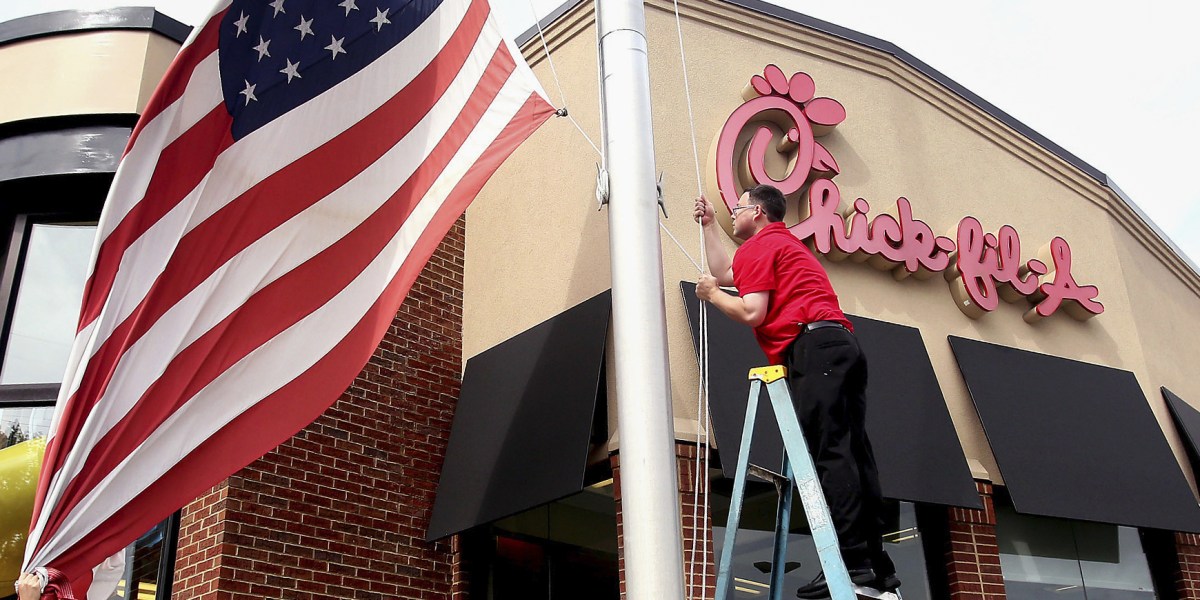
    Chick-fil-A has no branches in China. But the brand has enticed Chinese students in the U.S. for a simple reason: “Chick-fil-A” sounds like “check files.” In a culture that puts great stock in soundalike words and numbers, it is believed to bring good luck to those with complicated visa applications.

    “It feels like I am one step closer to the green card after having a Chick-fil-A meal,” says Zhou Yilu, an AI software engineer in his late 30s who lives in Wilmington, Delaware.

    Since arriving in the United States as a student 14 years ago, Zhou has had a roller-coaster experience with his visa status. He was repeatedly asked to add paperwork while switching among four types of visas, one of which was approved days ahead of its expiration. That was when Zhou turned to the popular poultry purveyor.

    No one can say who originally had the idea, but it has been kicking around the Chinese student community for years, especially for visa applications such as the H-1B, which is based on a lottery system and has become harder to secure.

    Some 3D-print the Chick-fil-A logo on coasters. Some embroider the logo into a small cross-stitch pendant for key chains. Others set Chick-fil-A’s logo as their profile picture on social media, sometimes converting it from red to green — as in green card.

    Chick-fil-A didn’t respond to emails seeking comment.

    They believe they’re one wordplay away from ‘stay’

    Chinese people, particularly younger ones, have long been enthusiastic about wordplay.

    On the night before Christmas, for example, eating apples — “pingguo” in Mandarin — flourishes because the word echoes “ping’an ye,” which means Christmas Eve. Brides carry lettuce bouquets because lettuce — “shengcai” — sounds like “getting rich.” Who doesn’t like catching that at a wedding? A much older use of wordplay lies in Chinese people’s aversion to the number four, which sounds like the word for death in Mandarin.

    The Chick-fil-A superstition reflects how difficult it is for immigrants to overcome the obstacles to work legally in the U.S., even for those with prestigious educational backgrounds and high-level job titles.

    More than 46,000 Chinese students and workers were approved for H-1B visas in 2024. Approved Chinese applicants account for 11.7%, the second-largest group by country, after India at 70%.

    Fan Wu, a data scientist living in Indianapolis, didn’t win his H-1B lottery despite changing his social media profile picture to the fast-food chain’s red logo and traveling to Hawaii to pray at a Japanese Taoist temple.

    “I was forced to turn to these mysteries,” he says. “The lottery itself is a matter of chance. It depends on luck, and we need another mystery to echo it.”

    It goes beyond chicken. The need for better fortune in visa lotteries has given rise to a new profession — agents who pray in temples across the Pacific on behalf of others.

    When the students reach out to 24-year-old Meng Yanqing in Beijing, across the world, through the social media platform Xiaohongshu, Meng lines up to enter and pray at the popular Lama Temple, holding a paper between his palms that expresses his wish for an H-1B visa. That involves “precise positioning” with their personal information, such as passport numbers and birthdays.

    “I respect them, they have their demands, and I offer the service,” says Meng, who also helps his clients buy consecrated bracelets from the temple and send them across the Pacific to the U.S. “I truly hope the best for them.”

    The visa issue is always looming

    The Trump administration’s abrupt decision to impose a $100,000 fee on H-1B visas a few months ago stunned Chinese students and workers, created chaos and fostered a more chilling atmosphere. It was later explained that it only applied to the new visas. But the roller-coaster experience added anxiousness to a landscape for Chinese students that already includes language and cultural barriers and a tight job market.

    Some experts believe employers’ sponsorship of green cards through visas like H-1B is why the United States can attract some of the best and brightest.

    “A real talent pipeline,” says Juliet Gelatt, associate director of U.S. Program under Migration Policy Institute based in Washington, “we’ve really benefited as a country and as an economy from bringing in smart young people from all around the world, including from China.”

    The air of suspicion surrounding Chinese immigrants, especially in high-tech industries, makes it even harder. Experts warn that it reduces the U.S.’s ability to attract international talent.

    One manager at a new energy company in his late 20s finally changed his profile picture to the chicken logo after months of waiting for his visa. Like many Chinese, he would give only his surname, Yang, and otherwise spoke anonymously, fearing trouble with his visa status. Of his status in the United States, he says, “It feels like living under someone else’s roof.”

    The United States limits participation in the H-1B visa lottery. STEM majors are eligible for three years of optional practical training under their F-1 student visa, while other majors are eligible for one year. After that, they turn to Chick-fil-A while seeking a work visa to continue their work in the United States.

    For Harriet Peng, a data analyst living in northern Virginia, eating a chicken sandwich and having the company’s T-shirt on the back of her chair weren’t enough. After losing the lottery repeatedly, she went to a temple in upstate New York to pray in person — or, as she puts it, to “make some efforts using scientific materialist methods in metaphysics.”

    The temple contains many sculptures of gods, each representing a particular aspect of life, such as fortune or childbirth. There is, she says, no god for visas.

    Nevertheless, Peng jokes, “I knelt in front of almost every god and prayed, in case they all know each other.”

    [ad_2]

    Source link

  • ‘Babies become sitting ducks’: Babies too young for vaccines remain vulnerable in measles ‘hotbeds’

    ‘Babies become sitting ducks’: Babies too young for vaccines remain vulnerable in measles ‘hotbeds’

    [ad_1]

     With baby Arthur too young for the measles vaccine and a sibling due in June, the Otwells grew nervous when the threat of the highly contagious virus started factoring into their grocery run.

    “We go to the Costco that was kind of a hotbed,” said John Otwell, who knew about the state health department’s warnings of public exposures at the store. “A lot of people just don’t get it; they think it’s just a cold. It’s not.”

    By Arthur’s 9-month checkup, the South Carolina outbreak had exploded into the nation’s worst in more than 35 years, surpassing last year’s in Texas. That meant that under state guidance, Arthur could get his first dose of the MMR vaccine — for measles, mumps and rubella — earlier than the usual 12 to 15 months old. Their new baby won’t be able to get the shot until at least 6 months — a prospect that worries parents of infants wherever measles spreads.

    Babies too young to be vaccinated are among the most vulnerable in a measles outbreak. The disease can wreak havoc on their fragile bodies, making them so sick they stop eating and drinking. They can develop pneumonia or brain swelling, and sometimes die.

    Babies depend entirely on herd immunity — at least 95% of a community must be vaccinated to prevent measles outbreaks. But dropping vaccination rates have eroded protection in South Carolina and across the nation. In Spartanburg County, the outbreak’s epicenter, less than 90% of students have gotten required vaccines.

    “Babies become sitting ducks,” said Dr. Deborah Greenhouse, a Columbia pediatrician. “The burden is on all of us to protect all of us.”

    But increasingly, some policymakers and officials push a view of vaccination as an issue of individual freedom and parents’ rights, rather than one of public health to safeguard the population as a whole.

    At the federal level, Health Secretary Robert F. Kennedy Jr., a longtime anti-vaccine crusader, has sought to remake vaccine policy and oversaw billions in public health cuts. And though a temporary ruling from a federal judge has slowed his momentum, a raft of bills has been introduced in states, including South Carolina, that threaten to further reduce vaccination rates.

    South Carolina’s measles outbreak, totaling about 1,000 cases, has slowed. But measles is spreading in many states, with 17 outbreaks this year and 48 last year, and the U.S. on the verge of losing its status as a country that has eliminated measles.

    Doctors work to protect the youngest against measles

    Dr. Jessica Early never thought she’d have to deal with measles, but the pediatrician feared for her patients and her own baby when it popped up in her Greer community. She and other doctors began offering an approved infant MMR dose as early as 6 months old. Her practice also started giving the second MMR dose — usually for ages 4 to 6 years old — early.

    To the chagrin of many doctors, no one knows how many South Carolina infants have gotten measles or been hospitalized by it.

    State officials will disclose only that 253 of the 997 cases were among children 4 and younger; they say they won’t break cases down further for confidentiality reasons. It’s not uncommon to group statistics this way.

    Officials also don’t know exactly how many infants were hospitalized with the virus because, as in some other states, hospitals aren’t required to report measles-related admissions.

    Across the state, doctors said they got many questions about whether it was safe to bring infants to waiting rooms or day care.

    Thomas Compton — regional director of Miss Tammy’s Little Learning Center, a child care network operating across the outbreak region — said 18 parents pulled children out of his facilities, though they had no confirmed cases. Some abandoned deposits days before their kids were scheduled to start, forcing the company to lay off a teacher.

    Although licensed day cares must require vaccines under state law, families can easily get religious exemptions. About a fifth of Miss Tammy’s 300 children have vaccine waivers.

    When measles surged, Compton said state officials gave little guidance. His staff scrubbed down surfaces, as they did when COVID-19 was raging; tracked local measles cases on Facebook; and relied on Google for information about the disease.

    “A lot of parents were really stressed out,” Compton said. “Anytime that we had a little sickness going on or something, they were like, ‘Do you think it’s the measles?’”

    State legislation would prohibit vaccines for children under 2

    Last year, an Associated Press investigation found that Trump administration officials were directing activists to push anti-science legislation in statehouses. Nationally, around 350 anti-vaccine bills were introduced as of late October, AP found, including at least eight in South Carolina.

    This year, a state bill would prohibit requiring vaccines for children under 2.

    “In other words, it would get rid of those requirements in the day cares,” pediatrician Greenhouse said. “And for people like me, that is a gut punch that is terrifying.”

    In a subcommittee discussion, Republican State Sen. Carlisle Kennedy said his bill aims to protect parents’ rights. His baby was born in August without working kidneys and got vaccines on a personalized schedule, in coordination with doctors.

    “We didn’t want to put vaccines in his body before his body was able to survive them,” he said.

    Opponents countered that herd immunity protects children in these situations.

    The Senate subcommittee advanced the legislation. Greenhouse fears it has momentum.

    “In the climate that we are currently living in, I think any bill potentially could have legs,” she said. “It is our job to do our absolute best to make sure that those legs don’t go anywhere.”

    Whether the bill becomes law, doctors say this sort of legislation fuels vaccine skepticism and confusion. While the American Academy of Pediatrics advises giving babies all the vaccines they’ve gotten for years, some parents tell Greenhouse they know the government has called for fewer.

    “They don’t actually know who they can trust,” she said.

    South Carolina, like other states, has made nonmedical vaccine exemptions easier to get, noted Dr. Martha Edwards, president of the state’s American Academy of Pediatrics chapter. In the outbreak’s epicenter, religious exemptions have more than doubled since 2020. Statewide, 4% of school-age students have such exemptions in 2025-26.

    “Parental choice is a big buzzword in a lot of the Southern states,” Edwards said. But the choice not to vaccinate, she said, impacts other parents’ rights to keep their children safe.

    Nationwide, protection fades as measles spreads

    Doctors expect things will only get worse.

    In the first three months of 2026, the U.S. logged 1,671 measles cases. That’s 73% of the total from 2025, the worst year for the virus in more than three decades. In November, international health officials will determine whether measles is still considered eliminated in the U.S.

    National MMR vaccination rates – which dropped to 92.5% among kindergartners in the 2024-25 school year, from 95.2% in 2019-20 – obscure much lower rates in certain communities. At one Spartanburg County school, 21% of kids received all required vaccines.

    Doctors worry it’s just a matter of time before all sorts of vaccine-preventable diseases threaten lives like they did a century ago.

    “The whole concept of immunization is one of the best things that has ever happened to medicine,” Greenhouse said. “To see that we are actually going backwards is just confounding.”

    Helen Kaiser, who lives in the outbreak area, vaccinated her twin 2-year-old boys early to protect them and the community.

    “I would never forgive myself,” she said, “if I knew that my son had gotten another baby very sick and it was something I could have prevented.”

    ———

    Ungar reported from Louisville, Kentucky.

    ——-

    The Associated Press Health and Science Department receives support from the Howard Hughes Medical Institute’s Department of Science Education and the Robert Wood Johnson Foundation. The AP is solely responsible for all content.


    [ad_2]

    Source link

  • Down Arrow Button Icon

    Down Arrow Button Icon

    [ad_1]

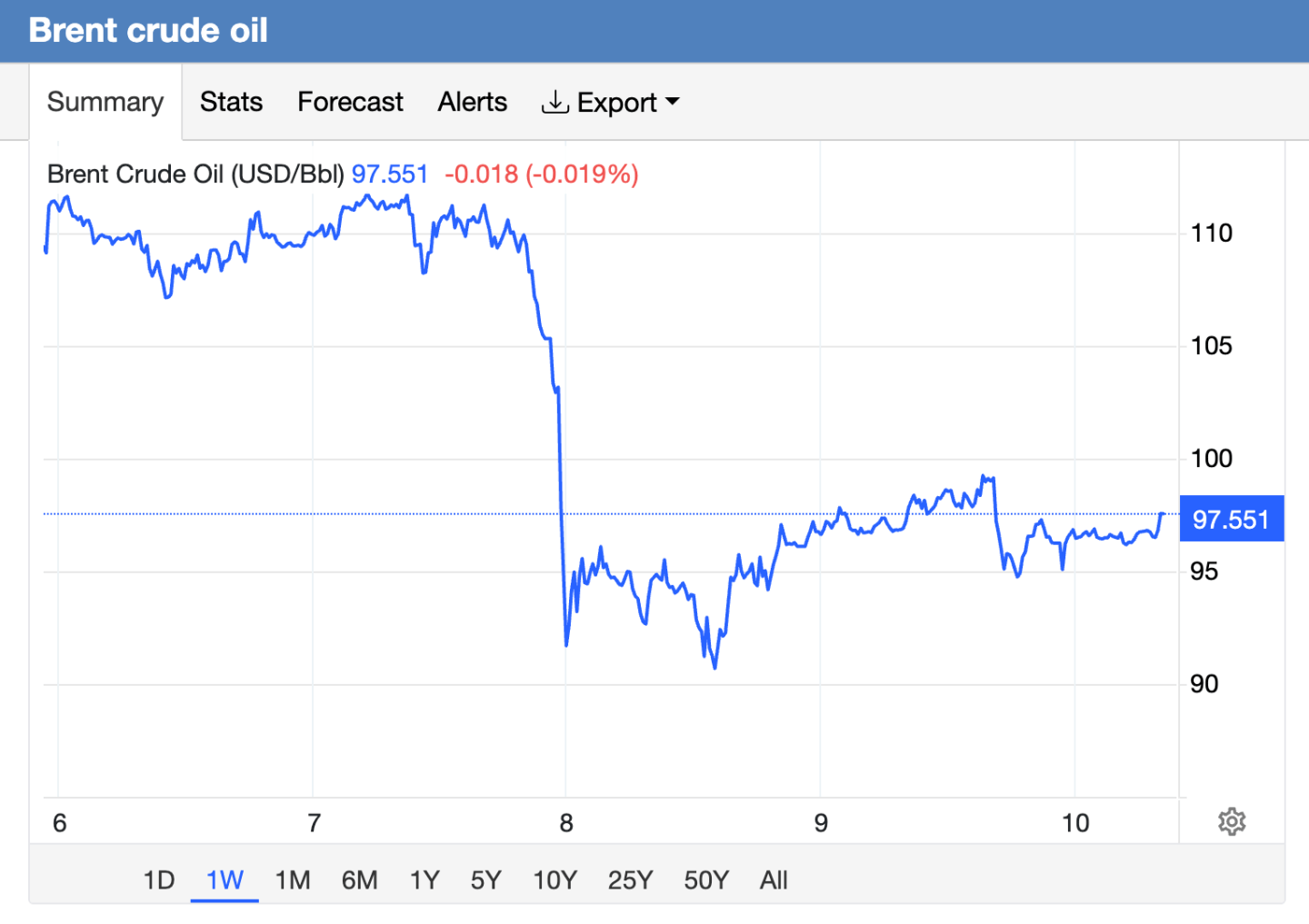
    At 9 a.m. Eastern Time today, oil was priced at $97.78 per barrel with Brent serving as the benchmark (we’ll explain different benchmarks later in this article). That’s a gain of $4.02 compared with yesterday morning and around $31 higher than the price one year ago.

    Oil price per barrel % Change
    Price of oil yesterday $93.76 +4.28%
    Price of oil 1 month ago $108.90 10.21%
    Price of oil 1 year ago $63.68 +53.54%
    Price of oil yesterday
    Oil price per barrel $93.76
    % Change +4.28%
    Price of oil 1 month ago
    Oil price per barrel $108.90
    % Change 10.21%
    Price of oil 1 year ago
    Oil price per barrel $63.68
    % Change +53.54%

    Will oil prices go up?

    It’s impossible to forecast oil prices with detailed precision. Many different elements affect the market, but ultimately it boils down to supply and demand. When worries about economic recession, war, and other large-scale disruptions increase, oil’s path can shift fast.

    How oil prices translate to gas pump prices

    Gas prices at the pump don’t only track crude oil. They also include what it takes to refine and move that fuel, the taxes layered on top, and the extra markup your local station adds to stay in business.

    Since crude oil generally makes up a majority of the per-gallon cost, changes in its price have an outsized impact. When oil surges, gas prices typically rise in tandem. But when oil retreats, gas prices often lag on the way down, a trend sometimes described as “rockets and feathers.”

    The role of the U.S. Strategic Petroleum Reserve

    In case of emergency, the U.S. has a store of crude oil known as the Strategic Petroleum Reserve. Its primary purpose is energy security in case of disaster (think sanctions, severe storm damage, even war). But it can also go a long way toward softening crippling price hikes during supply shocks.

    It’s not a long-term answer and is more meant to provide temporary relief, assisting consumers and keeping critical parts of the economy running, like key industries, emergency services, public transportation, etc.

    How oil and natural gas prices are linked

    Both oil and natural gas are key sources of the energy we use every day. Because of this, a big change in oil prices can affect natural gas. For example, if oil prices increase, some industries may swap natural gas for some segments of their operations where possible, which increases demand for natural gas.

    Historical performance of oil

    To gauge oil’s performance, we often turn to two benchmarks:

    • Brent crude oil, the main global oil benchmark.
    • West Texas Intermediate (WTI), the main benchmark of North America

    Between these two, Brent better represents global oil performance because it prices much of the world’s traded crude. And, it’s often the best way to track historical oil performance. In fact, even the U.S. Energy Information Administration now uses Brent as its primary reference in its Annual Energy Outlook.

    Looking at the Brent benchmark across several decades, oil has been anything but steady. It’s seen spikes due to factors such as wars and supply cuts, and it’s also seen crashes from global recessions and an oversupply (called a “glut”). For example:

    • The early 1970s brought the first big oil shock when the Middle East cut exports and imposed an embargo on the U.S. and others during the Yom Kippur War.
    • Prices dropped in the mid-1980s for reasons such as lower demand and more non-OPEC oil producers entering the industry.
    • Prices spiked again in 2008 with increased global demand, but it soon plummeted alongside the global financial crisis.
    • During the 2020 COVID lockdown, oil demand collapsed like never before—bringing prices below $20 per barrel.

    All to say, oil’s historical performance has been anything but smooth. Again, it’s hugely affected by wars, recessions, OPEC whims, evolving energy initiatives and policies, and much more.

    Energy coverage from Fortune

    Looking to stay up-to-date regarding the latest energy developments? Check out our recent coverage:

    Frequently asked questions

    How is the current price of oil per barrel actually determined?

    The current price of oil per barrel depends largely on supply and demand, including news about potential future supply and demand (geopolitics, decisions made by OPEC+, etc.). In the U.S., prices also move based on how friendly an administration is to drilling, as it can affect future supply. For example, 2025 saw the Trump administration move to reopen more than 1.5 million acres in the Coastal Plain of the Arctic National Wildlife Refuge for oil and gas leasing, reversing the Biden administration’s policy of limiting oil drilling in the Arctic.

    How often does the price of oil change during the day?

    The price of oil updates constantly when the “futures” markets are open. A futures market is effectively an auction where people agree to buy or sell oil in the future. As long as people and companies are trading contracts, the oil price is changing.

    How does U.S. shale oil production affect the current price of oil?

    In short, shale is rock that contains oil and natural gas. Think of shale as energy yet to be tapped. The more shale the U.S. accesses, the more energy we’ll have—and the more easily oil prices can keep from spiking as much thanks to a greater supply.

    How does the current price of oil impact inflation and the broader economy?

    When oil is expensive, it tends to make everyday items cost more. This can be related to energy (your heating, gas utilities, etc.), but it’s also due to the logistics involved with making those items accessible to you. Shipping, for example, can affect the price of things at the grocery store, as it’s more expensive to get those products from warehouses and farms onto the shelf.

    [ad_2]

    Source link

  • U.S. and Iran begin peace talks as Trump goes to war against the media and insider traders

    U.S. and Iran begin peace talks as Trump goes to war against the media and insider traders

    [ad_1]

    Oil rose marginally to $97 per barrel this morning. S&P 500 futures were flat before the open in New York. The index closed up 0.62% yesterday. Asia was up strongly today: Japan’s Nikkei 225 rose 1.84%, China’s CSI 300 gained 1.54%, and South Korea’s KOSPI added 1.40%. The optimism spread to Europe, too. The Stoxx 600 climbed 0.35% and the U.K.’s FTSE 100 put on 0.21% before lunch.

    • New inflation number incoming: The U.S. Bureau of Labor Statistics will publish the Consumer Price Index for March—the first full month of the war—later today. The expectation is that it rose one percentage point to 3.4%, per ING.

    Get ready for oil hoarding

    Oil prices will stay “high for longer” even if the U.S. and Iran can make a peace agreement because governments don’t believe the peace will last, according to Macquarie analysts Thierry Wizman and Gareth Berry. Even if the Strait of Hormuz is reopened, nations will start hoarding it in fear of a resumption of hostilities, they advised clients:

    • “It’s the risk of renewed disruption (or control of the Strait by Iran) that will make crude oil appear scarce, and why the industrialized countries will want to hoard supplies immediately. That will push the spot and futures prices higher than they would otherwise be without the tension. And hoarding of crude oil could be just as inflationary as a shut-in of crude oil.”

    “Dated Brent” is becoming a problem: There are already signs of stress in the oil market, according to CNBC. The price of “dated Brent,” which reflects cargoes at sea due for delivery between 10 days and a month from now, was at $131.97 per barrel on Thursday.

    ONE BIG THING

    EXCLUSIVE: Has Anthropic built something too dangerous and too expensive to commercialize at scale?

    Anthropic says its new AI model, “Mythos,” is too dangerous to be released because it can be used by hackers to find cyber security vulnerabilities that humans don’t even know exist. That’s an unusual stance for a company valued at around $380 billion and preparing for an IPO, according to Fortune’s Bea Nolan. The company is rolling out Mythos via an invitation-only initiative restricted to organizations focused on security risks, such as Amazon, Apple, Microsoft, and Cisco. That looks like pretty great brand-building, according to Paulo Shakarian, a professor of artificial intelligence at Syracuse University. It “plays really well with the chief security officers of the world,” he said.

    But it may also be the case that Mythos is so large, and requires so much computing power, that the company cannot afford to support its release to the general public. “I think it is likely that they simply do not have the GPU and other compute resources available to serve it at scale,” says Richard Whaling, lead researcher of cybersecurity startup Charlemagne Labs.

    IRAN

    U.S.-Iran peace talks begin as the White House goes to war against the media, insider traders, and the Vatican 

    Peace talks between Iran and the U.S. are scheduled to start today in Islamabad, Pakistan. Conflict between Israel and Hezbollah, Iran’s proxy terror group in Lebanon, continued overnight and this morning. Live coverage from the BBC here.

    President Trump accused Iran of violating the ceasefire agreement: “Iran is doing a very poor job, dishonorable some would say, of allowing Oil to go through the Strait of Hormuz. That is not the agreement we have!” he said on Truth Social.

    • Only 12 ships have passed through the strait in the last 24 hours, according to this live monitoring site. That’s up from seven ships the previous day. Normally, 130-plus ships navigate the gap daily.

    Inside the White House, staffers were formally warned to stop placing insider bets on commodity indexes and prediction markets like Kalshi and Polymarket. Fifteen minutes before Trump announced there would be peace talks with Iran, $760 million of oil futures contracts changed hands “in less than two minutes,” the Wall Street Journal reports. On Polymarket, three accounts earned $600,000 by correctly predicting the exact time of the Iranian ceasefire.

    Trump was angry at the Wall Street Journal last night: “The Wall Street Journal, one of the worst and most inaccurate ‘Editorial Boards’ in the World, stated that I ‘declared premature victory in Iran.’ Actually, it is a Victory, and there’s nothing ‘premature’ about it! Because of me, IRAN WILL NEVER HAVE A NUCLEAR WEAPON and, very quickly, you’ll see Oil start flowing, with or without the help of Iran and, to me, it makes no difference, either way. The Wall Street Journal will, as usual, live to eat their words. They are always quick to criticize, but never to admit when they’re wrong, which is most of the time!”

    He also slammed former allies Tucker Carlson, Megyn Kelly, Candace Owens, Alex Jones, and Marjorie Taylor Greene. See the tirade here.

    • Must-read story on the Trump Administration denying reports that one of its officials threatened to set up a rival papacy if the Pope didn’t tone down his criticisms of the war, via the FT.

    MORE FROM FORTUNE

    Defense executives worry Trump’s proposed military splurge could backfire – Diane Brady

    Schools across America are quietly admitting that screens in classrooms made students worse off and are reversing years of tech-first policies – Marco Quiroz-Gutierrez

    EXCLUSIVE: Eva Longoria says she refused to be a ‘struggling actor’—so she worked part time as a headhunter, closing deals from her soap opera dressing room – Orianna Rosa Royle

    ‘We owe it to the next generation’ to get national debt under control, says think-tank boss, as U.S. borrowing hits $1.2 trillion in just six months – Eleanor Pringle

    ‘Good for Russia, good for China, bad for America’: how the Iran war is reshaping global economies and power – Nick Lichtenberg

    The world’s 500 richest people made more than a quarter trillion yesterday as volatile markets react to fragile Iran war ceasefire – Jacqueline Munis

    CHART OF THE DAY

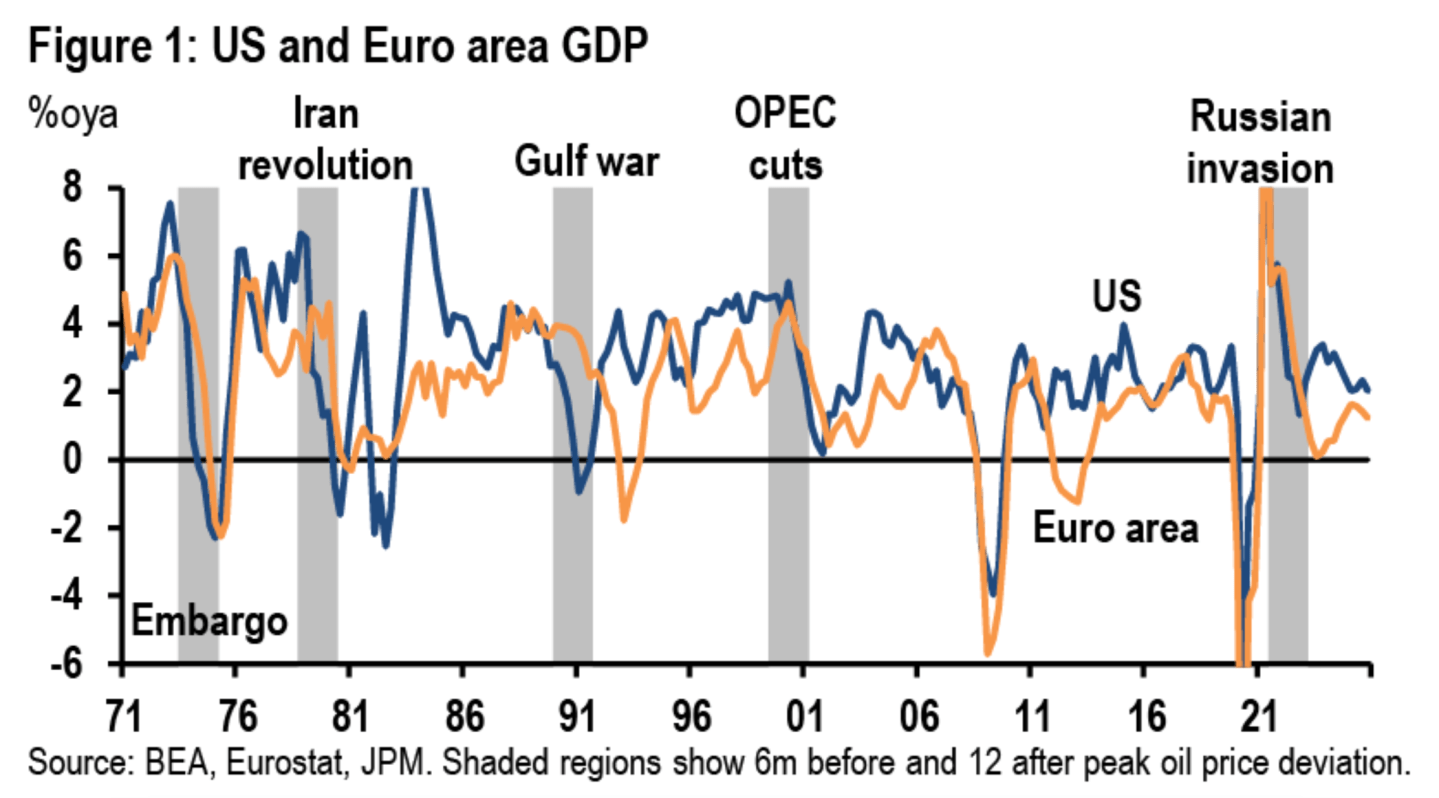
    Oil shocks can cause “stagflation” — but it’s temporary 

    The long view of what historic oil crises do to GDP growth shows that … it’s not terrible, J.P. Morgan’s Bruce Kasman argues. “Large energy supply shocks weigh on global growth and raise consumer price inflation. However, the magnitude and duration of this ‘stagflationary’ tilt varies greatly. Energy shocks in the 1970s were associated with global recessions and persistent inflationary pressures. The stagflationary tilt in subsequent episodes was more modest and transitory. Global recessions were avoided amidst highly differentiated outcomes across regions,” he said in a research note seen by Fortune.

    NUMBER OF THE DAY

    30%

    The share of renewable energy among European countries’ various energy sources. Non-carbon energy is now Europe’s largest supply source, according to data gathered by ING’s Gerben Hieminga and Nadège Tillier. Renewables were 20% of supply before Russia invaded Ukraine in 2022, pinching Europe’s gas supplies. Gas consumption fell 20% across the continent since then, and now forms only 19% of European energy supplies. Hydro power is 21%, nuclear is 15%, and coal is 8%.

    THE FRONT PAGES TODAY

    Melania Trump says she’s “never been friends with Epstein” in rare address – Axios

    When Bill Ackman Vented Over $2 Million, Fellow Billionaires Rushed to Commiserate – WSJ 

    UBS Won’t Release Nazi Accounts Settlement Files Sought by Investigator After Court Setback – Bloomberg

    Afrika Bambaataa, Often Called the ‘Godfather of Hip-Hop,’ Is Dead – NYT

    ONE MORE THING

    Without immigrants the U.S will need robots, Pimco says

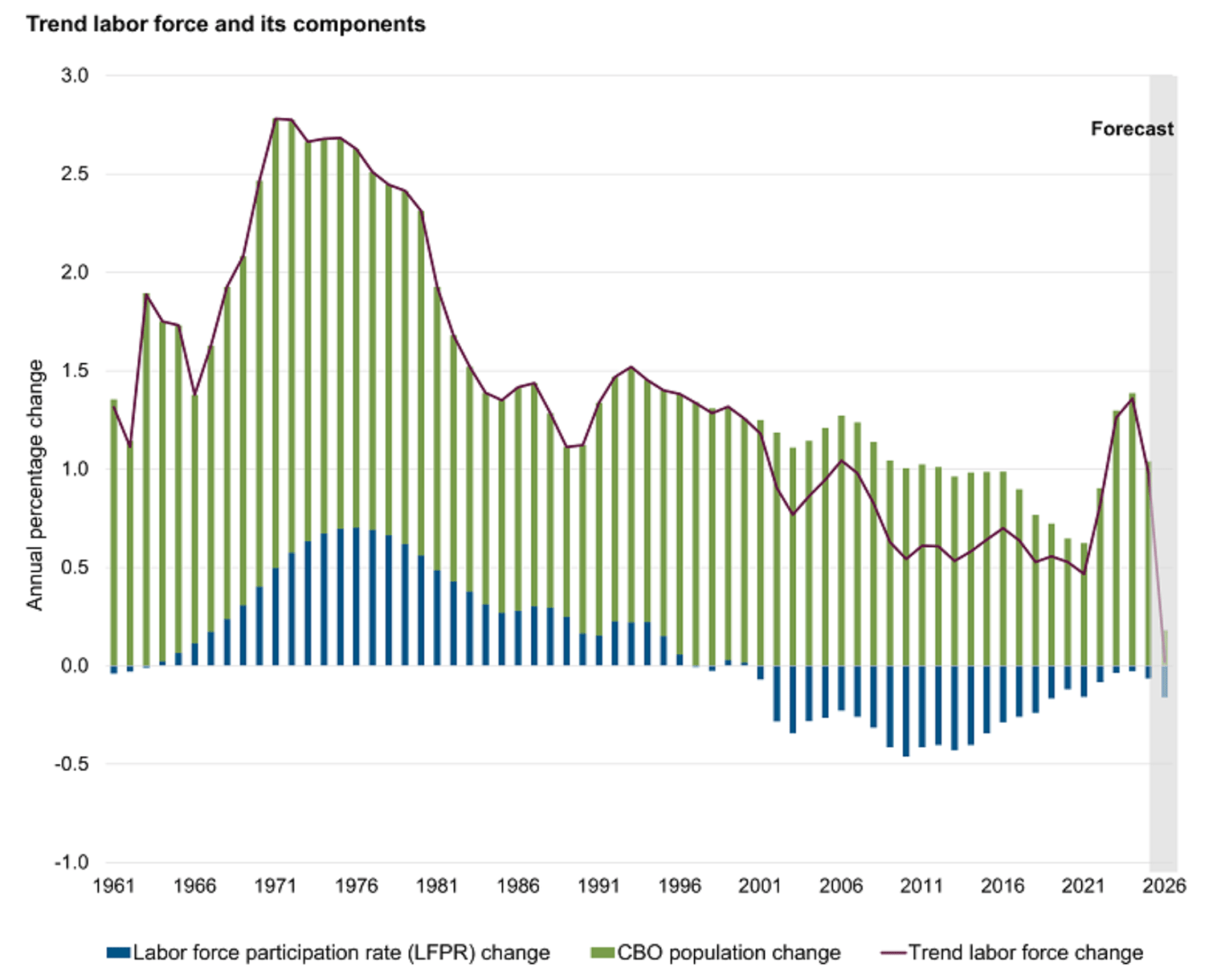
    The U.S. labor force has stopped growing and may be about to shrink, according to a note from Pimco economist Tiffany Wilding. Declining immigration is mostly to blame. Without a supply of new workers, employers will be forced to turn to AI to find gains in productivity, she argues.

    “More restrictive U.S. immigration policies along with long-running demographic trends are reducing labor supply growth and employment trends essentially to zero. This means that the U.S. economy now relies solely on real productivity growth to maintain its 1.5% to 2% trend in overall GDP growth – an unprecedented dynamic.”

    “Economic growth may largely depend on how quickly and effectively AI implementation can contribute to sustainably higher productivity growth,” she said. “Without a significant boost from AI, stagnant labor force trends could eventually lead to lower investment, slower growth, and lower rates.”

    [ad_2]

    Source link

  • Eva Longoria says she refused to be a ‘struggling actor’—so she worked part time as a headhunter

    Eva Longoria says she refused to be a ‘struggling actor’—so she worked part time as a headhunter

    [ad_1]

    Most actors arrive in Hollywood with nothing but a headshot and a tolerance for instant noodles. Eva Longoria arrived with one rule: her dreams would not come at the expense of her bank account. 

    Before she became a multimillionaire TV star, sipping rosé on Wisteria Lane as Desperate Housewives’ Gabrielle Solis, Longoria refused to rough it up like other actors, waiting on tables between auditions and crashing on a roommate’s couch. Instead, she was building a headhunting empire from her soap opera dressing room. 

    “The first day I landed in LA, I got a job,” Longoria exclusively tells Fortune. “I was like, I’m not going to be a struggling actor. I’m going to figure this out.”

    Figure it out, she did. The 51-year-old star—who now has a net worth north of $80 million, a production company, a directing career, a stake in women’s soccer team Angel City FC, a $6 million investment in the John Wick franchise, and a new mentoring partnership with Lenovo to support small business owners—landed a role at a temp agency as a headhunter. 

    And even once she’d scored her first real acting role on The Young and the Restless, she kept going. She was still negotiating salaries, screening candidates, and closing placement deals in between takes. 

    “In my dressing room, I was doing the headhunting,” Longoria recalls. “I was negotiating 401(k)s and salaries and interviewing and reading resumes and placing people. And then they would be like, ‘Eva, ready on set.’” She’d hang up mid-call, go act, come back, and pick up exactly where she left off. 

    Despite regular screen time, acting paid less than headhunting, so she didn’t quit—she kept up that double life for years, even denying it was her when clients eventually recognised her soap character on screen. She only walked away from corporate life in her third year on the show, after a pay bump finally made acting financially viable. 

    “I knew I could always go back to corporate America if acting didn’t work out,” she says. Shortly after, she landed Desperate Housewives—and the rest is television history.

    Eva Longoria’s former boss begged her to stay in corporate America

    Longoria has never had to look far for her work ethic. The youngest in a female-dominated household—“nine aunts, three sisters, no brothers”—she grew up surrounded by financially independent women. 

    As a teenager in Texas, Longoria started working at Wendy’s for $3.35 an hour and hustled her way up from “fried girl to hamburger girl to the drive-through, to head cashier to assistant manager” from the ages of 14 to 18—juggling her part-time job with high school.

    “If I’m going to do this, I’m going to do it well,” she remembers thinking. “I would work overtime. I work weekends. I was like, ‘pick me, pick me. I’ll do it.’ I love the idea of earning money.”

    That same energy followed her to Los Angeles. When she joined the temp agency, the CEO gave her a choice: steady base salary or unlimited commission. “I didn’t know either of those words,” she recalls. “He goes, ‘Well, base salary means you only make this much, but commission means you can make as much as you want.’ And I said, ‘That one. I want that one.’”

    Within one month, she says she was making three times the base salary.

    In fact, Longoria got so good at her job that her boss tried to renegotiate her commission structure because it “wasn’t built for the volume” she was producing—and when she eventually told him she was leaving for acting, he even tried to talk her out of it.

    “He never understood why I didn’t stay in corporate America,” she says. “It just wasn’t my calling, but I was really great at it.”

    “Everybody was surprised because I built this small business within his business, and he kept saying, ‘Why would you want to be an actress? You’re so good at business, it’s a one in a million chance you’re going to be successful at acting’. And I said, I know—and I’m the one in a million.” 

    Eva Longoria’s advice to Gen Z: ‘Figure it out’

    Her mother, for what it’s worth, wasn’t worried when Longoria said she was pursuing a career in acting. Her response was characteristically pragmatic: “You have your degree, so if you need a job, you can get a job… my mom always said that you better figure that out.”

    And she says it’s that mantra that separates the one-in-a-million who make it in a creative industry from the thousands who don’t. 

    Longoria, for example, didn’t wait for an agent to discover her—she went directly to them. “I looked up who the gatekeepers are, who hold the keys to these opportunities, and then figured out when they were speaking at an event. And I would go to the event, give them my headshot, or introduce myself.” That, she says, is how she landed her breakout role on The Young and the Restless. 

    Longoria is refreshingly clear-eyed about the fact that Hollywood, unlike business, doesn’t reward effort with predictable returns. “You could do exactly what I did and not have the same outcome,” she says. 

    But she also thinks a particular kind of resourcefulness is non-negotiable—and increasingly rare. “A lot of people prevent progress because of perfection,” she says. “‘I don’t exactly know how to do that, so I’m not going to do that’—that thought process, to me, is crazy.” 

    “A lot of people prevent progress because of perfection. Like: ‘I don’t exactly know how to do that, so I’m not going to do that’—it’s an odd thought process to me.”

    “I remember landing in LA and going, Okay, what do I need to do? I need headshots. Okay, let me figure that out. I need an agent. I’ve got to figure that out… And that’s really a huge trait.”

    [ad_2]

    Source link