Between faulty Outlook headaches and a toilet on the fritz that releases … well, gas into the air, the astronauts aboard NASA’s Artemis II mission may be feeling as if they’re spread a little thin, but that hasn’t stopped them from having a little sweet treat—and creating possibly the world’s best free advertisement in the process.
On April 6, commander Reid Wiseman, pilot Victor Glover, and mission specialists Christina Koch and Jeremy Hansen,thefour astronauts aboard the Orion spacecraft, became the farthest humans from Earth since Apollo 13. They broke a 56-year-old distance record; flew behind the far side of the Moon in a total communications blackout; and witnessed a solar eclipse from lunar orbit.
And less than four minutes before any of that history happened, a jar of Nutella stole the entire livestream.
During the livestream with a countdown of three minutes and 52 seconds before the Artemis II mission broke the Apollo 13 record, a tub of the chocolate-hazelnut spread drifted out of the Orion spacecraft’s kitchen area, rotated lazily in the cabin, and settled label-forward in perfect framing and perfect lighting.
It was the kind of product shot that would have normally come with a six-figure production budget to stage on Earth. But free product placement came a record-breaking 252,752 miles away from Earth, and the NASA livestream caught every second of it. And Nutella and parent company Ferrero were eating it up.
“We are over the Moon that the world’s best space explorers chose the world’s best spread,” Michael Lindsey, president and chief business officer, Ferrero North America, told Fortune in a statement.
“Like so many people around the world, we are captivated by the Artemis II mission and inspired by the brilliant teams making it possible. We were over the Moon to see how an unexpected glimpse of Nutella was able to spread a smile to our fans—even in space!” read a statement to Fortune from the Ferrero Group. “We always knew Nutella is out of this world, now we have proof!”
On social media, Nutella went nutty over all the excitement surrounding the brand. “Honored to have traveled further than any spread in history. Taking spreading smiles to new heights,” wrote the company on Instagram along with a rocket and heart emoji.
NASA’s Kennedy Space Center jumped in on the fun, writing: “Enjoying sweet treats while our Artemis crew takes sweet photos of the Moon!”
In another post, a jar of Nutella, floating just like the real-life one did aboard the Orion, is seen floating aboard a ship, this time beneath the words “Now enjoyed in space.” The caption asks folks to comment on what they would bring to space to win their name on a jar of Nutella: “Houston, we have Nutella in space! Tell us the one thing you’d bring into the cosmos for a chance to have your name written in the stars (or on a custom Nutella jar).”
NASA officials confirmed the Nutella was simply part of the crew’s approved food supply as one of 189 menu items aboard the Orion, alongside beef brisket, mac and cheese, scrambled eggs, and chocolate cookies. Bread, notably, is banned on spacecraft, as crumbs can damage precision instruments, so astronauts wrap most food in tortillas. NASA did not respond to Fortune’srequest for comment on how the spread was eaten, but we can take a wild guess the age-old teaspoon in the jar technique still works in free fall.
The Artemis II crew will splash down in the Pacific Ocean near San Diego on April 10, just nine days after launching from Kennedy Space Center.
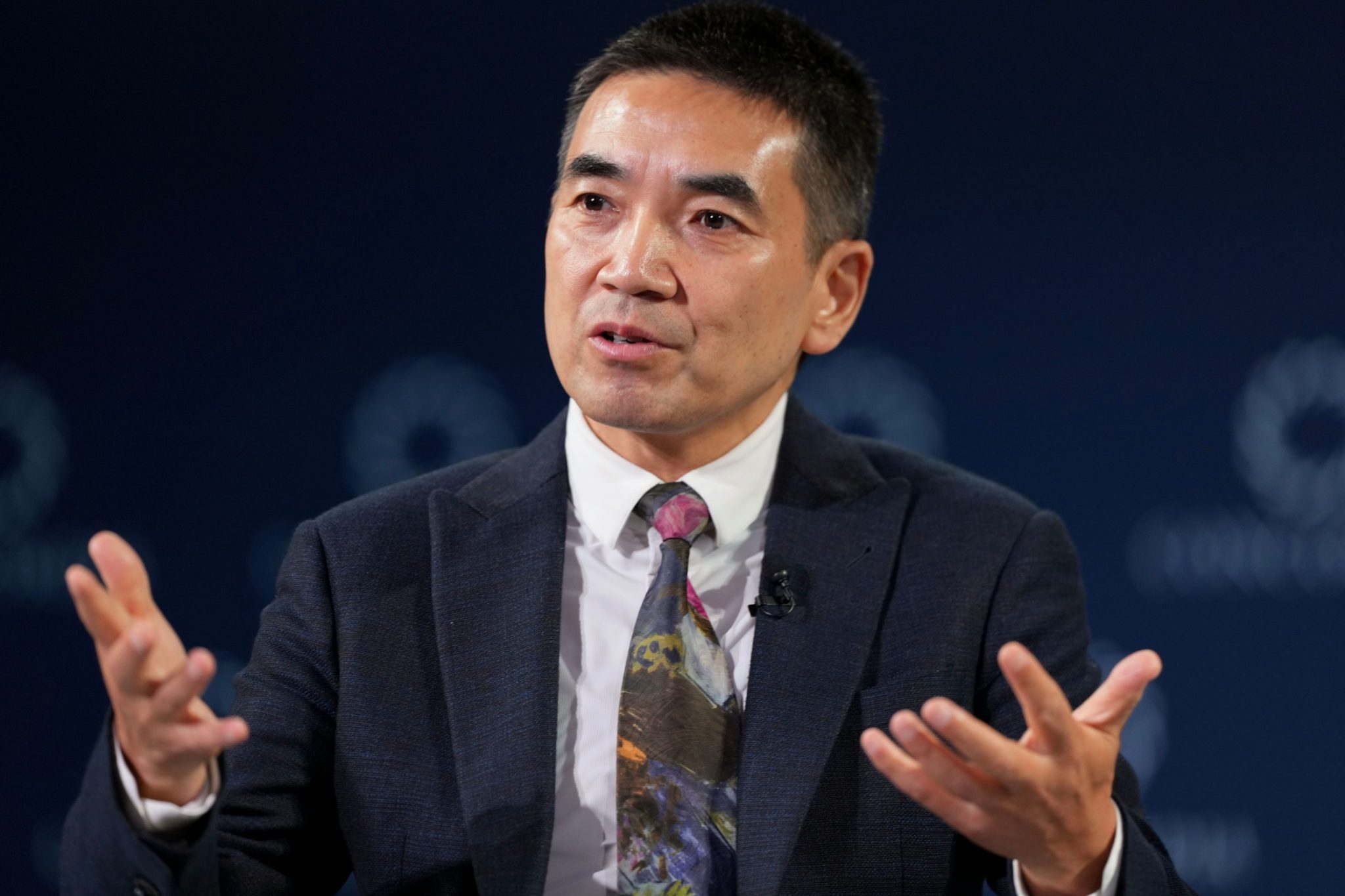
Zoom ushered in the remote era—cutting commutes, reshaping office culture, and giving millions of workers more control over their schedules. Now, as artificial intelligence begins to redefine productivity standards, Zoom’s CEO Eric Yuan is predicting an even bigger shift on the horizon: a dramatically shorter workweek.
“I’m pretty sure actually we really do not need to work for five days,” he said, adding that in the next half-decade, the workweek will be cut down to three days a week.
Calls for a shorter workweek aren’t new. Yuan pointed to past productivity breakthroughs—like Henry Ford’s assembly line, which helped reduce the workweek from six to five days. But this time, he argued, AI could accelerate that shift even further.
“I do not think we need to work for five days because literally, we all will employ so many digital agents,” Yuan said. In the future, he suggested, individuals could deploy thousands of AI agents to handle routine tasks like responding to emails or attending meetings. Yuan has already experimented with the concept himself—using an AI version of his likeness to join an earnings call last year.
While that could free up more time for human-to-human interaction, Yuan stressed that it won’t eliminate work altogether.
“We can enjoy the beach time, but we want the kids [to] still find something new, exciting to work [on].”
Fortune reached out to Zoom for further comment.
Workers are eager for a reduced workweek—but not every policy makes work-life balance easier
Momentum for a shorter workweek has been gaining steam. A 2024 survey from the American Psychological Association (APA) found that 80% of workers believe they would be happier—and just as effective—working four days instead of five.
Much of the push centers on the “100-80-100” model: workers receive 100% of their pay for working 80% of the time, while maintaining 100% of their productivity. The idea, endorsed by Sen. Bernie Sanders (I-VT), has gained traction through pilot programs run by 4 Day Week Global. Workers reported improvement in mental and physical health and life satisfaction, as well as less stress, burnout, fatigue, and work-family conflict.
Some companies have experimented with an alternative approach: compressing schedules into four 10-hour days, but there are trade-offs. One study found that longer days on the clock can strain employee health and make it more difficult to manage caregiving responsibilities, according to an analysis by APA. While job satisfaction increased under this model, absenteeism and productivity are often unchanged.
Jamie Dimon and Sam Altman agree: a reduced workweek is part of the future
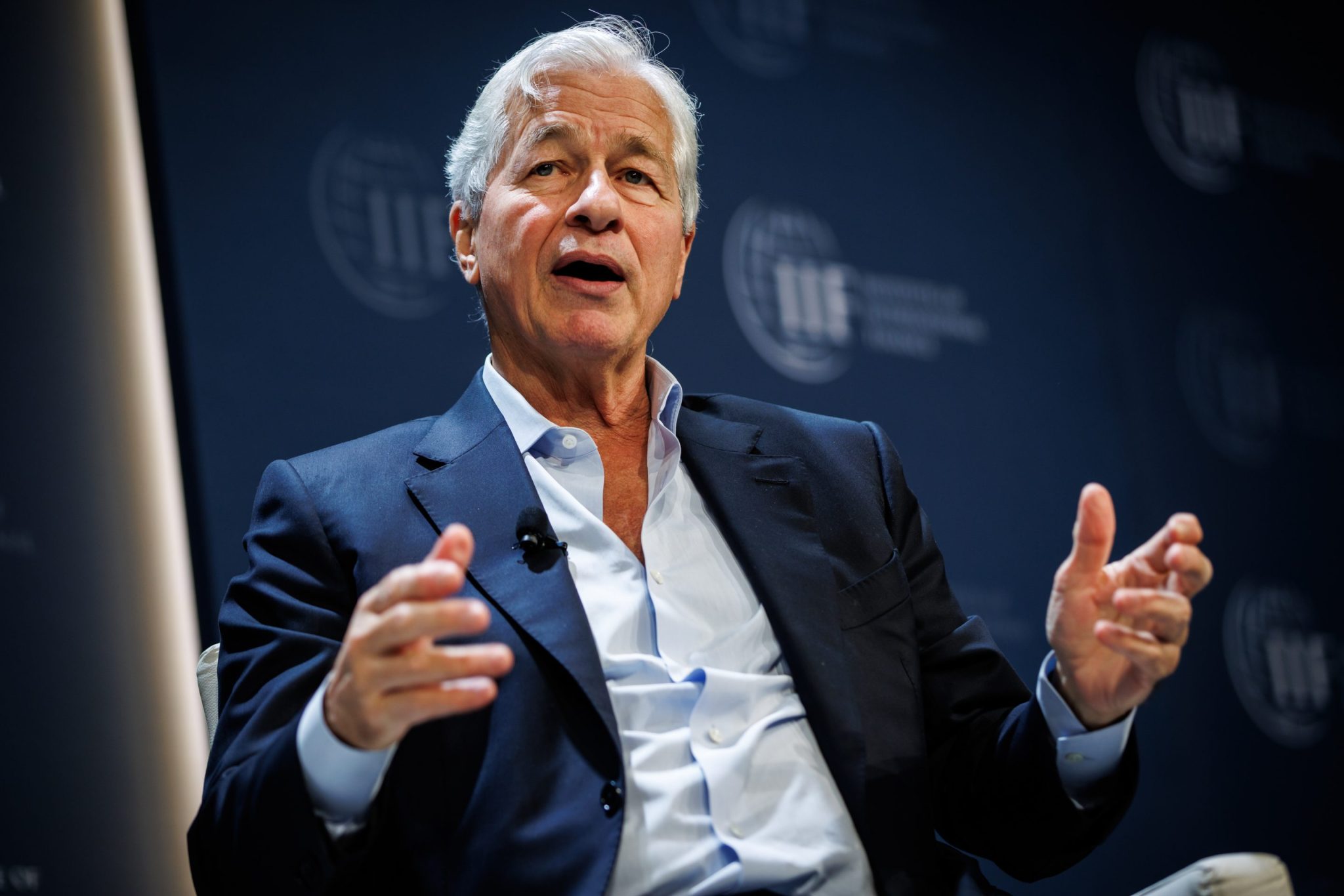
While adoption of reduced workweeks remains limited, the idea is increasingly top of mind for business leaders—especially as AI reshapes the labor market. JPMorgan Chase CEO Jamie Dimon recently predicted that the workweek could eventually shrink to as little as three and a half days.
“I believe that 30 years from now, your kids are probably working three and a half days a week,” Dimon told CBSNews in an interview that aired earlier this month.
In his latest letter to shareholders, Dimon added that advances in AI won’t just transform industries—they could also help people live “longer and safer” lives, in part by reducing how much they need to work.
“Incentivize employers and unions to run time-bound 32-hour/four-day workweek pilots with no loss in pay that hold output and service levels constant,” OpenAI recommended in its recent policy paper, Industrial Policy for the Intelligence Age: Ideas to Keep People First. “Then convert reclaimed hours into a permanent shorter week, bankable paid time off, or both.”
No worker, from front-line employee to CEO, is immune to the end-of-week brain fog that comes after a string of intense days on the job. Over the course of his Wall Street career, JPMorgan’s Jamie Dimon has learned to avoid making big decisions when the weekend rolls around—fried nerves will only lead to poor choices.
“I’ve learned some stuff like when I was 30, like anger doesn’t help,” the bank CEO recently said during an interview withNPR. “Making big decisions on a Friday when you’re tired is a really bad idea.”
Dimon has spent more than four decades in finance—from working as an assistant to then-American Express president Sandy Weill, to leading $826 billion titan JPMorgan through the financial crisis.
Despite having learned what works best in business, Dimon admitted he still falls into the Friday decision-making trap; and every time he comes out of it remembering why he avoids making important choices during his end-of-week slump.
“I always call them lessons learned and relearned,” Dimon continued. “I still make some of those mistakes, unfortunately.”
The CEOs who set rules to keep them ‘sane’ on the job
There are many business leaders who set firm boundaries around their schedules and meetings—habits honed over decades of experience finding their flow.
Airbnb cofounder and CEO Brian Chesky is doing things differently in leading the $78 billion short-term rental giant. He no longer bothers with tedious emailing, rarely dealing with his inbox anymore; instead, Chesky prefers to call, text, or talk it out when he’s on the clock. The leader also banned 9 a.m. meetings, pushing back all those important conversations to 10 a.m. the earliest. “When you’re CEO,” told The Wall Street Journal last year, “you can decide when the first meeting of the day is.
“Don’t apologize for how you want to run your company,” Chesky continued, adding that “[Emailing] was the thing about my job that I hated the most before the pandemic.”
Curbing time-consuming, energy-draining meetings is also a priority ofSouthwest Airlines CEO Bob Jordan in 2026. The airline executive said that “it’s easy to confuse busyness and going to meetings with leadership,” but this year he’s shaking things up. Jordan said his goal is to keep his calendar free of any meetings every Wednesday, Thursday, and Friday afternoon. It could sound “crazy” to some leaders, he acknowledged, but it allows him to invest more energy into other matters.
“It’s so that you can work on things you need to work on,” Jordan said at theNew York Times DealBook Summit last year. “You can think about what’s important right now. You can call people you need to talk to.”
Marc Randolph, the cofounder of Netflix, also set one rule when it came to managing his intense entrepreneurial career: Tuesdays ended at 5 p.m., no matter what. For decades, Randolph said he tried to keep “my life balanced with my job” by drawing that line. And it proved to be essential to his well-being.
“For over 30 years, I had a hard cutoff on Tuesdays. Rain or shine, I left at exactly 5 p.m. and spent the evening with my best friend,” Randolph wrote in a 2023 LinkedIn post. “We would go to a movie, have dinner, or just go window-shopping downtown together.”
“Those Tuesday nights kept me sane,” the Netflix cofounder continued. “And they put the rest of my work in perspective.”
After spending about a month in the red, shares of Levi Strauss jumped back into positive territory for the year yesterday, following a strong earnings report that also noted a major milestone: For the first time, direct-to-consumer sales accounted for more than half of the company’s quarterly revenue.
High-rise, not distressed: Overall revenue last quarter increased 14% from the same time last year, buoyed by Levi’s store and website sales, but also by wholesale revenue. That trend even grew in the US, where Levi’s severed some retail partnerships as it leaned harder into DTC.
Working in Levi’s favor:
The company offset tariff pressure by raising prices, which accounted for roughly half of its growth without steering away customers, according to its CFO.
It lost some dead weight by selling its struggling khaki brand, Dockers, last month.
Levi’s has also benefited from the popularity of ’90s styles like jorts and a resurgence of country trends (hat tip to Beyoncé).
Another pop culture bump: The company’s CEO said Levi’s saw a 25% spike in sales of its 517 jeans, which were a wardrobe staple for Carolyn Bessette and featured in the FX series Love Story about her and JFK Jr. The show premiered about two weeks before Levi’s quarter ended, meaning viewers wasted no time smashing that “Order” button.—ML
The Fortune 500 Innovation Forum will convene Fortune 500 executives, U.S. policy officials, top founders, and thought leaders to help define what’s next for the American economy, Nov. 16-17 in Detroit. Apply here.
Wall Street traders saw a huge surge yesterday, and the world’s wealthiest billionaires had their best day in nearly a year, after President Donald Trump took back his threat that “a whole civilization will die tonight” on Tuesday, quelling traders’ fears.
The world’s 500 richest people made $265 billion yesterday, according to the Bloomberg Billionaires Index. With the Dow Jones Industrial Average jumping 2.85% and the S&P 500 soaring by 2.51%, it was the second-largest single-day profit since the index was created in 2012.
Meta CEO Mark Zuckerberg made the most gains and added $12.8 billion to his personal net worth as Meta shares—of which Zuckerberg owns about 13%—rose 6.5%. Luxury goods billionaire Bernard Arnault had the second-highest gains with $9.89 billion.
The largest gain for the world’s 500 wealthiest people was just a year ago tomorrow, on April 10. Last year on this day, Trump paused his planned “Liberation Day” tariffs, and the subsequent 24 hours of trading added a record $304 billion to the top 500 wealthiest’s net worths. In comparison, this Wednesday saw 61 people on the index grow their wealth by more than $1 billion.
The rally won’t offset that the 500 wealthiest billionaires are still at a collective loss of $38.8 billion year-to-date. The world’s richest man Elon Musk alone lost about $3 billion on Wednesday.
That growth may not last forever. Both the Dow and and S&P 500 briefly dipped this morning before making modest gains as reports of a shaky ceasefire dominated headlines. Crude oil climbed back up to $100 per barrel on Thursday morning, as doubts grow over how the ceasefire will hold. The current price is far from its peak of $118.35 since the war began, but much higher from its $70 cost before the war.
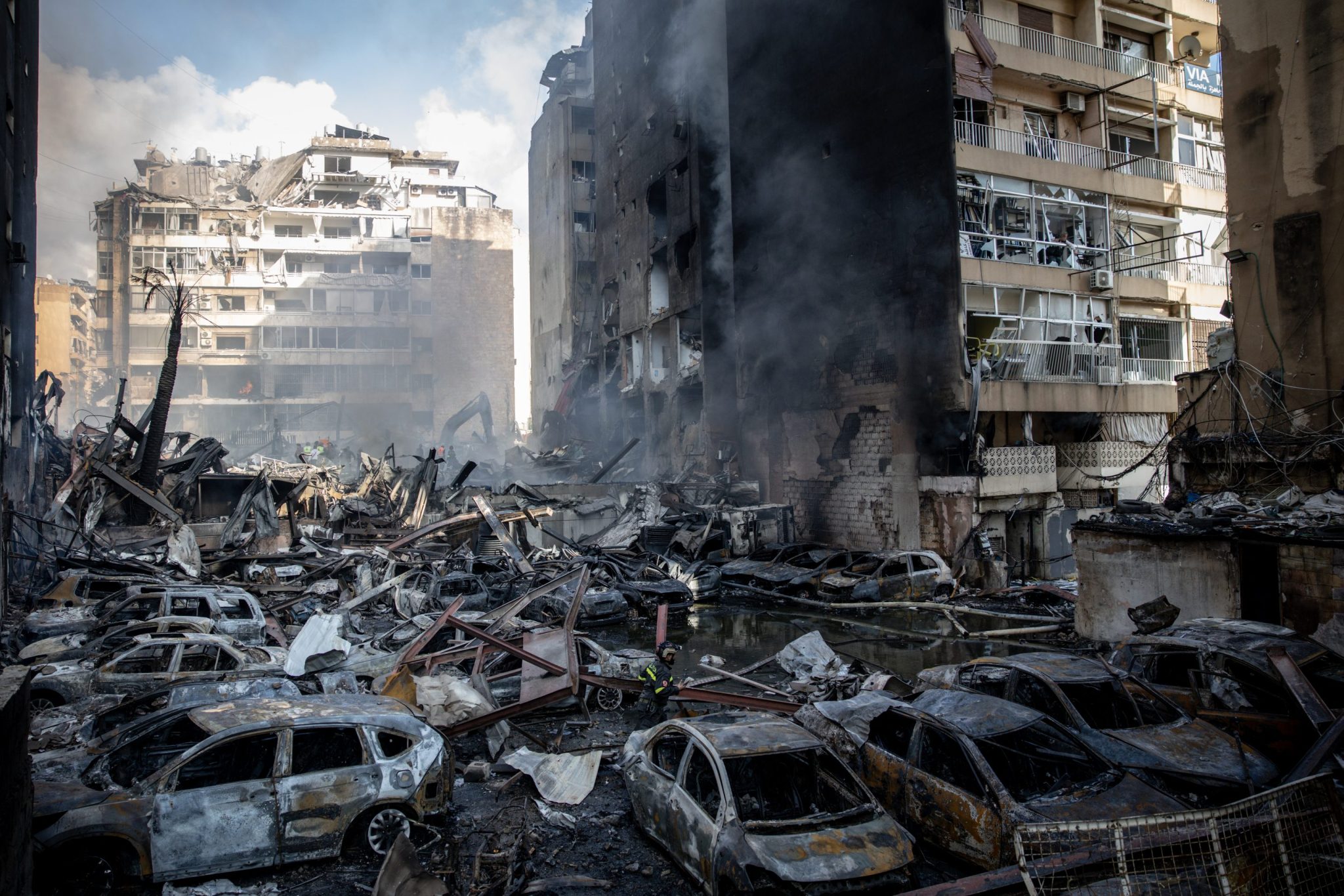
After an eleventh-hour ceasefire deal between the U.S., Israel and Iran was reached on Tuesday, just before Trump’s self-imposed 8 p.m. deadline that night, a ceasefire agreement sent markets soaring. Then Israel heavily bombarded what it considered Hezbollah strongholds in Lebanon on Wednesday, killing more than 200 people. Iran, which said it believed the ceasefire included Lebanon, claimed Israel had violated the agreement and thus closed the Strait of Hormuz to non-approved ships in response to the attacks.
On Thursday as talks continue, Trump told NBC News that he asked Israeli Prime Minister Benjamin Netanyahu to be “a little more low-key” in operations in Lebanon.
The Fortune 500 Innovation Forum will convene Fortune 500 executives, U.S. policy officials, top founders, and thought leaders to help define what’s next for the American economy, Nov. 16-17 in Detroit. Apply here.
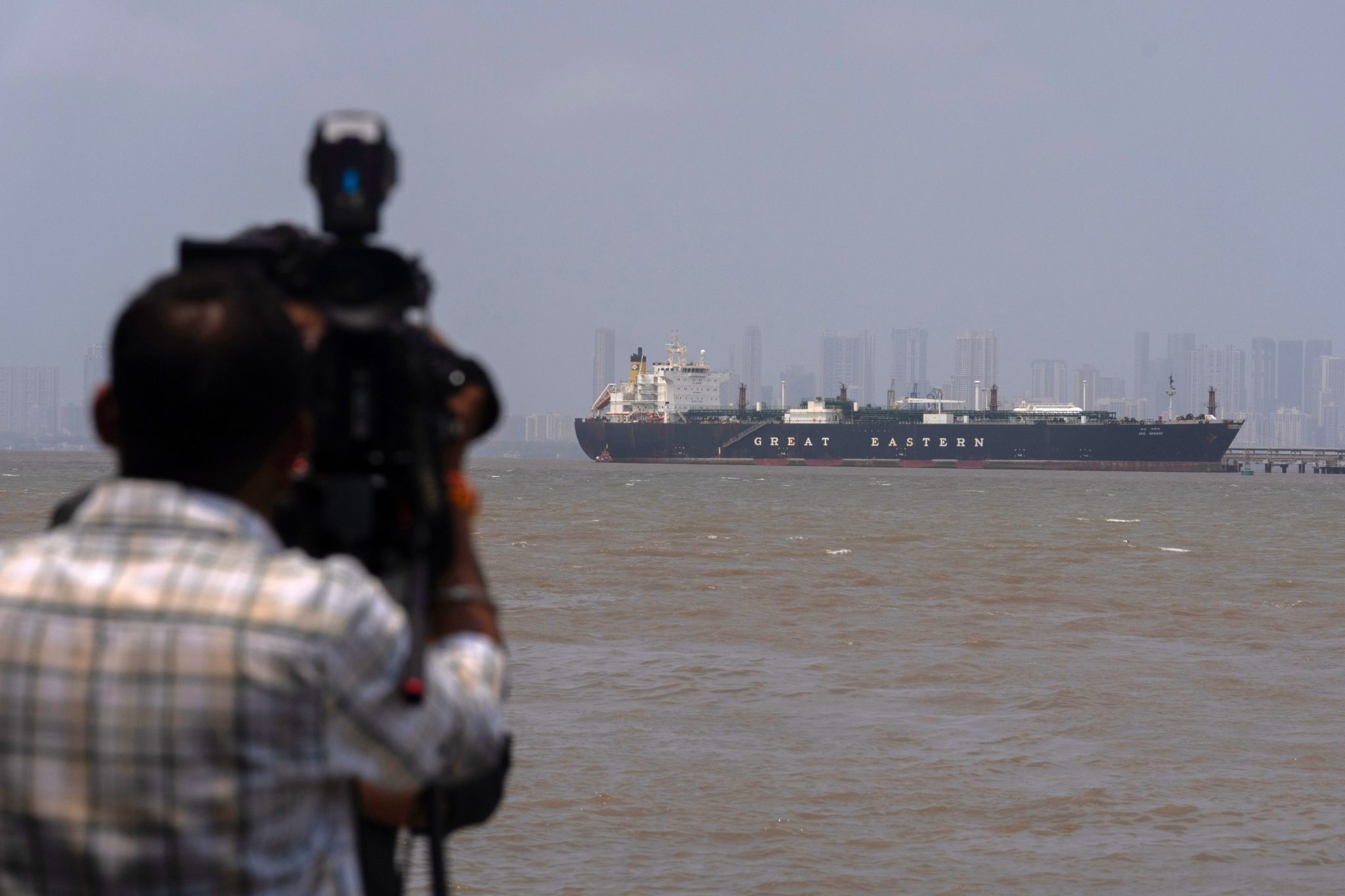
Only five ships moved through the Strait of Hormuz on April 9 during the ceasefire agreement between Iran and the U.S. and Israel, according to S&P Global Market Intelligence data. That number of ships, three tankers and two other vessels, is significantly below the “minimum of fifteen” ships Iran had promised would pass through the Strait during the expected two-week ceasefire, and is vastly lower than the pre-war count of 130 to 160 ships. The number also underscores an uncomfortable truth about the ceasefire in the war in Iran: while the U.S. has stopped its attacks, Iran has been able to functionally keep the Strait closed.
There have been plenty of days during the war which saw significantly more traffic than these seven ships that have passed during the ceasefire—including multiple days last week alone that saw 13 ships crossing the waterway. On Wednesday, the day after the ceasefire was announced, only four passed, according to S&P Global Market Intelligence.
It seems like the Pandora’s box is open: Iran has control over the Strait and is looking to maintain that control—using it as their top priority in their negotiations with the U.S. and Israel, which are set to start Friday. Tehran has made quite a penny charging tolls on the Strait, and twisting the knife by demanding payment in cryptocurrency or Chinese yuan, according to the FT. And Iran’s deputy foreign minister, Saeed Khatibzadeh, told ITV earlier Thursday that any ship needs army approval to pass so crews can be told where to avoid the mines—formalizing what was already a de facto closure.
All of which sits quite awkwardly against the day’s diplomatic vein. Trump told NBC Thursday he’s “very optimistic” about a peace deal with Iran and said Netanyahu promised to “low-key it” in Lebanon, after a brutal wave of strikes left over 200 people dead in Beirut in a single day and prompted Iran to claim the ceasefire deal had been broken—although White House Press Secretary Karoline Leavitt said Lebanon was not part of the agreement. “I just think we have to be sort of a little more low-key,” Trump told NBC.
Israel agreed to direct talks with Lebanon starting next week at the State Department, ostensibly under U.S. pressure. After the news broke, the S&P 500 reversed its morning loss and is on track for a seventh straight advance—its longest winning streak since October. WTI pulled back to around $97 after spiking above $102 earlier in the session, and Brent settled near $96, despite no indication the Strait is any more open than it was yesterday.
The Fortune 500 Innovation Forum will convene Fortune 500 executives, U.S. policy officials, top founders, and thought leaders to help define what’s next for the American economy, Nov. 16-17 in Detroit. Apply here.
Modern agriculture depends on precise timing of delivering nutrients to plants. When fertilizer arrives late or becomes too expensive to buy in sufficient quantities, farmers are left to either reduce the amount they use, plant fewer crops or switch to crops that need less fertilizer. Each option reduces overall productivity, cutting supplies of basic foods, feed for livestock and key ingredients used in a wide range of food products.
Ultimately, with corn prices rising, summer barbecues may taste a bit different or cost more. Corn on the cob may not be cheap, nor will corn-fed beef. In addition, many store-bought condiments, soft drinks and other food products are made with high-fructose corn syrup and will also cost more.
Potash, the potassium-rich component of fertilizers, has also been in short supply in recent years, in part because of economic sanctions on Belarus and Russia, which are major potash producers.
As a consequence, fertilizer prices have risen globally. In the U.S., some fertilizers rose more than 40% in just one month after the war’s start in late February 2026. https://www.youtube.com/embed/PkNWSogQzAM?wmode=transparent&start=0 An American farmer talks about the cost of fertilizer amid the war in Iran.
Reducing nitrogen application by 10% to 15%, or delaying application by two to four weeks, can reduce corn yields by 10% to 25%.
Producing less corn and wheat reduces not only food available for humans but also food for livestock. Increased fertilizer costs and reduced grain supplies increase the price of raising livestock, making meat and animal products more expensive.
When feed costs become unsustainable, farmers may be forced to kill or sell off the breeding cows and sows that represent the future of the food supply. In the U.S., a combination of persistent drought and high costs in 2022 forced producers to kill 13.3% of the national beef cow herd, the highest proportion ever. As a result, the U.S. beef cattle inventory shrank to its lowest level since 1962, a problem that restricts beef supplies for years.
Farmers who fear not being able to optimize their corn yields may decide to plant less corn or switch crops and plant soybeans, which need less fertilizer. Either would reduce the corn supply.
Government loan guarantees and aid packages may help farmers cover higher costs, but they cannot address timing if enough fertilizer simply isn’t available when it is needed.
Hitting home
American consumers aren’t facing the gas and foodshortages or power outages other countries are seeing from the war, but they will be hit in the pocketbook. U.S. prices for gas and jet fuel are already climbing. The effects on the food supply take longer to appear, but they are coming.
Corn tortillas and other relatively lightly processed corn foods are more likely to show price responses within a few months after corn prices increase. Adjustments to cereals or poultry prices will take a little longer. Changes in the cost of livestock products such as beef will take longer, because there are more steps between the purchase of feed corn and the sale of the meat to consumers.
Other indirect costs, related to the cost of fuel and packaging, tend to hit later. Producers often absorb the price increases in the short term, but some increases are already in the works. For instance, transport companies are adding fuel surcharges on freight shipments.
Food price hikes hit low-income households harder than high-income households, because people with lower incomes spend larger shares of their money on food and housing. For these households, even relatively affordable proteins, such as chicken, may become harder to purchase regularly.
The cost and availability of fertilizer will affect the whole world. More than 300 million people worldwide already do not have enough food. The U.N. World Food Program predicts an additional 45 million could join them by the end of 2026 if the conflict in the Middle East continues into the middle of the year.
These problems may seem removed for most Americans, but food prices are global in nature, and people in the U.S. will soon face these additional costs of the war.
To end the war with the United States and Israel, Iran is demanding the right to collect tolls in the Strait of Hormuz as a precondition for reopening the waterway vital to world oil supplies.
Yet collecting tolls in the strait would violate a basic and enduring principle of international maritime trade: freedom of peaceful navigation. It’s an ancient idea that was codified by the United Nations’ Convention on the Law of the Sea, which took effect in 1994.
Opening the strait would save the global economy from supply constraints that have pushed energy and fertilizer prices sharply higher since the war began on Feb. 28. But agreeing to Iranian toll-collecting would cement the Islamic Republic’s control over the strait through which 20% of the world’s oil is shipped — and enrich the country against whom the war was launched.
U.S. President Donald Trump has made reopening the strait a priority. But the White House said Wednesday he is opposed to tolls, and analysts say the Gulf’s oil producers are, too.
Analysts say they have seen no change in traffic through the strait since the ceasefire was announced, despite claims to the contrary from the White House.
Here are things to know about Iran’s proposal and the international law with which it collides.
Iran had already begun charging vessels passing through the strait
After the U.S. and Israel launched the war, Iran immediately exercised leverage by blocking the strait with attacks — and threats of attacks — on ships, making passage too risky. The disruption caused immediate shortages in some Asian countries highly dependent on the region’s energy, sent gasoline prices higher in the U.S. and Europe, and threatened global economic growth.
Iran then began vetting vessels in a murky scheme dubbed the “tollbooth” by shipping analysts.
The ships were told to divert from the middle of the strait in Iranian and Omani territorial waters and instead detour around Iran’s Larak Island. After delivering detailed information on crew and cargo to intermediaries of Iran’s paramilitary Islamic Revolutionary Guards Corps, some vessels were allowed to proceed — and at least two reportedly paid the equivalent of $2 million in Chinese yuan.
The Law of the Sea Treaty guarantees passage to peaceful ships
Iran’s 10-point proposal for ending the war includes a provision allowing it and Oman to charge ships passing through the Strait of Hormuz, according to a regional official who spoke on condition of anonymity to discuss negotiations they were directly involved in. The official said Iran would use the money it raised for reconstruction.
But the Law of the Sea Treaty’s Article 17 guarantees a right of “innocent passage” for ships that do not threaten the coastal states. So allowing Iran and Oman to start charging for passage through the strait would set a dangerous precedent, experts said.
Freedom of navigation in the world’s seas has been a fundamental right for hundreds of years, founded on “the idea that the sea doesn’t belong to anyone,” said Philippe Delebecque, a professor and maritime law expert at Paris’ Sorbonne University.
“Freedom of navigation has always been recognized, including specifically in straits,” he said. The concern is if the Strait of Hormuz could be closed, then why not the Strait of Gibraltar between the Mediterranean and the Atlantic, or the Strait of Malacca off Indonesia?
He called that scenario “the end of an international society.”
Neither Iran or the U.S. have ratified the Law of the Sea Treaty
While 172 countries have ratified the U.N. convention, Iran and the United States are among those that have not.
“Not having ratified the convention doesn’t give (Iran) total freedom of action in the Strait of Hormuz,” said Julien Raynaut, who heads the French Association of Maritime Law, a trade group. “It remains subject to international law and notably this customary right of passage.”
An Iranian tollbooth could lead China to conclude that it could restrict movement in the Taiwan Strait, Raynaut said.
Oman and Iran may face diplomatic pushback to adhere to the convention, said Constantinos Yiallourides, a senior research fellow at the British Institute of International and Comparative Law.
Free passage “is in the interest of everyone,” he said. “We all want to get the best products at the best prices.”
The global economy needs the Strait of Hormuz reopened
Some economists say that, from a strictly financial standpoint, the world would barely notice the additional costs from any tolling in the Strait of Hormuz.
For example, a $2 million toll on a large tanker carrying 2 million barrels of oil amounts to $1-per-barrel increase on that ship’s oil.
“The burden does not fall on global consumers, but overwhelmingly on the Gulf states that supply the oil that transits the strait,” wrote the Bruegel think tank in Brussels. It said the world economy would instantly benefit from the reopening the strait — returning 20% of the world’s oil to the market and sending prices lower.
Plus, by lowering oil prices, it would eliminate a multibillion-dollar geopolitical windfall for Russia, whose oil is suddenly in greater demand despite sanctions.
The international price of oil has jumped from around $72 per barrel before the war to as high as $118 on March 31. On Monday, Brent crude, the international benchmark, traded at $94.55, down sharply after news of the two-week ceasefire.
The Gulf’s oil producers are leery of Iranian control of the strait
Saudi Arabia, the biggest Gulf producer, welcomed the ceasefire deal between the U.S. and Iran but called for keeping the Strait of Hormuz open “without any restrictions.”
Gulf countries have had to shut down some 12 million barrels per day in crude production because there’s no viable way around the strait for much of their oil. The two pipelines that bypass it aren’t big enough to make up for all of the lost oil, and building new pipelines would take years.
Given the downsides of the tollbooth proposal, the Gulf states would only agree to it if all other options looked much worse, Bruegel said.
A major objection in the West is that the toll would likely benefit the Islamic Revolutionary Guard Corps, which is responsible for Iran’s ballistic missile program, suppresses domestic political opposition, and is listed as a terrorist organization by the U.S. and the European Union.
___
Leicester reported from Paris. Michael Biesecker in Washington contributed to this report.
Bobby Healy is at peace with his drone delivery enterprise being unsexy. “Think of us like a low-cost airline,” the Manna CEO told Fortune. That pitch just landed him $50 million.
Manna, the Irish drone delivery startup, closed a Series B this month backed by ARK Invest—Cathie Wood’s firm, known for early investments in OpenAI, Tesla, and SpaceX—along with the Ireland Strategic Investment Fund, Schooner Capital, Coca Cola HBC, and Molten Ventures. The capital will be put towards expanding Manna’s U.S. and European operations. Total funding now sits at $110 million.
Manna, founded in 2018, operates throughout Ireland, as well as Finland and Texas, delivering anything from burritos to biomedical tests. The company has already completed more than 250,000 successful deliveries. It recently announced a new partnership with Uber, and has existing contracts with DoorDash, Deliveroo, and Just Eat.
The problem Manna hopes to solve isn’t ritzy, but the math and market are.
Road-based delivery in the U.S. costs merchants around $10 per order in driver costs alone. Manna does it for cents in electricity. Its drones fly at around 50 to 60 mph in a straight line, deliver in under three minutes, and turn around in under 60 seconds—eight deliveries per aircraft per hour versus the industry average of 1.2.
Meanwhile, the global rapid delivery economy—same-day and on-demand—is projected to grow 21.3% year-over-year for the next decade, reaching $100 billion by 2034, according to Manna. And the last-mile (from hub to final destination) delivery market was worth an estimated $166.45 billion in 2024 and is projected to reach $311.31 billion by 2031, growing at a CAGR of 9.62 percent.
Manna’s U.S. target is 92 million family homes that gig economy delivery has never served profitably. As Healy notes, there are more than a billion food delivery orders placed annually in the U.S., and not enough drivers to move them without bleeding money. “Drones don’t take jobs away,” Healy added. “You’re giving every small business in the suburbs a better logistics platform than Amazon has.”
Recent regulatory unlock, according to Healy, is what’s making VCs move now. The FAA has historically required drone operators to keep their aircraft in direct eyesight at all times, making commercial delivery at scale essentially illegal without a one-off waiver for every single flight. In August 2025, the agency proposed Part 108, a new permanent ruleset that would allow drones to fly beyond what operators can see. The deadline to finalize these rules is mid-2026.
Manna already has plans for 40 to 50 new U.S. locations in the next 12 months, starting in Texas and Oklahoma.
The competitive field has also thinned to four players: Manna, Google’s Wing (750,000+ deliveries, expanding to 150 Walmart stores this year), Zipline ($600M raise, $7.6B valuation, 2 million deliveries globally, but burning more than $60 per order according to a confidential Q4 2025 memo seen by Fortune), and Amazon Prime Air (~16,000 deliveries). Healy notes Amazon only serves its own parcels, leaving Manna, Zipline, and Wing as the three companies competing for what he calls a $300–$400 billion U.S. opportunity. Manna, however, is the only company in the cohort currently turning a profit on every flight.
In the end, Healy says drone delivery is going to be free. “The only losers here are the people selling cars and e-bikes.”
Term Sheet podcast… This week’s guest is Mackenzie Burnett, CEO and cofounder of Ambrook–a modern finance toolkit for farmers. Agriculture is the backbone of the U.S. economy, yet the average American farmer earns only 5 cents of every dollar spent on food. Meanwhile, there’s been an almost 50% spike in bankruptcies of U.S. farms, and margins are thinner than ever due to falling revenues and rising production costs. On the podcast, Burnett breaks down the high-stakes world of agricultural finance, and she and Allie Garfinkle discuss why many farms still rely on paper ledgers, the “unscalable” journey to find product-market fit in a skeptical industry, and how modern financial tools are a critical part of the strategy to save American family farms. Watch the episode here.
Joey Abrams curated the deals section of today’s newsletter.Subscribe here.
VENTURE CAPITAL
– Patlytics, a New York City-based AI platform designed for the patent process, raised $40 million in Series B funding. SignalFire led the round and was joined by N47, Myriad Venture Partners, Relativity, AlumniVentures, AntiportfolioVentures, and BAM Corner Point.
– MOAB, a New York-based operating system for equipment rental and dealership business, raised $16 million in funding across seed and Series A rounds from EladGil, IronspringVentures, and others.
– SoraFuel, a Boston, Mass.-based climate technology company, raised $14.6 million in funding. SperoVentures and InspiredCapital led the round and were joined by EngineVentures and WireframeVentures.
– Livid, a Dover, Del.-based ad-free video hosting platform for creators and small businesses, raised $10 million in funding from GeigeVandentop and DanBriggs.
– GoldenAnalytics, a Seattle, Wash.-based AI-powered business intelligence platform, raised $7 million in seed funding from NEA, Madrona, and Breakers.
– Pomo, a San Francisco-based agentic AI-powered marketing platform, raised $4.5 million in seed funding. KindredVentures led the round and was joined by Databricks, SevenStars, SVAngel, 645Ventures, and angel investors.
– cadootz!, a New York City-based children’s snack brand, raised $3 million in seed funding. SelvaVentures led the round.
– Earlyasset, a Park City, Utah-based developer of financial infrastructure designed to make secondary transactions in venture-backed companies simpler, raised $2 million in pre-seed funding. New Stack Ventures led the round and was joined by CervinVentures and others.
PRIVATE EQUITY
– AeroAccessories & Repair, a portfolio company of ATLPartners, acquired NewGenerationAerospace, a Medley, Fla.-based airplane parts repair company, and Tri-County Aerospace, a Miami, Fla.-based airplane parts repair company. Financial terms were not disclosed.
– AirTransportComponents, backed by AEIndustrialPartners, acquired PASMRO, a Bristow, Okla.-based bearing repair services company. Financial terms were not disclosed.
– Arbiter, a portfolio company of Accel-KKR, acquired VerticalRaise, a Coeur d’Alene, Idaho-based provider of K-12 fundraising solutions. Financial terms were not disclosed.
– FranciscoPartners agreed to acquire BlacklineSafetyCorp., a Calgary, Canada-based safety technology company. Financial terms were not disclosed.
– Harrell-Fish, a portfolio company of NewStateCapital, acquired EcofriendlyMechanical, a Bloomington, Ind.-based mechanical solutions company. Financial terms were not disclosed.
– MissionCriticalGroup, backed by Emerald Lake Capital Management, acquired TxLaSystems, a Huffman, Texas-based electrical switchgear and modular systems. Financial terms were not disclosed.
– MiQ, backed by BridgepointGroup, agreed to acquire RocketLab, a Miami, Fla.-based growth platform for mobile apps. Financial terms were not disclosed.
EXITS
– SteeleSolutions, a portfolio company of RevelarCapital, acquired MaysteelIndustries, an Allenton, Wisc.-based metal products manufacturer, from LittlejohnCapital. Financial terms were not disclosed.
IPOs
– Arxis, a Bloomfield, Ct.-based designer and manufacturer of electrics and mechanical parts for the aerospace and defense industries, plans to raise up to $1.055 billion in an offering of 37.7 million shares priced between $25 and $28. The company posted $1.6 billion in revenue for the year ended Dec. 31. Arcline Investment Management backs the company.
FUNDS + FUNDS OF FUNDS
– 154 Partners, a New York City-based private equity firm, raised $400 million for its first fund focused on companies in the residential, business, and sports & live event services industries.
PEOPLE
– GigascaleCapital, a Palo Alto, Calif.-based venture capital firm, promoted EvalineTsai to partner.
– K8Capital, a New York City-based private credit and venture capital firm, hired Mark Fiorentino as Managing Partner & Head of Venture. Previously, he was with Bain Capital Ventures.
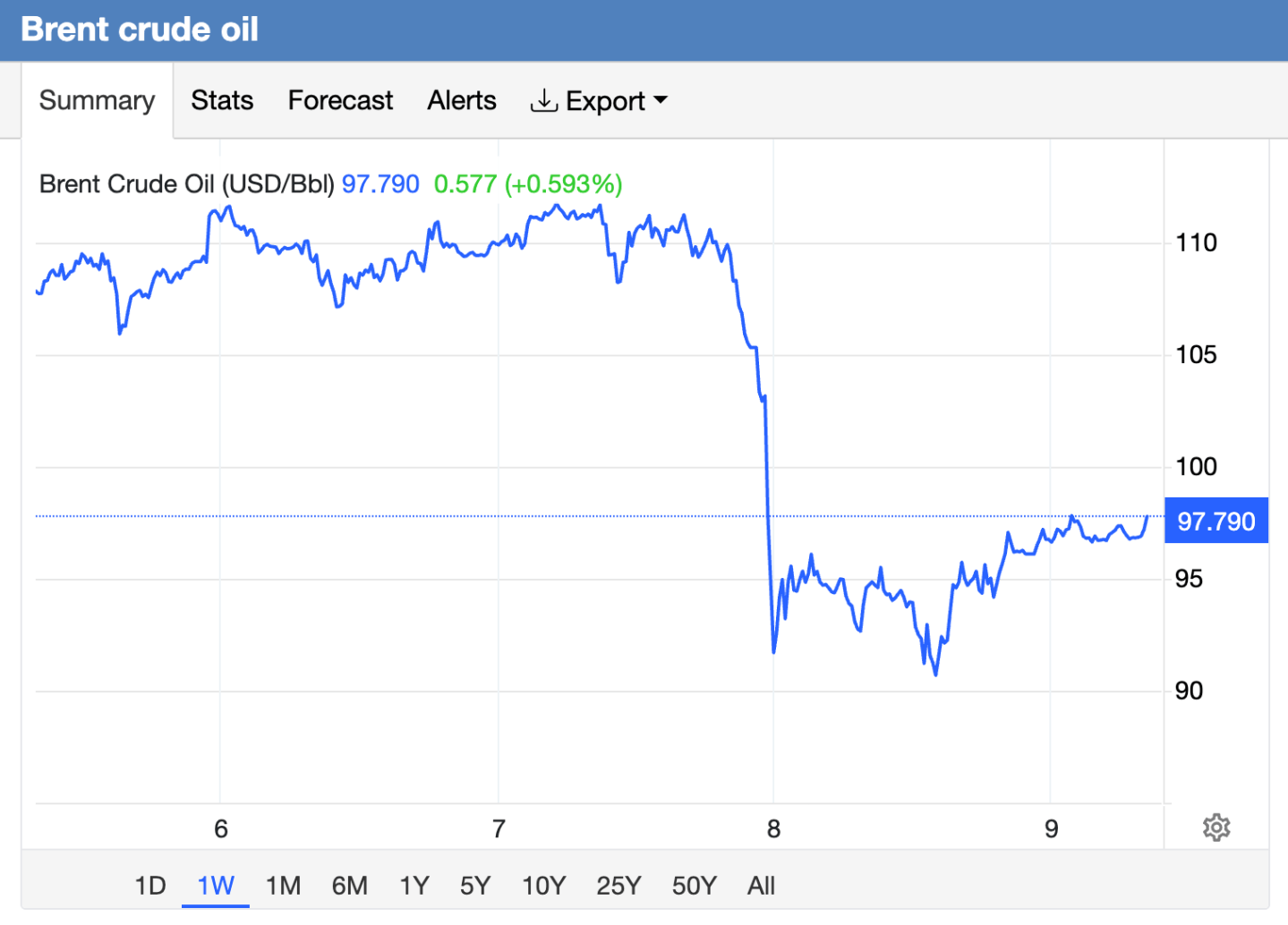
Oil was at $97 per barrel and moving upward this morning. And as surely as night follows day, S&P 500 futures declined on that news, sinking 0.37% before the open in New York. The index was up 2.51% yesterday on the prospect of a ceasefire in the Middle East.
But as dawn broke over Asia and Europe, traders decided to lock in some of their gains from yesterday’s relief rally. The U.K.’s FTSE 100 declined 0.42% in early trading. Europe’s Stoxx 600 slipped 0.55% before lunch. Japan’s Nikkei 225 gave up 0.73%. South Korea’s KOSPI declined 1.61%.
Look on the bright side, Bespoke Investment Group told clients: “Since the lows at the end of March, the S&P has rallied 7% and is now a little more than 2% away from all-time highs.” It is also back above both its 50-day and 200-day moving averages.
“Clients sold the bounce” last week, according to Bank of America’s Jill Carey Hall. Although the S&P 500 was up 3.4% in the period, the “first up-week since the Iran conflict began, clients were net sellers of U.S. equities for the fourth week” in a row, she said in a note. They net sold $2.6 billion.
Bitcoin ticked up nearly 6% in the last five days to $71K. In case you missed it: Adam Back, responding to a New York Times investigation, denied he is Satoshi, again.
The Fed looks hawkish. The Fed published the minutes of its last meeting and Wall Street analysts largely read them as hawkish—meaning that it’s less likely than previously thought to deliver further interest rate cuts this year. That would be negative for stock markets, where investors prefer successive rounds of cheaper money. “The ‘vast majority’ of [Federal Open Markets Committee] participants judged that upside risks to inflation and downside risks to employment are elevated, with many noting that both have intensified amid developments in the Middle East,” EY-Parthenon Chief Economist Gregory Daco said in an email. “Our baseline now incorporates just one 25 basis points rate cut in 2026, in December. It is entirely plausible that the Fed delivers no cuts this year—and that the next policy move could, in fact, be a hike.”
Oil this morning, via TradingEconomics.com:
ONE BIG THING
Warner Bros. Discovery CEO’s $887 million golden parachute
Warner Bros. Discovery CEO David Zaslav should not receive an $887 million parachute payment in Paramount Skydance’s $77.7 billion acquisition of the company, according to advisory firm ISS. Warner execs could collect a total of $1.35 billion after the deal goes through. It’s unclear if Zaslav will have a future role at the combined entity, Fortune’s Amanda Gerut explains.
IRAN
One day old and already on life support
Israel struck Hezbollah positions in Lebanonyesterday. Iran accused Israel of violating the ceasefire, which is less than 24 hours old. Iran also hit positions in the UAE and Kuwait today. As Vice President JD Vance heads to the peace negotiations in Islamabad, Pakistan, Tehran threatened to withdraw from the talks unless Israel desists. Vance, in response, denied that Lebanon was covered by the ceasefire agreement.
The Strait of Hormuz remains closed to all but a few ships granted safe passage by Tehran.
President Trump continued to yell at everybody on social media. If Iran and the U.S. cannot come to a permanent peace, “then the ‘Shootin’ Starts,’ bigger, and better, and stronger than anyone has ever seen before,” he posted.
Good news: There will be “NO NUCLEAR WEAPONS” used in the conflict, he said.
He also denied the various bullet-point lists described in the media as peace proposals from both the U.S. and Iran. “There is only one group of meaningful ‘POINTS’ that are acceptable to the United States, and we will be discussing them behind closed doors.”
What happens next: Iran gains more control or conflict re-escalates
The most likely scenarios moving forward involve either Iran exerting more control over global energy markets than it did before the fighting started, or the current tenuous agreement merely delays another military escalation by days or weeks, geopolitical and energy experts told Fortune’s Jordan Blum. There is a less likely “happy scenario,” where global energy trade returns to normal—but even that would take until the end of this year.
The conflict will hasten a global transition toward renewables, according to Wood Mackenzie, the energy research firm. Countries that are not self-sufficient in energy—most of Asia and Europe—have realized they need to diversify quickly to not have their economies rise and fall on the whims of the White House or Tehran. The company estimates the conflict “could accelerate a structural shift in global energy systems, halving oil and gas import dependence by 2050 and reducing oil demand by 20% and gas demand by 10% relative to the base case. As countries prioritize energy security, demand is increasingly met through electrification, renewables, coal and nuclear, while reliance on globally traded fuels declines,” it said in an email.
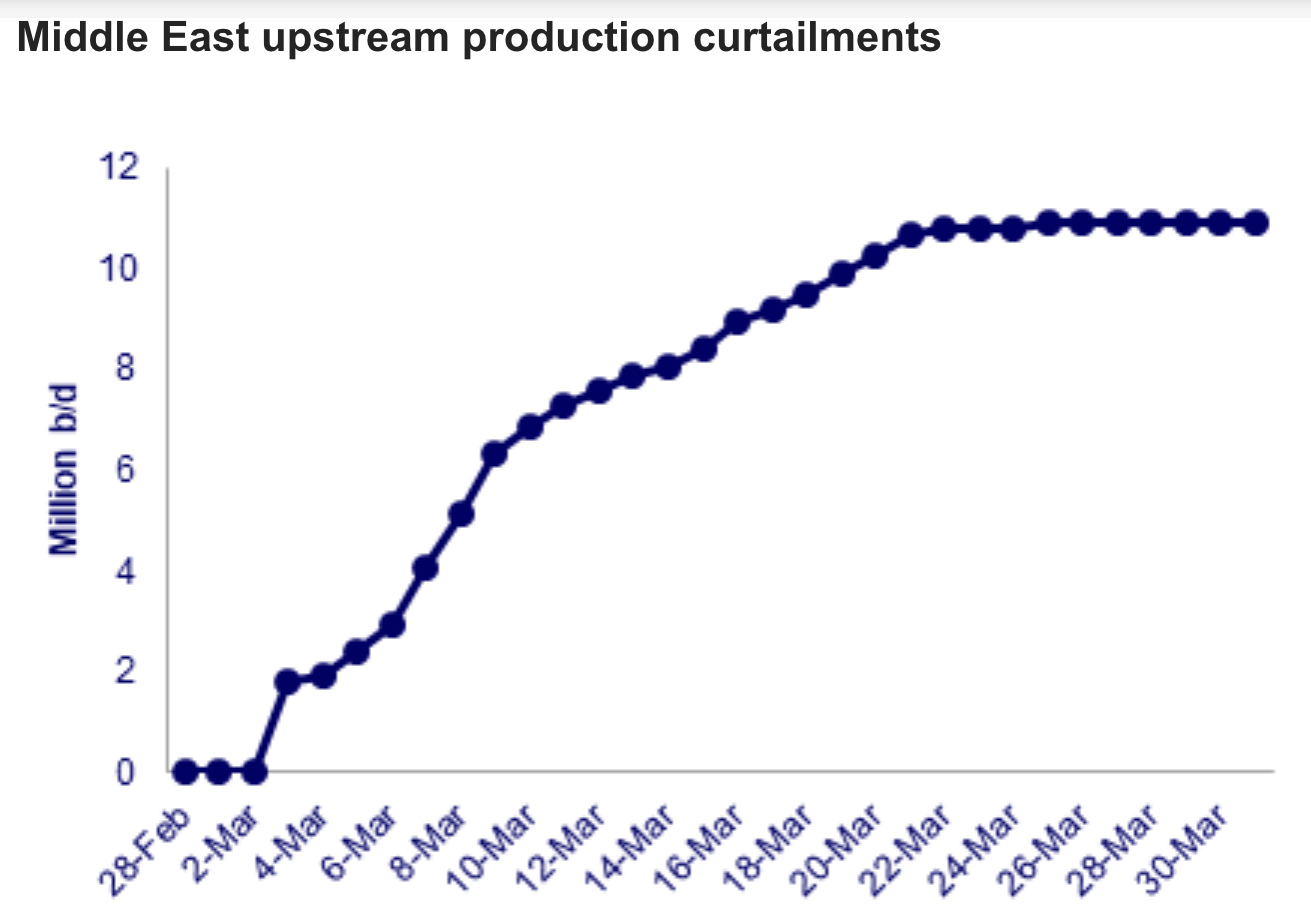
11 million barrels per day are currently “shut-in” (the oil industry term for offline) across the Middle East, Wood Mackenzie says:
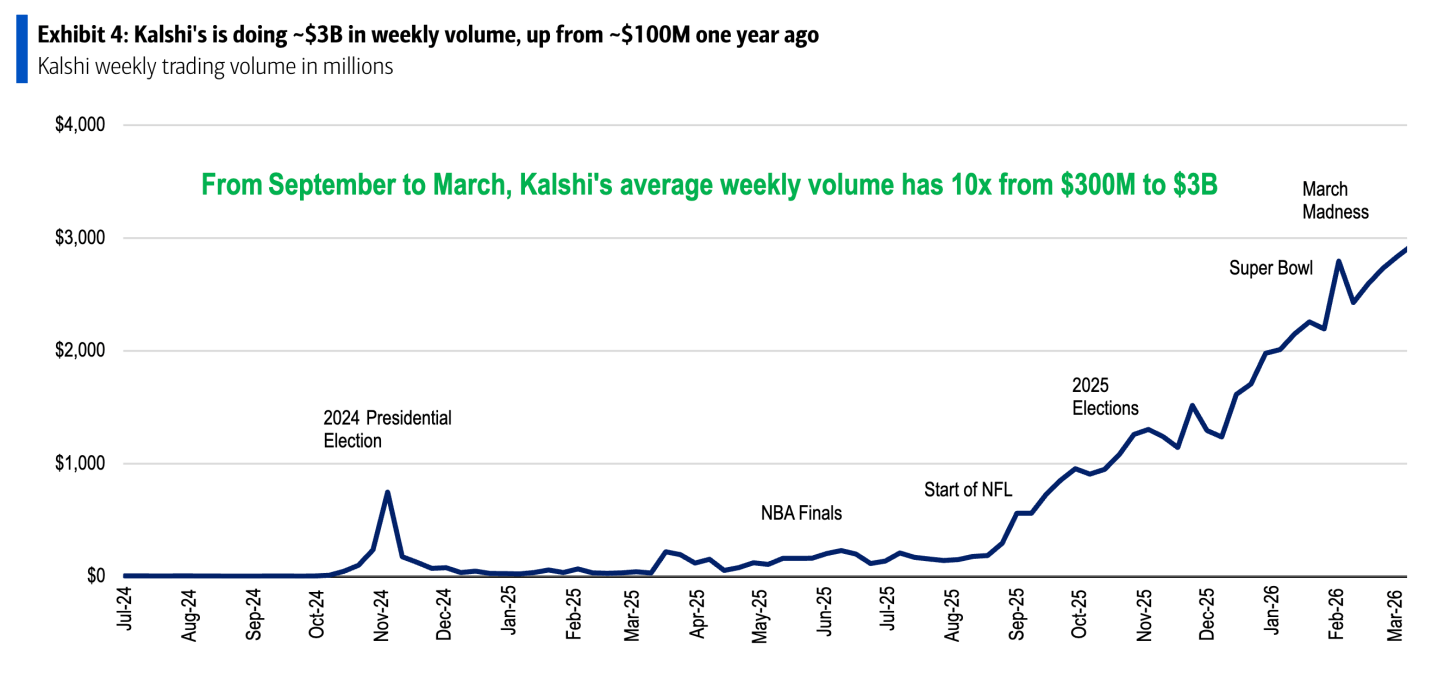
Kalshi has a 90% share of the prediction market and its trading volume has reached $3 billion per week, up from $100 million just a year ago. The company recently raised $1 billion at a $22 billion valuation.
NUMBER OF THE DAY
$1 trillion
AI, caramba: The amount that must be spent on data-center capex in order for every AI vendor’s sales expectations to be met in 2027, according to an estimate by Vivek Arya and colleagues at Bank of America. The problem, Arya argues, is that 2027 AI capex is currently only trending toward $872 billion for that year. Don’t fret, though! Arya notes that capex spending has historically been revised upward as time goes by.
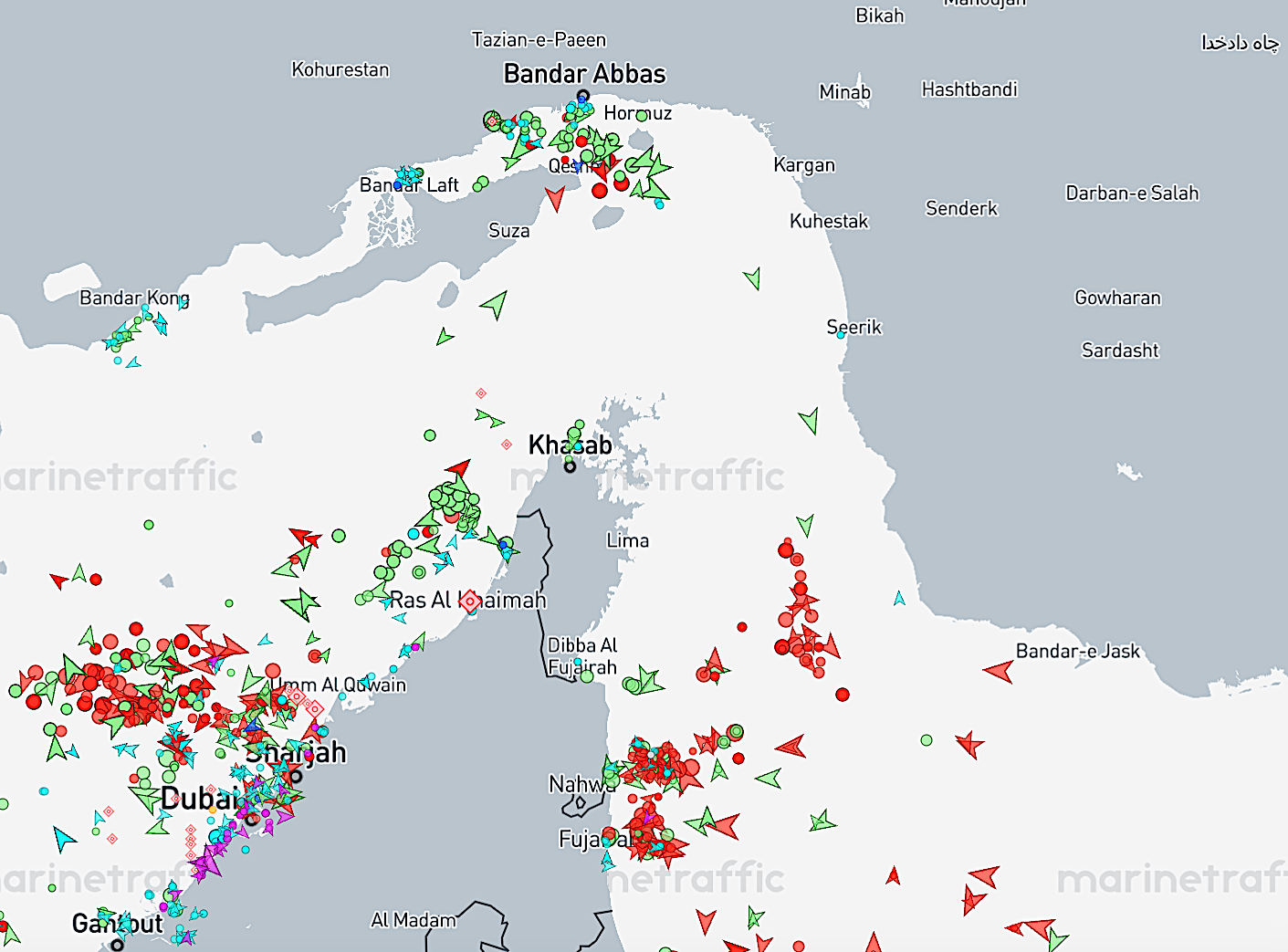
You first? On Day 1 of ceasefire, ships avoided the Strait of Hormuz
This map from MarineTraffic.com shows the narrowest pinch point in the Strait of Hormuz, with Iran to the north and Oman and the UAE to the south, on the first day of the ceasefire. Normally, about 130 ships per day happily sail through the middle of the strait. But that big gap in the middle—and the fact that many ships are hugging the northern shoreline—shows that captains were not eager to test the open-sea route without Tehran’s approval. Only seven ships have made it through the gap in the last 24 hours, according to this live tracker.