Blog

  • Meta just killed a dashboard that let employees compete to be the company’s No. 1 AI token user

    Meta just killed a dashboard that let employees compete to be the company’s No. 1 AI token user

    [ad_1]

    Ever wondered how productive your coworkers actually are? Meta employees don’t have to guess.

    A Meta employee independently created a leaderboard that tracked how many tokens—the basic units of data or words that AI models process—the company’s more than 85,000 employees used, The Information reported on Monday. Called “Claudeonomics,” after Anthropic’s AI model, the leaderboard showed the top 250 token users and awarded employees with titles, such as “Token Legend” and “Cache Wizard.”

    The leaderboard encouraged “tokenmaxxing,” a growing phenomenon in Silicon Valley which emphasizes token usage as a measure of productivity. While every AI model measures tokens differently, OpenAI estimates that one token is equal to about four characters and a single one-to-two sentence prompt requires about 30 tokens. Token usage can imply if workers are optimizing their prompts, or the number of AI agents they are using. 

    But now, the fun is over:, Meta took down the internal AI-use leaderboard just two days after the news broke. 

    The dashboard now reads: “We’ve really enjoyed building this app on Nest for everyone. It was meant to be a fun way for people to look at tokens, but due to data from this dashboard being shared externally, we’ve made the decision to shutter Claudeonomics for now,” reported The Information

    Meta declined to answer Fortune’s questions regarding the dashboard or the move to shut it down, but that doesn’t mean the company is necessarily done tracking tokens. The Information also reported the company has a separate official dashboard for token usage geared toward software engineers, who generally use the most tokens. 

    Last year, Meta’s Chief People Officer Janelle Gale told employees that “AI-driven impact” would be a “core expectation” in 2026, according to Business Insider. In January, the company overhauled its performance review system to incentivize the highest performers with upwards of a 200% bonus. 

    Some employees have put AI agents to work for hours to maximize their token usage. Neither Meta CEO Mark Zuckerberg nor Meta CTO Andrew Bosworth are in the top 250 token users.

    In a 30-day period, total employee usage on the dashboard exceeded 60 trillion tokens, and the highest-ranked individual user averaged 281 billion tokens. Using the least expensive version of Claude Opus 4.6, which costs $5 for every million tokens, that one user alone could have cost Meta more than $1.4 million. 

    Incentivizing high token use is becoming the norm in Silicon Valley. OpenAI has an employee leaderboard, and the company’s top power user used 210 billion tokens over one week in March.

    Last month, Nvidia CEO Jensen Huang, who has been a leading voice on token budgets, shared his vision for token use at Nvidia’s GTC conference in San Jose in March. 

    “I could totally imagine in the future every single engineer in our company will need an annual token budget,” he said. “They’re going to make a few 100,000 a year as their base pay. I’m going to give them probably half of that on top of it as tokens so that they could be amplified 10 times.”

    Just days later, Huang said he would be “deeply alarmed” if an engineer he paid $500,000 a year didn’t use at least $250,000 worth of tokens. He did not specify the importance of the 50% measure. 

    Meta CTO Bosworth said his best engineer is spending the equivalent of his salary in tokens, but he’s “5x to 10x more productive.”

    “It’s like, this is easy money,” Bosworth said. “Keep doing it. No limit.”

    [ad_2]

    Source link

  • The Iran war is exacerbating already high grocery bills

    The Iran war is exacerbating already high grocery bills

    [ad_1]

    The U.S., Israel, and Iran agreed to a two-week ceasefire on Tuesday, but the sticker shock you’ve been feeling every time you go to the grocery store will get worse if the war continues. One of the first places you’ll feel it will be the produce aisle, experts say. 

    A Fortune analysis of produce wholesale prices from USDA data found grocery-cart staples such as tomatoes, bananas, and yellow onions have experienced significant price spikes since the war began. The United Nations reported its global food price index rose by 2.4% in March, the second consecutive month of rising prices.

    “The big recent changes are the war causing spikes in diesel, fertilizer, and chemical prices,” Jeffrey Dorfman, professor of agricultural and resource economics at North Carolina State University, told Fortune

    USDA predicted food prices will increase by 3.6% in 2026, but soaring fuel prices should lead to an only 1% to 2% increase on produce, Dorfman said. 

    How fuel prices affect grocery prices

    To understand how fuel prices are actually affecting your grocery bill, it’s important to look at how much energy affects food prices. Fossil fuels used to make oil, diesel, and fertilizer used in farming and distribution account for between 15% and 30% of produce costs, Dorfman explained. If fuel prices increase by 30%, as they have since the war began, produce, which accounts for about a fifth of a shopping cart, will increase by just 1% to 2%, Dorfman estimated. 

    Shipping costs are also a key factor in price increases. This time of year, most produce in the U.S. comes from Florida, Arizona, California, and Mexico, Dorfman said. If you live farther from these places, and food has to travel longer, you will see more of an effect on prices, he noted. 

    Other factors impacting grocery prices

    Fuel prices are not the whole story.

    Grocery prices were facing upward pressure even before the war in Iran, Dorfman said. A growing labor shortage owing to limited immigration, drought, and overall inflation have all led to price increases, he said. 

    Labor, which contributes to about half of the cost of groceries, was the single biggest contributor to higher prices before the war, Chris Barrett, professor of applied economics and management at Cornell University, who studies international agriculture, told Fortune

    “Labor shortages have been a very real feature of the food value chain over the last 14 months, and that means that they’re having to pay more for overtime,” he said. “They’re having to pay more to get or to keep workers because they’re losing workers as people have been detained or deported.” 

    In October, the Department of Labor filed a report with the Federal Register, estimating that 42% of the U.S. crop workforce is unable to enter the country, faces potential deportation, or is leaving the U.S.

    Another key factor is electricity prices beyond fuel and diesel, Barrett said.  

    “Energy is also embedded in your grocery bill,” he said. “Just think of all the refrigerated trucks you see moving fruits and vegetables and dairy products around. Think of all the refrigeration and freezers in the grocery store. Think of all the electricity running the machinery that does the processing and the packaging.

    “All of those higher electricity costs turn into an added expense on your grocery store bill, and that was already an issue before the war,” he continued.

    Tariffs also raised produce prices before the war, Barrett said. 

    “Tariffs are a tax right on the top,” he said. “The importer is paying a duty to the government to import tomatoes from Mexico, or to import broccoli from Chile, during our winter. That passes straight through to you and me at the grocery store checkout.”

    What to expect over the next few months

    Grocery prices could get much higher if the war continues, Dorfman said. 

    “It’s not like we can’t ship the oil now, but we’ll catch up once this is over. You can return to normal amounts of oil being shipped, but you can never really catch up,” Dorfman said. “I certainly can’t predict how long the war is going to last, but the longer it lasts, the longer oil prices will stay high, and the slower they will be in returning to normal.” 

    While the current effects of the war on grocery prices may be mild, customers could feel the pain for the rest of the year if the war continues another two or three months, Dorfman said. This is, in part, because most crops only grow once a year. Therefore, if farmers use higher-cost fertilizer to grow products like corn this spring and summer, it could affect prices until the next growing season. 

    If the war does not last much longer, food prices may not go up, Peter Zaleski, an economics professor at Villanova University, told Fortune. While crop prices tend to be volatile, other foods may not change in the short term. 

    “Even especially at the retail level, firms are loath to raise prices,” Zaleski said. “They’re probably in a wait-and-see mode to see for certain,” especially when it comes to factory-processed food. Other manufacturers may respond with shrinkflation, or offering a smaller amount of product for the same price, he said. 

    [ad_2]

    Source link

  • Morgan Stanley’s Bitcoin ETF began trading. An analyst put it in the top 1% of ETF launches

    Morgan Stanley’s Bitcoin ETF began trading. An analyst put it in the top 1% of ETF launches

    [ad_1]

    A slew of Bitcoin ETFs have hit the market since the products were first approved in the U.S. in 2024, but so far one sector has remained on the sidelines—major U.S. banks. That changed Wednesday with the launch of MSBT, a Bitcoin ETF offered by Morgan Stanley.

    The spot ETF, which features an industry low with a sponsor fee of 0.14%, saw over $25 million in trading volume in its first half day of trading. In an X post, Bloomberg senior ETF Analyst Eric Balchunas put MSBT’s debut in the top 1% of all ETF launches. 

    The bank’s crypto plans don’t end with Bitcoin, either. Morgan Stanley also filed for Ethereum and Solana trusts in January.

    Bitcoin ETFs currently hold over $100 billion in cumulative assets under management as of Tuesday, according to data from CoinShares. The largest Bitcoin ETF belongs to BlackRock, which has over $53 billion in net assets in its IBIT fund. 

    Bitcoin’s newest ETF arrives at a time when investor interest in crypto, and risky assets in general, is relatively muted. Demand for Bitcoin ETFs recovered slightly after posting a sluggish start to 2026, and the funds have cumulatively seen over $1 billion in net inflows on the year, according to data from CoinShares.

    Morgan Stanley’s wealth management arm, which has about 16,000 advisors, has recommended clients allocate 2% to 4% of their portfolios to crypto. The bank’s clients were previously able to access third-party Bitcoin ETFs. Now, Morgan Stanley will be able to direct clients to its own product.

    For crypto boosters, MSBT’s launch was yet more confirmation of crypto’s relevance to the financial sector. 

    “Institutional priorities have matured; MSBT is the clear response to this second wave of digital asset adoption,” Coinbase Institutional co-CEO Brett Tejpaul told Fortune. Coinbase and BNY Mellon were both selected as custodians for the ETF.

    But it’s yet unclear if Morgan Stanley breaking the ice on bank-led crypto ETFs will open a floodgate of new crypto funds. Despite the fact that the “risk of being first is gone,” CoinShares senior research associate Luke Nolan said in a text, “banks with strong anti-crypto reputations are unlikely to follow quickly … I [don’t] think Goldman [will] join the ETF game, for example. They seem to be going more for the tokenization side of things (although this could prove incorrect).”

    [ad_2]

    Source link

  • Warner Bros. CEO David Zaslav’s $887 million golden parachute gets ripped by proxy advisory firm ISS

    Warner Bros. CEO David Zaslav’s $887 million golden parachute gets ripped by proxy advisory firm ISS

    [ad_1]

    An advisory firm that counsels the largest institutional investors on how to vote at shareholder meetings is recommending investors support Warner Bros. Discovery’s $77.7 billion acquisition by Paramount Skydance but is against a golden-parachute proposal that would see executives collect a total of $1.35 billion after the deal goes through. 

    In a report issued on Wednesday, Institutional Shareholder Services (ISS) said support for the “extraordinary golden parachute” proposal, which it valued at $886.8 million in payments for Warner Bros. CEO David Zaslav and $466.2 million for the other executives, wasn’t warranted. ISS took issue with an “excise tax grossup” estimate of $335 million for Zaslav and hundreds of millions he stands to collect just because the deal between the two companies is happening.

    It’s unclear if Zaslav will have a future role at the combined entity or with one of its affiliates or if he will continue on in a senior role. When Warner Bros. was weighing rival offers from David Ellison’s Paramount Skydance and Netflix last year, Ellison and his father, Oracle co-founder Larry Ellison, dangled a compensation package worth “several hundred million dollars” to Zaslav, according to the deal disclosures. David Ellison also floated Zaslav becoming chairman of the combined company’s board, and then upped it to a co-CEO and co-chairman title. 

    As of Warner Bros. proxy report filed last month, none of the executive officers have made an employment deal with Paramount, the combined company, or any of its affiliates. If Zaslav stepped into a chairman or CEO role, his golden parachute pay wouldn’t be consolation for losing a job, as is common, since he would be moving into another role at the combined company.  

    “The value disclosed in the golden parachute table for CEO Zaslav at over $886 million represents one of the highest golden parachute estimates ever observed, though the proxy notes that this value may decline depending on merger timing,” ISS wrote in its report to investors. 

    The proxy advisory firm said it had “significant concerns” about the $335 million agreement to cover an excise tax Zaslav will incur as a result of the acquisition, describing the so-called grossup agreement as “an extraordinary cost” inconsistent with common market practice. An excise tax gross-up payment from a company to an executive is rare. The payments cover a 20% additional tax burden triggered by the IRS when an executive collects more than three times their average total compensation. The excise gross-up payment gives the executive enough additional cash so that they’re left as if the excise tax never hit them. The other Warner Bros. executives are not getting an excise tax, ISS noted.

    In addition to the special tax treatment for Zaslav, ISS found that the overall parachute payment for him is mostly the result of what are called single-trigger benefits. A single-trigger on an executive’s stock-based equity compensation means that the equity qualifies for accelerated vesting based on one event, which is usually when a company’s ownership changes. Most large-cap companies have double-trigger vesting, meaning there needs to be both a change-in-control of the company and that the executive loses their job. The awards for executives other than Zaslav are subject to double-trigger vesting, but most of Zaslav’s outstanding equity will just automatically accelerate based on the acquisition, ISS wrote.

    That includes awards the Warner Bros. board gave Zaslav in January, including more than 3 million stock options and 2 million restricted stock units that ISS valued at a total of $107 million, although the options could potentially be worth less. ISS’s report states that more than 94% of the value of Zaslav’s $887 million in payments was because of the tax gross-up payment and equity that will automatically accelerate just because of the deal. 

    Warner Bros. disclosed that if the deal were to take place in 2027, no excise tax payment would happen for Zaslav. However, Paramount Skydance and Warner Bros. are working to complete the merger as soon as possible and expect it to close by the end of the third quarter of 2026 in September.

    Warner Bros shareholders will vote on the Paramount acquisition and on executives’ golden parachute payouts on April 23, though votes on the payouts are purely advisory and non-binding.

    Warner Bros. did not respond to a request for comment on ISS’s recommendation.

    [ad_2]

    Source link

  • Within a day, the Iran-U.S. ceasefire began breaking down. Markets shrugged

    Within a day, the Iran-U.S. ceasefire began breaking down. Markets shrugged

    [ad_1]

    Iran’s parliamentary speaker, Mohammad Bagher Ghalibaf, said Wednesday that three clauses of the 10-point ceasefire framework with the United States had already been violated, despite negotiations not beginning.

    Ghalibaf cited continued Israeli strikes in Lebanon; a drone shot down over Iran’s Fars province; and what Tehran called a denial of its right to uranium enrichment. “In such situation, a bilateral ceasefire or negotiations is unreasonable,” he wrote in a statement posted to X. The Strait of Hormuz remained largely blocked, with only four tanker transits recorded on the day, according to S&P Global Market Intelligence.

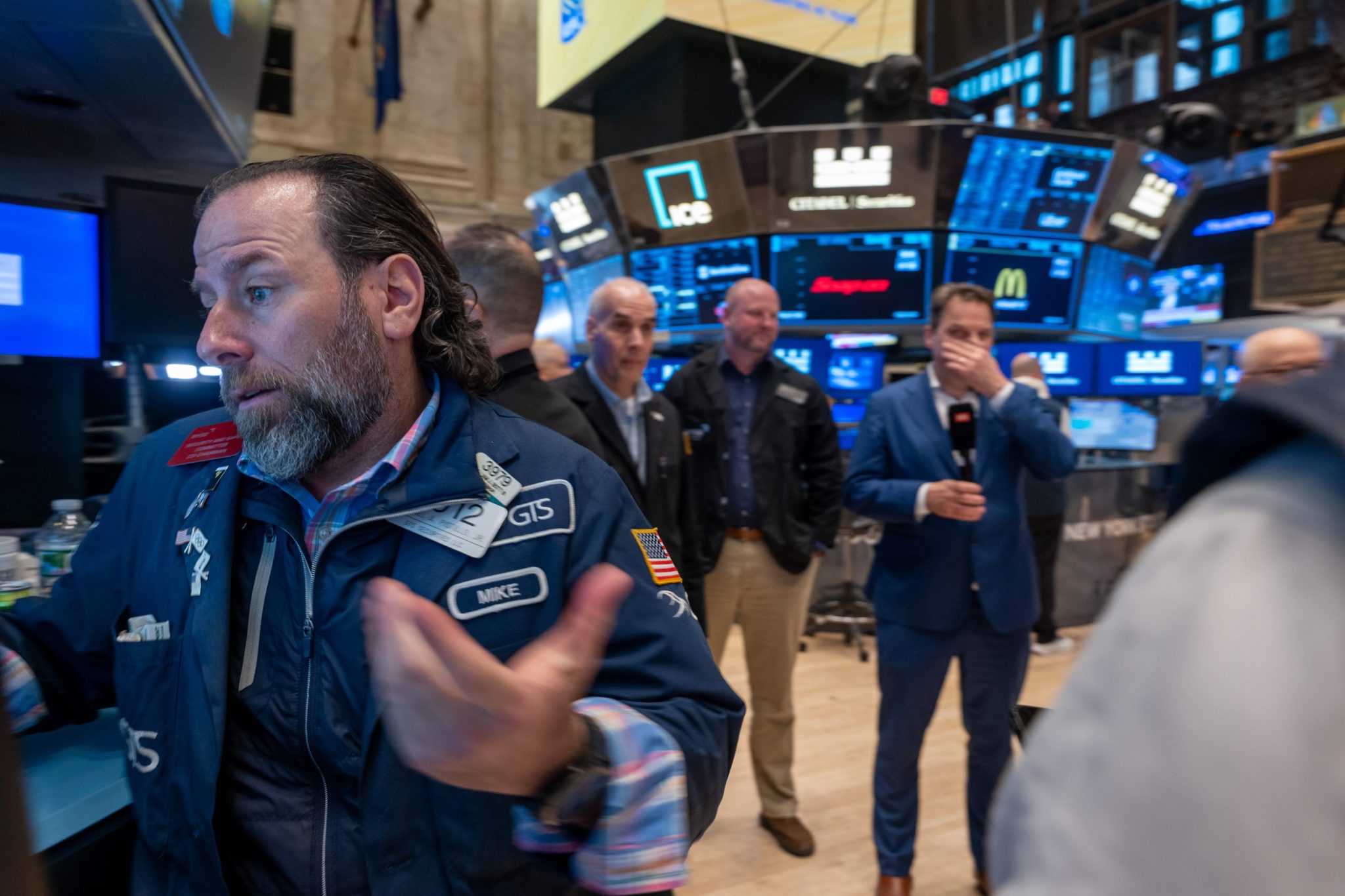
    Markets barely flinched on the news, with crude ticking up slightly higher and stocks falling only 0.3%. Crude has posted one of its sharpest single-day drops on record, and global equities have ripped higher on peace-deal euphoria. 

    The statement throws immediate uncertainty over a deal that is barely 24 hours old and exposes a fundamental disagreement over what was actually agreed to. The U.S. and Iran are heading into talks in Islamabad, Pakistan, on Saturday working to Frankenstein some agreement between two different documents: Iran’s 10-point plan and the White House’s 15-point plan. White House press secretary Karoline Leavitt said Wednesday there was no way President Trump would accept Iran’s version, which demands Tehran retain control over the Strait of Hormuz and receive reparations for the war.

    Trump moved Wednesday to dismiss the idea that any framework other than his own was on the table. In a post on Truth Social, he wrote: “Numerous Agreements, Lists, and Letters are being sent out by people that have absolutely nothing to do with the U.S.A./Iran Negotiation, in many cases, they are total Fraudsters, Charlatans, and WORSE.” It was unclear whether Trump was referring to Ghalibaf’s statement; to an earlier letter reported by CNN that the White House said carried no official authority; or to both.

    Lebanon becomes the flash point

    The single biggest point of contention, and now the most violent, is Lebanon.

    Israel’s military said Wednesday it had struck more than 100 Hezbollah command centers and military sites in 10 minutes, in what it called the largest wave of strikes in the conflict. The southern suburbs of Beirut, southern Lebanon, and the eastern Bekaa Valley were all targeted. Lebanon’s health ministry said at least 112 people were killed and 837 injured while the country’s civil defense put the toll higher, at 254 dead and more than 1,100 wounded. Hospitals are overwhelmed in Beirut, while rescue crews reported people trapped under the rubble of collapsed buildings.

    The strikes came hours after Israeli Prime Minister Benjamin Netanyahu’s office publicly denied Pakistan’s assertion—which Islamabad had used as a basis for mediating the U.S.-Iran ceasefire—that the deal also covered the Lebanese front.

    Iran had drawn its line directly on this question. Foreign Minister Abbas Araghchi said Wednesday the ceasefire with the U.S. must include a pause in Israel’s conflict with Hezbollah. “The Iran-U.S. Ceasefire terms are clear and explicit: the U.S. must choose—ceasefire or continued war via Israel. It cannot have both,” Araghchi wrote on X. “The world sees the massacres in Lebanon. The ball is in the U.S. court.”

    The White House sees it differently. “Lebanon is not part of the ceasefire. That has been relayed to all parties in the ceasefire,” Leavitt told reporters.

    Hezbollah, which has not claimed any attack since the ceasefire was announced, said Wednesday that the group was on the “threshold of a major historic victory” and warned displaced families to wait for a formal ceasefire announcement before trying to return home. Israeli military spokesman Effie Defrin said Israel would respect the ceasefire with Iran but warned: “If we need to go back and attack Iran, we will.”

    The Fortune 500 Innovation Forum will convene Fortune 500 executives, U.S. policy officials, top founders, and thought leaders to help define what’s next for the American economy, Nov. 16-17 in Detroit. Apply here.

    [ad_2]

    Source link

  • The Iran war is either concluding with the world worse off, or escalation is just delayed again

    The Iran war is either concluding with the world worse off, or escalation is just delayed again

    [ad_1]

    A fragile ceasefire agreement in the war began with bombs continuing to explode in Lebanon and contradictory statements about whether Iran will continue to control the critical Strait of Hormuz energy chokepoint.

    But the most likely scenarios moving forward involve either Iran exerting more control over global energy markets than it did before the fighting started in March, or the current tenuous agreement merely delaying another military escalation by days or weeks, geopolitical and energy experts said.

    There is a less likely, “happy scenario” where global energy trade returns to normalcy—but even that will take until the end of this year because of supply chain challenges—and where Iran is left weakened and militarily degraded for the long term, said Bob McNally, former White House energy advisor under George W. Bush and founder of Rapidan Energy Group.

    “We think the odds favor this ceasefire either not ever sticking or unraveling if it does,” McNally told Fortune, arguing the April 7 announcement of a two-week ceasefire was vague, fragile, and contradicted by Iran—not exactly justifying oil prices falling by almost $20 per barrel overnight.

    “The only thing we know for sure is the president called off a larger attack,” McNally said. “I am amazed at the market’s willingness to price in relief so willingly. While we do see a ceasefire as an ultimate end state, we don’t think we’re there yet, and we think this is going to get worse before it gets better.”

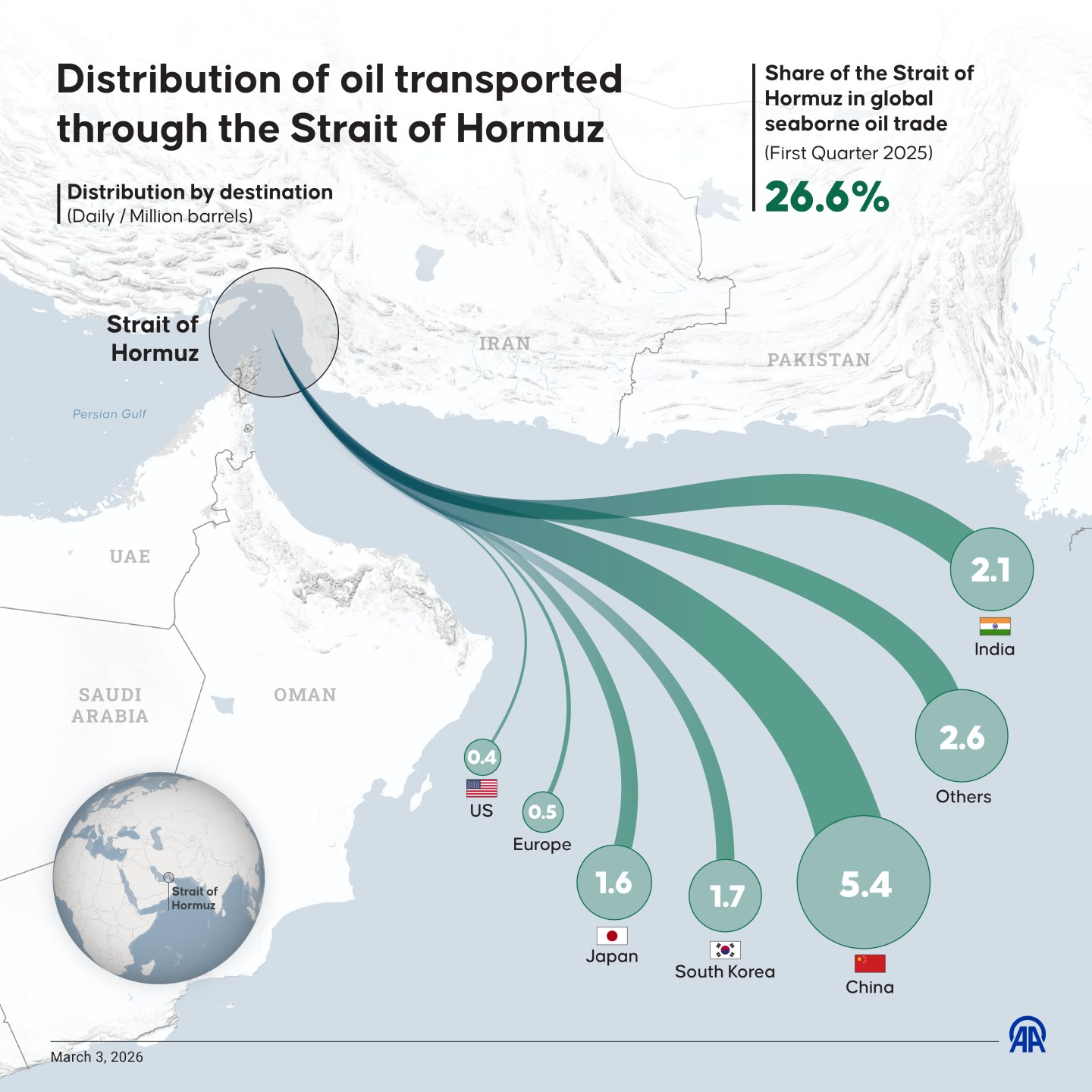
    Hours after President Donald Trump issued profanity-laden messages threatening that Iran’s “whole civilization will die” in one night on April 7, he announced a two-week ceasefire in exchange for opening the narrow Hormuz waterway through which about 20% of global energy supplies transit. Iran agreed to open the strait but only “via coordination with Iran’s Armed Forces and with due consideration of technical limitations.”

    Iran said it could continue to charge tolls per vessel, while Oman, which is situated on the other side of the strait, said “no fees will be imposed”—yet another contradiction.

    Regardless, Israel, which was unhappy about the ceasefire, continued to attack Lebanon on April 8, and Iran kept the strait closed and threatened to withdraw from the ceasefire.

    If the ceasefire does hold, Vice President JD Vance, special envoy Steve Witkoff and Jared Kushner are scheduled to travel to Islamabad for in-person negotiations with Iran on April 11, White House press secretary Karoline Leavitt said.

    Getty Images

    What happens next

    Rystad Energy chief economist Claudio Galimberti sees an enduring ceasefire as the most likely scenario, but it won’t be pretty. Iran is likely to assert its control over the strait for at least a few months before any broader, long-term deal is reached with the U.S. and neighboring, oil-producing Gulf states.

    “The normalization of the Strait of Hormuz is still far, far away,” Galimberti fold Fortune. “It’s a very fragile situation.”

    He agreed that regular flows through the strait are unlikely at least until late 2026. In the meantime, a stronger ceasefire could mean the resumption of about one-third of the vessel traffic through the strait.

    Traffic for oil, liquefied natural gas, fertilizer for agriculture, hydrogen for semiconductors, and petrochemicals plunged to 5% of typical flows in March and only grew to nearly 10% for a few days in early April before ceasing again on April 8.

    Only a single Iranian-linked oil tanker passed through the strait on April 8, said Rohit Rathod, senior analyst with the Vortexa cargo tracking firm.

    A lot of work remains. First, the strait would have to be cleared of mines and emptied of the hundreds of ships that have remained trapped for over a month. Then, vessels would need to resume their complicated, global logistical dance. And, eventually, Saudi Arabia, Iraq, Kuwait, the United Arab Emirates, and other Gulf states would restart their oil and gas production volumes—all of which would take many months, Galimberti said.

    Oil prices—down to about $94 a barrel from over $110 the day prior—could continue to fall but remain elevated from pre-March levels by at least $10 per barrel longer term, including from higher insurance costs on tanker journeys, he said.

    “The political risk premium is going to be embedded for a long time,” Galimberti said.

    A return to the normal transit system of goods and commodities means ensuring insurance availability, commercial trade financing, and the resumption of empty, inbound “ballasting” vessels.

    While the currently trapped ships will want to exit as quickly as they can, resuming other traffic is much harder, said Alan Gelder, senior vice president for refining, chemicals, and oil markets with the Wood Mackenzie energy research firm.

    “[Inbound] ballasting vessels are unlikely to enter via the Strait of Hormuz any sooner than a ‘just in time’ logistics basis, at risk of becoming trapped if hostilities resume,” Gelder added.

    As for the liquefied natural gas (LNG) exports, which mostly come from Qatar, shipments could be back up and running by the end of the summer, but more than 15% of its export capacity will remain offline for years because of serious damages inflicted from Iranian attacks.

    In the meantime, McNally sees investors and energy traders overreacting to the ceasefire—as evidenced by the big spike in stock markets and the opposite drop in oil prices.

    “The market was eager to hear a ceasefire had been reached. And the market continues to underappreciate the gravity and the risk of a prolonged disruption from Hormuz,” McNally said. “I still think there’s an unwarranted, large reservoir of hope and optimism that you see reflected in prices today.”

    [ad_2]

    Source link

  • Analysts warn TACO trade won’t last after an Iran ceasefire wipes out weeks of losses in markets

    Analysts warn TACO trade won’t last after an Iran ceasefire wipes out weeks of losses in markets

    [ad_1]

    President Donald Trump again stepped back from the brink, and traders are cashing in on what they called “TACO Tuesday.”

    After threatening that “a whole civilization will die tonight” early Tuesday, just two hours before his 8 p.m. deadline, Trump announced a two-week ceasefire on the condition that Iran reopen the Strait of Hormuz and restart the flow of oil. While doubts remain about the agreement and whether oil flows will actually restart, the president’s about-face still managed to lift markets.

    A $1.5 trillion rally lifted all three major indexes and brought some optimism to markets following weeks of uncertainty over Middle East turmoil. Oil fell by 16% to below $100 per barrel while equities surged. The Nasdaq led gains with a 3.55% jump, followed by a 2.7% increase for the S&P 500, and a 1,200 point, or 2.6% bump, in the Dow Jones industrial average. The surge reversed weeks of losses—the S&P 500 earlier this week was down 4% since the Iran war started in late February.

    Online, traders rejoiced as the reliable TACO trade, shorthand for “Trump always chickens out,” panned out once again.  

    “Knowing Trump will [TACO] is the equivalent of me knowing I need to drink water to survive,” wrote one commenter on the trading-focused Reddit forum SmallStreetBets.

    Financial analysts tend to agree with the retail traders—with some caveats. 

    “This could be a boom for tech stocks now with this off-ramp in Iran,” Wedbush analyst Dan Ives told Fortune

    Ives went further in a Wednesday note, saying more than one month of Iran turmoil has created opportunities for traders to benefit. 

    “We continue to strongly believe the nervous geopolitical backdrop over the past few months has created an oversold tech environment for Mag 7, software names, and many tech winners in the AI revolution,” Ives wrote. 

    What is the TACO trade?

    The TACO trade was born last year when Trump switched course after announcing broad “Liberation Day” tariffs on nearly all U.S. trading partners. At the time, the S&P 500 plunged nearly 20% before rebounding sharply after Trump paused them. Retail investors, in particular, capitalized on the so-called TACO trade following the Liberation Day tariffs, putting a record $3 billion into equities as the S&P 500 sank 5%.

    Still, others cautioned that while the TACO trade is alive and well now, that doesn’t mean it will always deliver.

    “Investors are noticing the pattern, and may they extrapolate that pattern into the future. I think that’s reasonable, but we would caution not to over extrapolate that,” Michael Reynolds, vice president of investment strategy at Glenmede Investment Management, told Fortune.

    Reynolds added that while the trade has been consistent for now, investors should not be confident it’s foolproof.

    “We would caution that if investors were to completely see through all of those statements, they may be setting themselves up for a nasty surprise in a situation where there is a follow through,” he said.

    [ad_2]

    Source link

  • Phones banned at the bar: Why Gen Z is actually cheering the no-screen dining movement

    Phones banned at the bar: Why Gen Z is actually cheering the no-screen dining movement

    [ad_1]

    The next time you’re out to dinner, someone might not only ask to take your jacket, they may want you to hand over your phone, too. The number of bars and restaurants establishing a phone-free environment is growing, per Axios—a change that appeals to younger patrons.

    Axios found that at least 11 states have individual restaurants or bars with a form of phone restriction or digital detox. Scrolling a menu instead of your phone is thought to create a more intimate setting, lead to more focus on food, and protect patron privacy.

    A recent survey from Talker Research shows a significant number of people are putting their phones away and probably don’t want to see someone taking pictures of their food:

    • 63% of Gen Z says they intentionally disconnect; 57% of millennials say the same.
    • Even older crowds are on board—42% of Gen X and 29% of boomers said they unplug.

    A needed break: Data from Consumer Affairs showed Americans spend an average of 4.5 hours per day on their devices. Another revealed that 86.5% of phone use involves social networking and texting during meals.

    It’s chains, too: The upscale supper club Delilah’s has a no-phones policy. Even some Chick-Fil-A locations are offering free ice cream as an incentive for turning over your phone while eating.—DL

    This report was originally published by Morning Brew.

    The Fortune 500 Innovation Forum will convene Fortune 500 executives, U.S. policy officials, top founders, and thought leaders to help define what’s next for the American economy, Nov. 16-17 in Detroit. Apply here.

    [ad_2]

    Source link

  • Gen Z workers who fear AI will take their job are actively sabotaging their company’s AI rollout

    Gen Z workers who fear AI will take their job are actively sabotaging their company’s AI rollout

    [ad_1]

    AI’s capabilities are growing more sophisticated by the day, and business leaders are rushing to adopt the technology to remain competitive. 

    But one obstacle to AI adoption is catching companies off guard: their own workers.

    A new report published Tuesday from enterprise AI agent firm Writer and research firm Workplace Intelligence finds a significant share of employees are actively trying to sabotage their company’s AI rollout. The report—a survey of 2,400 knowledge workers across the U.S., the U.K., and Europe, including 1,200 C-suite executives—found 29% of employees admit to sabotaging their company’s AI strategy. That number jumps to 44% among Gen Z workers.

    The sabotage entails entering proprietary information into public AI tools, or using unapproved AI tools. Some employees report outright refusing to use AI tools. Others have even admitted to tampering with performance reviews or intentionally generating low-output work to make AI appear less effective. 

    As AI becomes ubiquitous across society, many people are growing to hate it. A recent NBC News poll found just 26% of registered U.S. voters have a positive view of AI, while 46% hold a negative view. 

    Meanwhile, business leaders and AI experts have issued successive warnings about the threat AI poses to human workers. Anthropic CEO Dario Amodei said AI could snatch half of entry-level, white-collar jobs, roles many Gen Z workers hold today. Microsoft AI chief Mustafa Suleyman issued a similar warning earlier this year, saying all white-collar work could be automated in 18 months.

    An Anthropic study released last month found AI is already theoretically capable of completing the majority of tasks associated with computer science, law, business, and finance, and other major white-collar fields. As the fear of AI automation slowly materializes into reality, many workers, including a sizable chunk of Gen Z employees, are pushing back against the assumed doomed fate of their careers.

    Why employees are sabotaging AI—and why it’s backfiring

    Of those workers who admitted to sabotaging their company’s AI technology, 30% cited fear AI would take their job. “FOBO”—fear of becoming obsolete—is widespread. KPMG similarly found in November four in 10 workers fear AI could take their job. But ironically, the survey found workers who refuse to adopt AI are actually more vulnerable to layoffs than those embracing the technology. Sixty percent of executives said they’re considering cutting employees who refuse to adopt AI. Another 28% are concerned about the technology’s security risks. Twenty-six percent think the technology diminishes their creativity or value within the company. Another 26% cite poorly-executed company AI strategy.

    Even as some companies rush to implement AI agents, an MIT report released last year also found 95% of generative AI pilots at companies are failing not because of the quality of the technology, but the learning gap between tools and organizations.

    Yet as some employees drag their feet, researchers found the workers actively implementing AI into their workflows are getting ahead. Dan Schawbel, managing partner at Workplace Intelligence, said AI “super users,” workers that have mastered generative AI to a high degree of proficiency, are being rewarded for their work more so than laggards. 

    “The super-users we surveyed were around 3x more likely to have received both a promotion and pay raise in the past year, compared to employees who have been slow to adopt these tools,” Schawbel said in a statement. “Top AI users are also saving nearly 9 hours per week using AI—4.5x more than the 2 hours a week reported by AI laggards.”

    A staggering 77% of executives said those employees who refuse to become proficient in AI won’t be considered for promotions or leadership roles as business leaders aim to steer the future of their companies into the future with AI, according to the Writer and Workplace Intelligence report. And 69% are planning AI-related layoffs. But May Habib, CEO and cofounder of Writer, said the most successful companies are not relying on layoffs: They’re optimizing the balance between agentic AI and human capabilities.

    “The leaders who are putting in the work to radically redesign operations with human-agent collaboration at the center are the ones compounding their advantage in ways competitors can’t replicate,” Habib said in a statement.

    [ad_2]

    Source link

  • Donald Trump Jr. says ‘the biggest names’ think Europe is a ‘disaster’ that needs to be fixed

    Donald Trump Jr. says ‘the biggest names’ think Europe is a ‘disaster’ that needs to be fixed

    [ad_1]

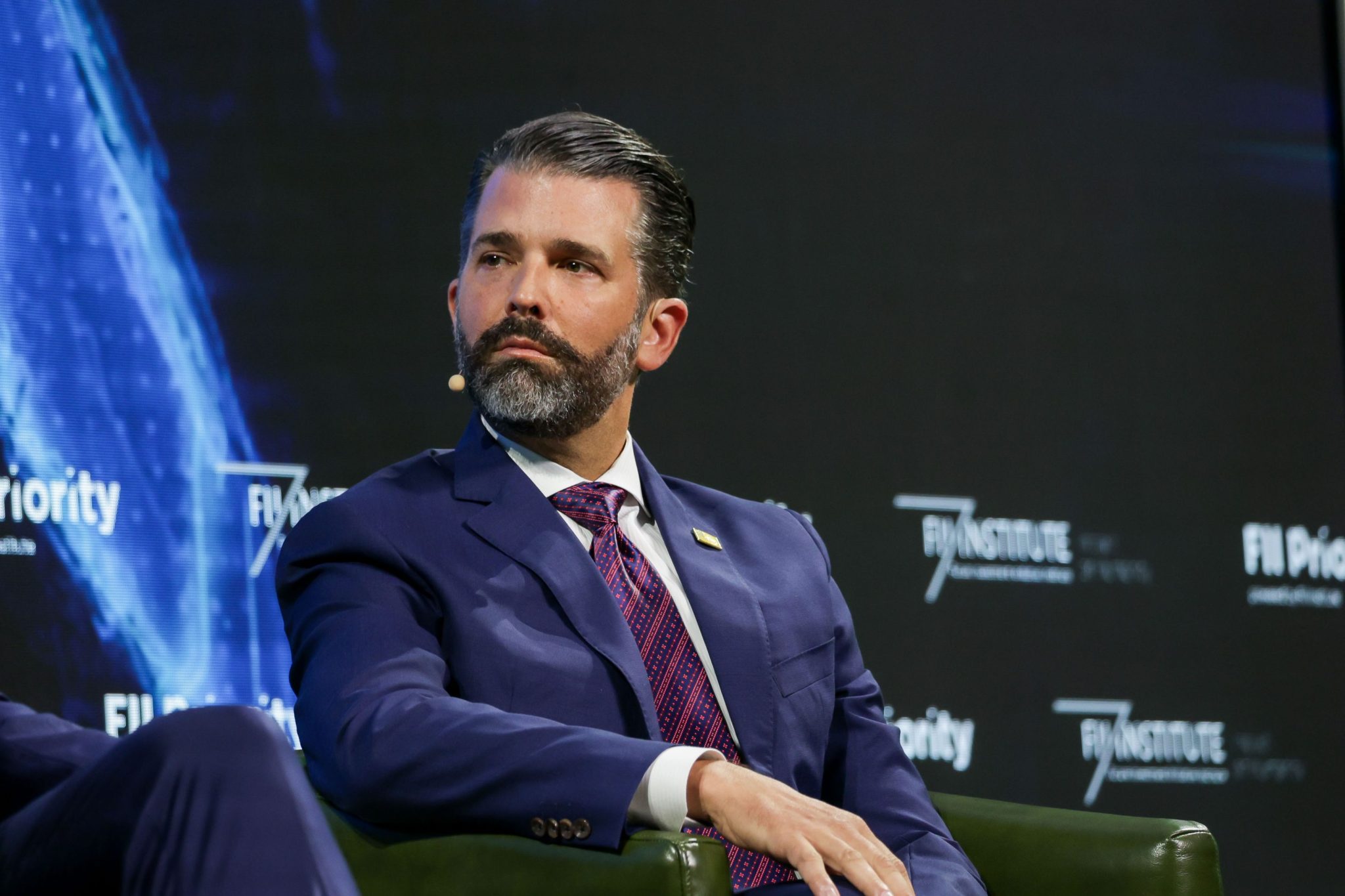
    Donald Trump Jr. lashed out at the European Union on Tuesday, saying its liberal policies were discouraging investment and predicted a “major fracture” between the bloc’s eastern and western member states.

    The eldest child of the U.S. president said that “the biggest players, the biggest names in banking and finance, in tech and AI across the board” believe that “Europe is a disaster,” but “the disaster that they feel also needs to be fixed.”

    “The only way it gets fixed, though, in my opinion is if they (Europe) get out of of their own way,” Trump Jr. said during a business discussion in the northwestern Bosnian city of Banja Luka, according to video recordings provided by the official television RTRS television.

    Banja Luka is a key city in Republika Srpska, the Serb-run part of Bosnia, whose leaders are staunch admirers of U.S. President Donald Trump and Russian President Vladimir Putin.

    The press office of the U.S. Embassy in Sarajevo, Bosnia’s capital, told The Associated Press in an email that Trump Jr. came “in a private capacity.” The visit was nonetheless seen here as a boost for the Serb separatist political leadership.

    Trump Jr.’s trip came as U.S. Vice President JD Vance traveled to Hungary to support the reelection bid of nationalist Prime Minister Viktor Orbán before a highly-contested vote next weekend.

    Bosnian Serb politician and former Republika Srpska president, Milorad Dodik, an ally of Orbán, said on X that the two visits “signal an important shift of the U.S. administration under the leadership of President Trump and the care for this part of Europe regarding the position of Christians.”

    Trump Jr,, in Banja Luka, said that eastern European countries “have a work ethic that has (withstood) some of the ‘woke’ nonsense that has really been a parasitic thing in the mind in Western Europe.”

    “I see that creating major fractures in the European Union between those few countries in eastern Europe that actually still believe in common sense, and Western Europe that’s clearly missing in the political discourse these days,” he said.

    Dodik has repeatedly called for the Serb-run half of Bosnia to break off from the rest of the country that is run by Bosniaks, who are mainly Muslims, and Croats. The Serb bid to form its own state and unite with neighboring Serbia was seen as the main cause of the 1992-95 ethnic war that killed more than 100,000 before ending in a U.S.-brokered peace agreement.

    The Biden administration in 2022 imposed sanctions on Dodik and individuals and companies linked to him because of the separatist policies that stoked fear of renewed instability. The sanctions were lifted by the Trump administration last year.

    The Trump administration has long been critical of the EU, notably over trade and EU regulation of the technology sector. Its criticism of long-time European allies has intensified during the Iran war.

    Bosnia is a candidate country for EU membership and the 27-nation bloc says it’s Bosnia’s biggest trading partner, investor and provider of financial aid.

    [ad_2]

    Source link