After stocks notched the first positive week since the U.S.-Israel war on Iran started over a month ago, Wall Street is weighing another round of threats and the latest deadline from President Donald Trump.
Futures tied to the Dow Jones industrial average fell 284 points, or 0.61%. S&P 500 futures were down 0.57%, and Nasdaq futures lost 0.56%.
U.S. oil futures rose 1.9% to $113.69 a barrel, and Brent crude climbed 1.8% to $110.99. The national average gasoline price reached $4.11 a gallon on Sunday, according to AAA, up from $2.98 before the war.
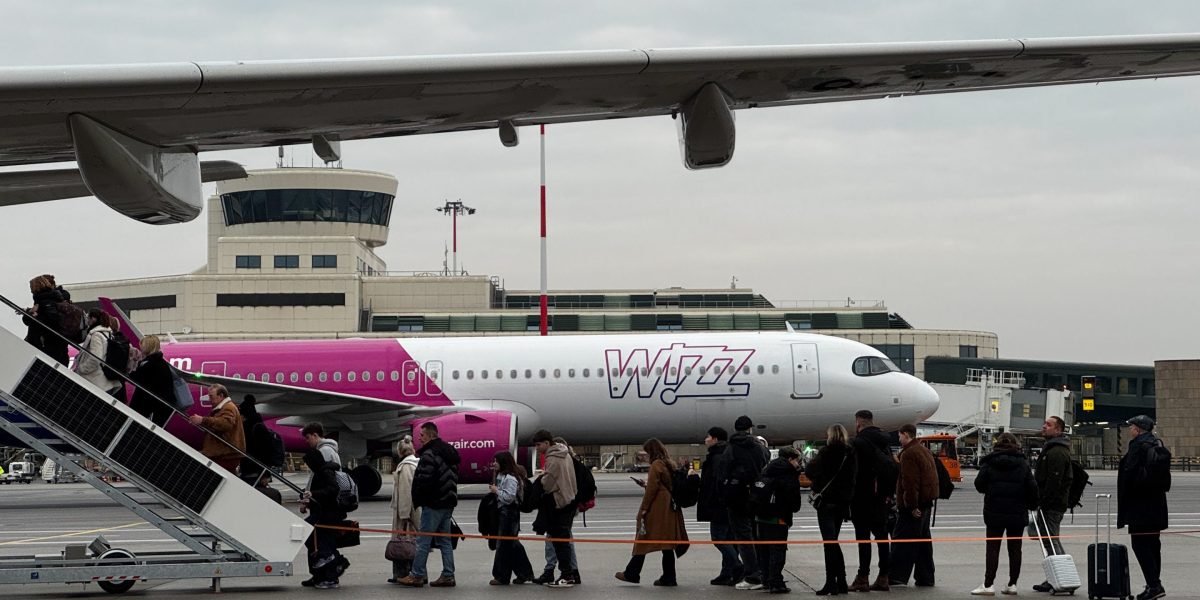
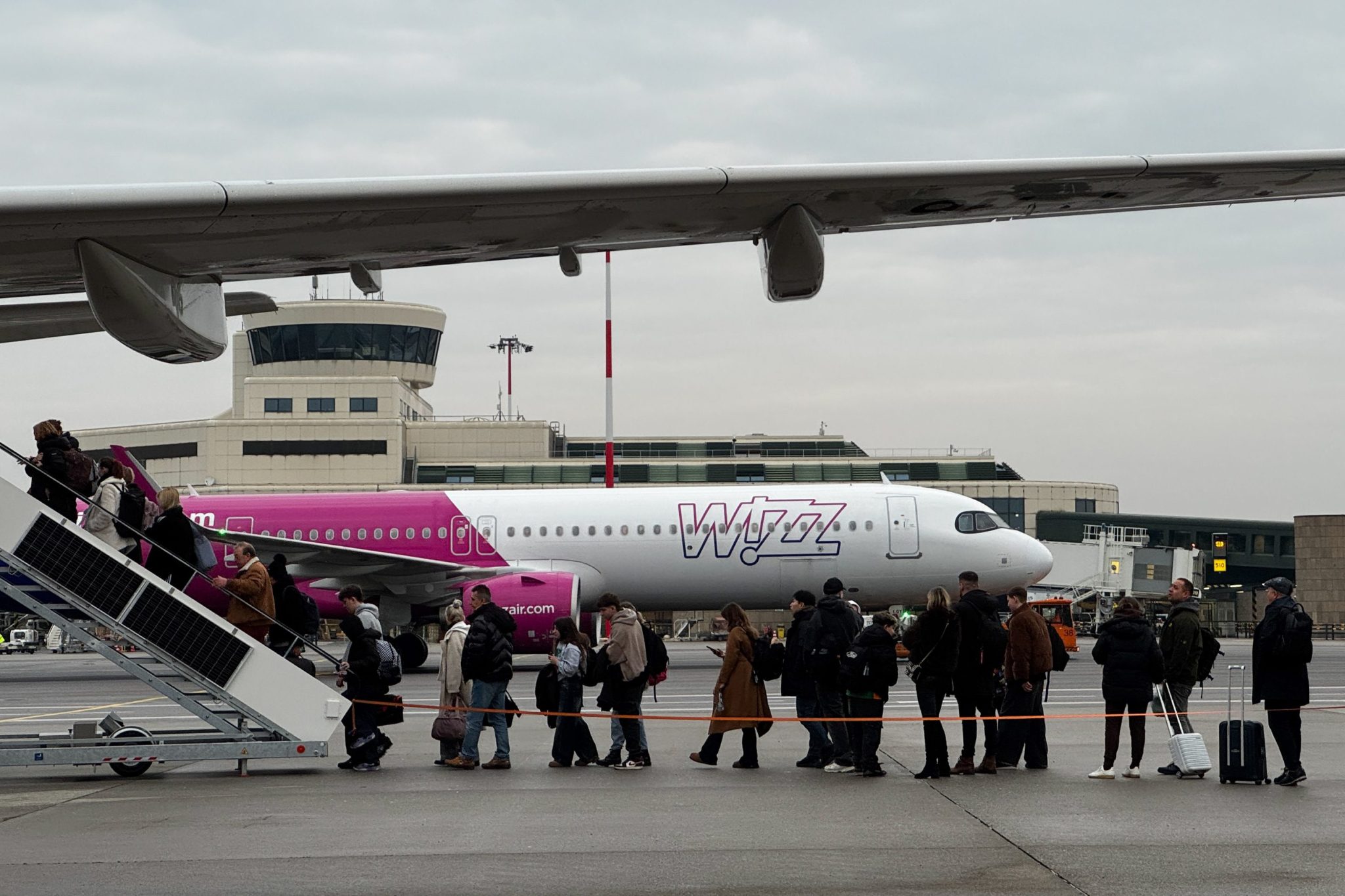
In Europe, which depends heavily on Mideast refiners for jet fuel, shortages forced Italy to limit supplies at several airports. That’s after several countries in Asia have already started rationing energy.
The U.S. dollar was up 0.07% against the euro and up 0.16% against the yen. The yield on the 10-year Treasury was flat at 4.345%.
The conflict has entered its sixth week, reaching the end of Trump’s earlier timeline for the war to last four to six weeks.
But Tehran shows no signs of relinquishing its grip over the Strait of Hormuz, even as it allows a growing trickle of tankers through, while Trump appeared to be emboldened by a daring rescue of a U.S. airman shot down over Iran.
In a social media post on Sunday, he threatened to destroy Iran’s power plants and bridges if the strait isn’t open by Tuesday, then demanded, “Open the F—in’ Strait, you crazy bastards, or you’ll be living in Hell – JUST WATCH! Praise be to Allah.”
That appeared to push his deadline back from Monday, which was already delayed from an earlier deadline a week and a half ago.
Trump also told ABC News that if Iran doesn’t make a deal, “their whole country is gone.” He then told Fox News, “If they don’t make a deal and fast, I’m considering blowing everything up and taking over the oil,”
And in an interview with the Wall Street Journal, he said that if Iran keeps the strait closed, “they’re going to lose every power plant and every other plant they have in the whole country.”
Mohammad-Bagher Ghalibaf, the speaker of the Iran parliament, responded in kind. “Your reckless moves are dragging the United States into a living HELL for every single family, and our whole region is going to burn because you insist on following Netanyahu’s commands,” he wrote on social media.
“Make no mistake: You won’t gain anything through war crimes. The only real solution is respecting the rights of the Iranian people and ending this dangerous game.”
Meanwhile, more than 2,000 Marines are in the Middle East, with thousands more troops on the way—as well as a third aircraft carrier.
Trump could deploy them to seize Kharg Island, from which 90% of Iran’s oil is exported, or other small islands near the Strait of Hormuz to weaken Iran’s grip on the narrow waterway that’s critical to the global oil trade.
For now, it’s unclear if the successful rescue of the F-15 airman after a harrowing operation makes a future ground assault more or less likely.
“On the one hand, the costs from this episode (four, as many as seven aircraft) may suggest the risks to such operations are simply too great to contemplate,” Gregory Brew, a Eurasia Group analyst focusing on oil and Iran, posted on X. “On the other hand, the admin may perceive the successful retrieval following operations inside Iranian territory as proof that such operations are feasible.”
Russia’s key Baltic port of Ust-Luga resumed crude loading after days of disruptions amid multiple Ukrainian drone attacks in the region.
The Jewel, an Aframax-class vessel, started a cargo loading on Saturday, according to shipping information seen by Bloomberg News.
Loadings at Ust-Luga, a key oil-export outlet in Russia’s west, stopped at the end of March as Ukraine stepped up attacks on energy infrastructure along the Baltic coast.
Russia’s oil-pipeline operator Transneft didn’t immediately respond to a request for a comment outside normal business hours.
Ukraine continues its attacks on Russia’s Baltic oil infrastructure, with facilities damaged in the port of Primorsk earlier on Sunday. Ukraine’s moves are aimed at curbing Russian export revenue at a time when global energy prices have rallied because of the war in the Middle East.
Still, if Russia resumes stable crude flows from Ust-Luga, it could bring some relief to global markets rattled by Iran’s chokehold on the Strait of Hormuz.
The Fortune 500 Innovation Forum will convene Fortune 500 executives, U.S. policy officials, top founders, and thought leaders to help define what’s next for the American economy, Nov. 16-17 in Detroit. Apply here.
Of all the things Donald Trump has done to disrupt global commerce, from levying punitive tariffs to tearing up trade deals, few would be as consequential as withdrawing and leaving the rest of the world to secure the Persian Gulf.
The move, which the US president has repeatedly threatened as his war with Iran drags on, would represent a break with decades of US policy keeping open the sea lanes that carry four-fifths of the $35 trillion global goods trade. Even the threat of reducing security for the Strait of Hormuz risks shaking confidence in a pillar of the world economy, as well as American wealth and power.
Traffic through the strait has dropped to a handful of ships daily from about 135 before the war, with Iran allowing passage mainly for its own exports. Those conditions are putting at risk roughly one-fifth of global oil flows, driving up prices and injecting volatility into energy markets.
Since World War II, the US has used its navy to deter attacks, counter piracy and challenge attempts by states to restrict lawful passage across the oceans that cover more than 70% of the Earth’s surface. Those guarantees have allowed oil, goods and commodities to pass across borders with minimal friction.
“The free flow of commerce through the strait is a larger principle at stake in this conflict,” said retired Vice Admiral John W. Miller, former commander of US Fifth Fleet in Bahrain. “Failure to ensure freedom of navigation in Hormuz puts global freedom of navigation everywhere at risk.”
European and Asian officials, who spoke to Bloomberg on the condition of anonymity to discuss sensitive matters, said the conflict has eroded faith in the US role as protector of the high seas, raising concerns about energy prices, shifting security calculations around key choke points and growing doubts about Washington’s ability to manage the consequences of the war.
And it’s more than just Hormuz. The Trump administration’s campaign to blow up speed boats suspected of ferrying drugs across the Caribbean and doubts about whether the Navy made sufficient efforts to save crew members of an Iranian warship it sank off the coast of Sri Lanka have raised questions about the US’s commitment to the rules that protect all sailors at sea.
A Pentagon spokesperson didn’t answer a question about whether the US was still committed to ensuring freedom of navigation, saying only that the military “continues to provide the president options” regarding the strait. The White House didn’t respond to a request for comment.
In the absence of a US plan, smaller, trade-dependent nations have sought to build consensus for a multinational response. The United Arab Emirates on Tuesday urged the United Nations to authorize a range of measures, including force, to reopen the strait. The UK on Thursday convened representatives from more than 40 American allies to discuss nonmilitary options to convince Tehran to restore trade.
“When the Strait of Hormuz is strangled, the world’s poorest and most vulnerable cannot breathe,” UN Secretary-General António Guterres said on Thursday. “Freedom of navigation must be upheld.”
The free passage of vessels through choke points like Hormuz and the Strait of Malacca is protected under principles laid out in the UN Convention on the Law of the Sea. While the US never ratified the treaty, it played a key role in the document’s drafting and its almost 300-ship navy has served as chief enforcer of the rules.
Those include prohibition against regulating vessels that move between open waters, even if the route cuts through their territorial seas. Iran’s attempts to deny passage or charge fees in the Hormuz strait — as much as $2 million per transit — challenge that system.
In response, Trump has alternately suggested asserting US control over the waterway and leaving other nations to take responsibility for it.
“The countries of the world that do receive oil through the Hormuz Strait must take care of that passage,” Trump said Wednesday in a televised address on the conflict. “They must cherish it. They must grab it and cherish it. They can do it easily.”
Even if the fighting stops, the disruption may persist. Shipping and oil-market analysts say a ceasefire without a plan to reopen the strait risks leaving the strategic artery in Tehran’s hands, prolonging the shock.
“This will not be a crisis that ends with a ceasefire announcement,” said Angelica Kemene, head of market strategy at Optima Shipping Services in Athens. “It’s a structural shift in how the Gulf operates as an energy export corridor.”
The threat of Iranian attacks has kept most ship operators out of the strait since the US and Israel began strikes on Feb. 28 and that caution is unlikely to fade quickly, leaving any initial reopening dependent on naval escorts.
Vessels moving through Hormuz have largely been Iran-linked ships or those belonging to countries friendly with Tehran. That allows the Islamic Republic to earn almost $139 million per day in oil revenues — more than before the war, thanks to higher prices.
“It is a violation of maritime law to impede the free flow of travel in international waters,” US Secretary of State Marco Rubio said on Tuesday. “It’s illegal to hit commercial shipping and sink them. That’s what the Nazis did in World War II in the Atlantic.”
Iran, which also hasn’t ratified the sea-law treaty, is moving to formalize its control. A parliamentary committee has approved legislation to impose fees in the strait, according to the semi-official Fars news agency, though the bill has yet to go to a full vote. Authorities have already charged some vessels and barred ships from the US and countries supporting its military campaign, including Israel.
Tanker War
Asked about the US’s commitment to freedom of the seas, a White House official said Iran won’t be allowed to set up a permanent system that controls access to the Hormuz strait. The US has already destroyed 44 Iranian mine-laying vessels during the war and Trump is confident the strait will be opened very soon, the official said.
Ensuring the strait remains open has long been a core US objective in any conflict in the region. The US has intervened before to keep Hormuz open, notably during the so-called tanker war between Iran and Iraq in the 1980s.
The Navy has for years played a central role in maritime campaigns to suppress piracy off the Somali coast. More recently, the US led efforts to protect Red Sea shipping after attacks by the Iran-linked Houthis in Yemen caused vessels to make long, costly journeys around Africa.
The economic toll of Iran’s control over Hormuz is already clear: Iran’s grip on Hormuz comes at the expense of other major Gulf producers, with the potential to reshape global energy supplies.
Iraq’s exports plunged by about 80% in March compared with last year’s average daily volumes, while Saudi Arabia has rerouted crude through its east-west pipeline to the Red Sea, now running near capacity at roughly 7 million barrels a day. Even so, the kingdom was facing a drop of more than 25% in exports last month.
“The war in the Middle East is creating the largest supply disruption in the history of the global oil market,” the International Energy Agency said in early March.
Insurance costs have surged alongside the risk. Additional war-risk premiums that were about 0.15% of a ship’s value before the war have jumped as high as 10% in some cases in and around the strait, deterring operators from returning even if hostilities ease.
The disruption if allowed to persist could carry geopolitical consequences — especially in Asia. Washington’s commitment to that policy has been visibly demonstrated by the so-called freedom of navigation operations, or Fonops, that the US Navy conducts by asserting its right to sail through contested waterways.
If the US ends its campaign without reopening the strait, it risks setting a precedent that it won’t challenge expansive Chinese claims to the South and East China seas. Southeast Asian officials said such an outcome would deal a significant blow to US credibility in keeping sea lanes open.
It would also increase the incentive for Chinese President Xi Jinping, who now commands the world’s largest navy by number of ships, to assert greater influence at sea.
“If the US doesn’t have the ability to enforce freedom of navigation in the Straint of Hormuz, what then stops the People’s Liberation Army Navy from pushing things a bit farther in the South China Sea?” said Emma Salisbury, non-resident senior fellow in the National Security Program at the Foreign Policy Research Institute. “That’s a worrying precedent.”
That shift is already shaping how governments think about their security.
Officials said it could push countries to strengthen their capabilities around chokepoints, such as the Strait of Malacca, and coordinate more closely to uphold maritime norms under international law. The conflict has also shown that countries with sufficient military power and political will can move to control critical waterways.
While Europe is less directly dependent on Hormuz, its economy relies on the smooth functioning of global shipping routes. European officials said the episode is forcing a rethink of how allies protect sea lanes.
If the US were seen as unwilling or unable to keep key waterways open, countries may have to assume greater risk and adjust how they deploy forces, one official said. Major European economies also are assessing how to cushion any impact to other vulnerable shipping routes such as the Red Sea and the South China Sea.
“Iran controlling the Strait of Hormuz after the war would be a game-changer,” said Lucio Blanco Pitlo III, a Philippine foreign policy analyst. “US credibility as guarantor of unhampered navigation of crucial waterways will suffer.”
Several airports in Italy issued advisories of limited fuel supplies for the next few days as the conflict in the Middle East shows few signs of ending.
Fuel restrictions for flights have been introduced at the airports of Bologna, Milan Linate, Treviso and Venice, according to a Notice to Airmen, or Notam advisories.
At Venice, authorities said that priority will be given to medical, state and flights longer than three hours. For other flights under three hours, a maximum of 2,000 liters per aircraft may be applied. Similar provisions are included in notices for Bologna and Treviso. The notices span from April 2 through to April 9.
The advisories say Air BP Italia’s fuel jet A1 availability is limited.
The restrictions in Italy are among the earliest instances that fuel shortage in Europe are starting to impact operations since the conflict broke out in the Middle East and led to the effective closure of Strait of Hormuz — choking of supplies of crude, gas and products such as jet fuel to global customers.
Italian airport operator Save SpA, which manages the Venice, Treviso and Verona airports, told Italian daily Corriere della Sera that fuel limitations aren’t significant, relate to a single supplier, and that other providers are active across its airports. The company added that operations for intercontinental and Schengen-area flights aren’t subject to restrictions.
Pierluigi Di Palma, head of Italy’s civil aviation authority ENAC, told the newspaper the situation is “under control” despite heightened tensions in the sector. The executive said he doesn’t see issues that should concern travelers, but noted potential risks could emerge after April if supply pressures persist.
Europe is the main importer of jet fuel — including kerosene — from the Persian Gulf, with supplies from that region accounting for about half of European Union and UK imports, according to Vortexa data compiled by Bloomberg News.
Deutsche Lufthansa AG, Europe’s biggest aviation group, has readied plans including potentially grounding planes in case demand drops and fuel prices escalate as hostilities in the Middle East drag on.
Separately, International Energy Agency Executive Director Fatih Birol told the Financial Times that there are currently “no physical shortages of jet fuel or diesel in Europe at the moment.” However, he warned that the situation may change in the coming weeks if the disruption to Middle East flows continues.
For Delta employees, Valentine’s Day lately has come with a little something extra: a bigger paycheck, thanks to Delta’s now robust profit-sharing program.
The payout is sizeable: this year, Delta dispersed over $1 billion to its roughly 100,000 employees. For Delta CEO Ed Bastian, keeping employees happy is just a key to the airline’s success.
Delta first began its profit-sharing incentive in 2007, which, Bastian notes, “at the time, people didn’t think too much about it because it wasn’t paying anything,” as the company was “far from” profitable. But that quickly changed when the CEO turned the airline from bankruptcy to the $43.6 billion company it is today, and the most profitable U.S. airline.
“They’ll get a 15% effective return on profits for as long as we’re around,” Bastian told Fortune Editor-in-Chief Alyson Shontell during the Fortune 500: Titans and Disruptors of Industrypodcast of the program. “This is not like a short-term thing, because they created the 15% investment return. I thought [it] was a pretty good idea to get people excited.”
Profit sharing distributes a slice of company earnings directly to workers as a cash bonus. At Delta, the formula is simple: 10% of the first $2.5 billion in adjusted profits, and 20% of everything above that. The 15% number Bastian refers to derives as a shorthand between those two percentages.
As Delta’s success grows, the greater the reward for its staff.
This year, Delta distributed $1.3 billion to its employees, marking the ninth time in the past decade that the company distributed more than $1 billion to its workers. That’s equal to about four weeks of additional pay for the average employee. Since 2015, Delta has distributed more than $11 billion this way, and way more than the rest of the U.S. airline industry combined.
“The sharing of success is just core to the culture,” Bastian said. “Core to the competitive advantage that Delta has in the culture and the people.”
That culture definitely seems to strike a chord with the company’s employees. Nearly 9 in 10 say they envision working at Delta for a long time, which is about 4 points higher than the average for Fortune 100 Best Companies to Work For (2025). Even Bastian said as much himself: “I’m here 30 years, but I’m actually not one of the more senior people in the company. Many people have 40, 50, up to 60 years of service.” As a result, it took the 11th spot on this year’s World’s Most Admired Companies list and ranked higher than any other airline on the Top 50 list.
All that employee satisfaction leads to good results. Delta has a Net Promoter Score of 41 to 43, a customer loyalty metric ranging from -100 to +100 that measures the likelihood of customers recommending the company. Delta attributes nearly a quarter (24%) of its score to employee interactions with customers, and that score translates to 14% more revenue for seat miles, compared to Delta’s competitors.
From bust to boom
The program was born from a crisis. In 2004, Bastian, who was then the airline’s CFO, returned to Delta at half his salary after briefly quitting, on one condition: the company had to file for bankruptcy. “Sometimes your voice is actually louder when you leave than when you stay,” he said. Bastian then led the restructuring of what became one of the largest bankruptcies in U.S. history. Unfortunately, that meant asking a lot of Delta employees, from decreased salaries to the loss of their retirement safety net.
“When we went through the restructuring, we had to make a lot of hard decisions that resulted in large amounts of pay cuts, loss of jobs, loss of benefits, loss of pensions in certain cases. And when you’re at the bottom and you’re looking up, you don’t know how deep you have to go,” Bastian said. “And there was always a concern with our people saying, ‘yeah, we understand we have to make sacrifices, but how do we know what you’re going to do with the money that we’re going to give you?’”
Enter the profit-sharing program. “The great failsafe measure is when we are profitable, and we were far from it at the time,” he said. “Maybe the first year, $100 million distributed across still wasn’t a whole lot of money. But eventually, it became real dollars.”
It wasn’t until a few years into the scheme that the profit sharing crossed the billion-dollar threshold. “That’s life-changing money for a lot of people,” he said.
Shareholders jump on the bandwagon
At first, Wall Street grew restless with Delta’s decision.
“Years ago, I used to get a lot of pushback when we started getting into some big numbers from shareholders. Why are you doing this? This is our money you’re giving away,” said Bastian. But the CEO maintained the measure, adding it was a win-win all around, and that mentality eventually reached investors.
“It’s a great alignment with your shareholders because our customers win, because our employees are doing a great job for them, and the better job they do serving our customers, the better job our shareholders are going to do in terms of the returns into Delta,” Bastian said.
In fact, investors have turned around so much on the profit-sharing scheme that they’d fight to keep it.
“I would tell you if I was to announce—and I’m not—that we were going to end the profit sharing or change the profit sharing formula, the shareholders would be the first people that would come after me,” Bastian told Shontell.
The results proved him right. Delta is now America’s most profitable airline, a position it holds even after accounting for the profit-sharing payouts. “The most profitable airline that pays more profit sharing than all of the other airlines put together, and still has the highest profits as a result of that,” Bastian said.
All of this combined, Bastian said, creates a “virtuous circle” that leaves everyone—employees, customers, and stakeholders—driving up Delta’s bottom line.
It’s “taking care of the people so they can take care of the customers, who then reward our shareholders with their loyalty,” Bastian said. It’s “kind of right out in front of them.”
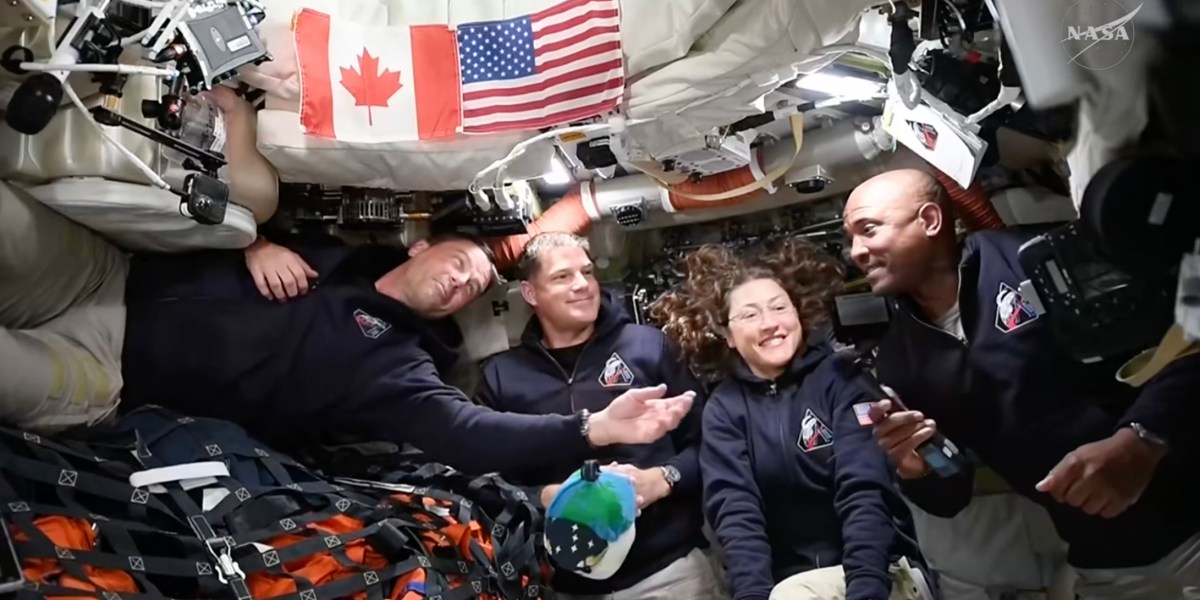
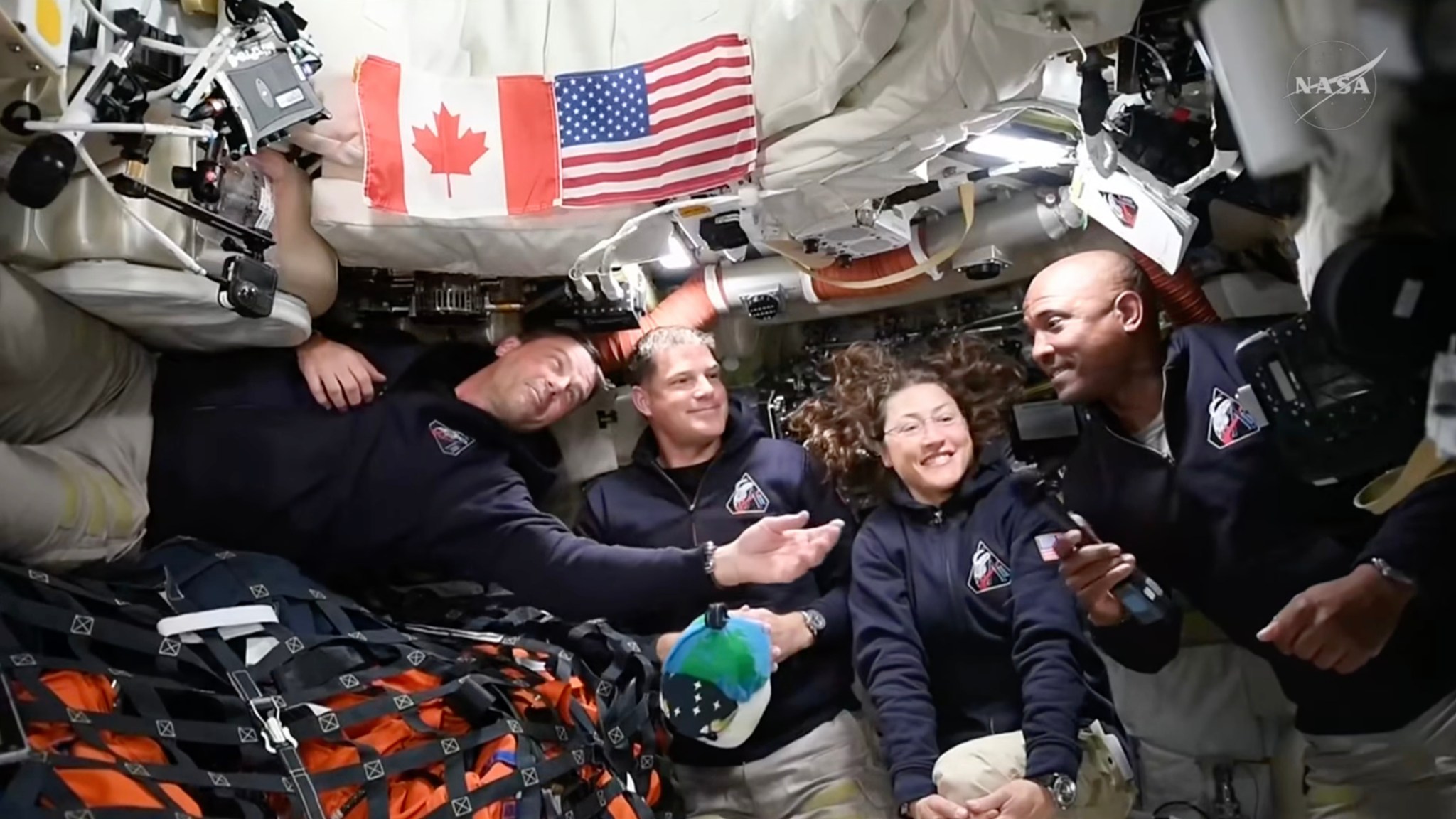
“The Earth is quite small, and the moon is definitely getting bigger,” pilot Victor Glover reported.
Until the Orion capsule’s bathroom is fixed, Mission Control has instructed the astronauts to break out more of the backup urine collection bags. The so-called lunar loo malfunctioned following Wednesday’s liftoff and has been hit-and-miss ever since. A version of the Artemis II toilet was tested on the International Space Station several years ago.
Engineers suspect ice may be blocking the line that is preventing urine from completely flushing overboard. The toilet is still open for No. 2 business.
Debbie Korth, NASA’s Orion program deputy manager, said the astronauts have also reported a smell coming from the bathroom, which is buried in the floor of the capsule with a door and curtain for privacy.
“Space toilets and bathrooms are something everybody can really understand .. it’s always a challenge,” she said, noting that the space shuttle toilet was also often on the fritz.
John Honeycutt, chair of the mission management team, said it is human nature to be interested in the space commode, and even though it is “in a good state right now,” he’d like it to be working at 100%.
“They’re OK,” he said of the astronauts. “They trained to manage through the situation.”
Artemis II is poised to set a distance record for humans, traveling more than 252,000 miles (400,000 kilometers) from Earth before hanging a U-turn behind the moon and heading home without stopping or entering lunar orbit. The record is currently held by Apollo 13.
The Canadian Space Agency celebrated the country’s role in the mission, speaking from Quebec with astronaut Jeremy Hansen as he headed toward his lunar rendezvous. Hansen is the first non-U.S. citizen to fly to the moon.
“Today he is making history for Canada,” Canadian Space Agency President Lisa Campbell said. “As we watch him taking this bold step into the unknown, let his journey remind us that Canada’s future is written by those who dare to reach for more.”
In the live televised linkup, Hansen said he has already witnessed “extraordinary” views from NASA’s Orion capsule.
Hansen, Glover, Reid Wiseman and Christina Koch are the world’s first lunar astronauts since Apollo 17’s crew of three in 1972. Koch and Glover are the first female and first Black astronauts to the moon, respectively.
Their nearly 10-day mission — ending with a Pacific splashdown on April 10 — is the first step in NASA’s bold plans for a sustainable moon base. The space agency is aiming for a landing by two astronauts near the lunar south pole in 2028.
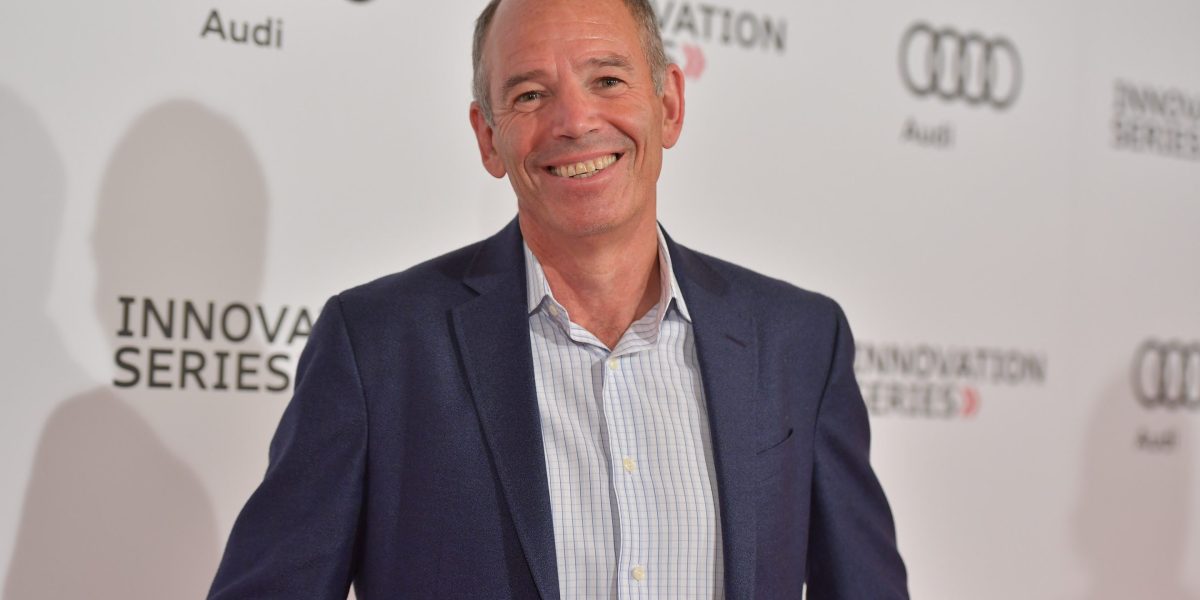
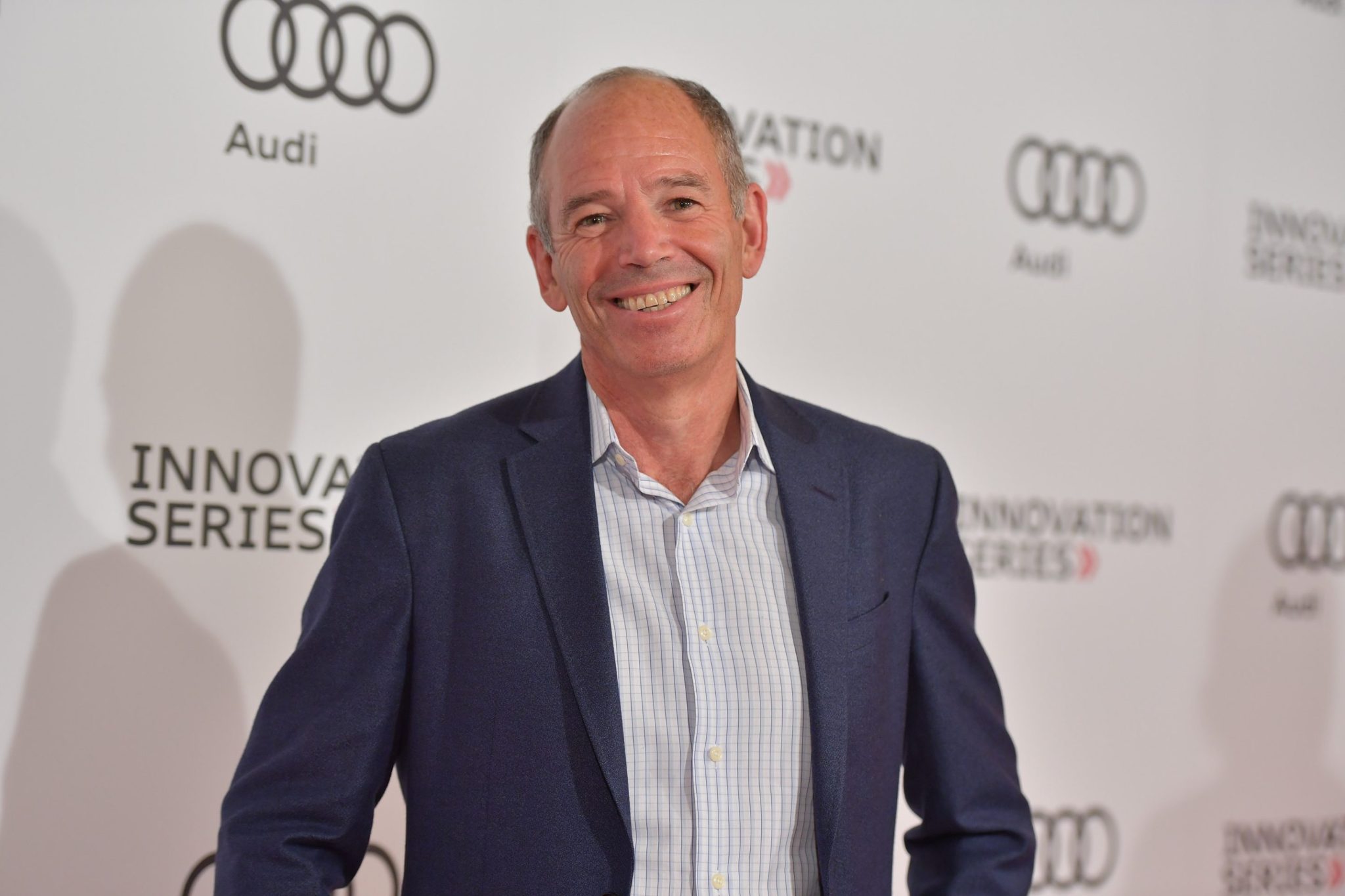
Business leaders love to debate the myth of work-life balance. But for Netflix cofounder Marc Randolph, the rule was simple: every Tuesday at 5 p.m., he walked out—no matter what.
“I’ve worked hard, for my entire career, to keep my life balanced with my job,” Randolph wrote in 2023 LinkedIn post that has recirculated on social media.
“For over thirty years, I had a hard cut-off on Tuesdays. Rain or shine, I left at exactly 5 p.m. and spent the evening with my best friend. We would go to a movie, have dinner, or just go window-shopping downtown together.”
It’s no question that it can be difficult for founders and CEOs to set strict work-life boundaries; sometimes they need to tune into late-night meetings with clients in different time zones, or feel that they should always be on call in times of business emergency.
But even while serving as chief executive of $416 billion entertainment giant Netflix for seven years, Randolph stuck true to his Tuesday exception for the sake of his sanity.
“Nothing got in the way of that,” Randolph said. “No meeting, no conference call, no last-minute question or request. If you had something to say to me on Tuesday afternoon at 4:55, you had better say it on the way to the parking lot. If there was a crisis, we are going to wrap it up by 5:00.”
“Those Tuesday nights kept me sane. And they put the rest of my work in perspective.”
Why some CEOs think work-life balance is a myth
There are many CEOs who put no limits on their professional lives, contrary to Randolph’s work-life philosophy—and they think it’s essential to be successful. Lucy Guo, the cofounder of Scale AI, often starts her workday at 5:30 a.m. and will keep going until midnight. At just 30 years old, she became a self-made billionaire from her 5% stake in the $29 billion AI company. And she might not have reached those heights if it wasn’t for her intense work ethic.
“I probably don’t have work-life balance,” Guo told Fortune last year, adding that those who chase it are probably in the wrong job. “For me, work doesn’t really feel like work. I love doing my job…I would say that if you feel the need for work-life balance, maybe you’re not in the right work.”
Andrew Feldman, the cofounder and CEO of $8.1 billion AI chip company Cerebras, said it’s possible for workers to have a “great life” clocking in at 9 a.m. and heading out at 5 p.m. However, if they want to launch the next unicorn company or generation-defining product, they won’t get very far working a traditional work schedule.
“This notion that somehow you can achieve greatness, you can build something extraordinary by working 38 hours a week and having work-life balance, that is mind-boggling to me,” Feldman said on the20VC podcastin 2025. “It’s not true in any part of life.”
“The path to build something new out of nothing, and make it great, isn’t part-time work. It isn’t 30, 40, 50 hours a week. It’s every waking minute. And of course, there are costs.”
The case for clocking out
Operating on hyperdrive with no breaks has become a badge of honor for CEOs—but others warn against the grind. JPMorgan’s Jamie Dimon encouraged the up-and-coming generation of business leaders to break away from work for the sake of their relationships and well-being.
“You need to have work-life balance,” Dimon said to students at the Georgetown University Psaros Center for Financial Markets and Policy in 2024. “What we tell our people at JPMorgan is you have to take care of your mind, your body, your spirit, your soul, your friends, your friends, your health. You really have to.”
Despite frequently traveling for business and having a “minimum of 10 meetings per day,” he fully uses up his PTO benefits each year. He’s also made changes within the company to ensure that all employees of the $13.7 billion grocery store chain take all their days off by placing a cap on how many hours can be banked. Buechel told Fortunein 2024 it “really forces people to make sure they are taking PTO…and ultimately having a great work-life balance.”
“I think it’s important for me to help set that example.”
A version of this story was published on Fortune.com on November 7, 2025.
Bruce Stockler, a former director of corporate communications at McCann Worldgroup, works with clients in the advertising, marketing, media, ESG, health & wellness, journalism and content spaces, providinginternal and external corporate communications services to CEOs, CMOs and Chief Communication Officers.
There’s a new acronym reshaping how workers think about their careers: FOBO — the Fear of Becoming Obsolete. Unlike traditional job insecurity, FOBO isn’t about getting fired. It’s about becoming irrelevant. Four in 10 workers now name AI-driven job loss as one of their primary fears — a share that has nearly doubled in a single year, according to KPMG. Sixty-three percent say AI will make the workplace feel less human. Skill demands in AI-exposed roles are shifting 66% faster than they did just one year ago. In 2026, FOBO became the defining psychological condition of the American workplace.
After Dario Amodei, CEO of Anthropic, claimed last year that AI could eliminate 50% of entry-level white-collar positions within five years, he was joined within months by Microsoft AI CEO Mustafa Suleyman, who offered a similar outlook. More recently, Senator Mark Warner (D-VA) said that AI leaders themselves have been surprised and alarmed at the pace of disruption, and they are “literally consciously pulling back on their predictions because of the short-term economic disruption.” Warner put the new college grad unemployment at 35% within two years.
These are the predictions feeding FOBO — and they’re landing. A massive new study from MIT wants to pump the brakes. Not on the fear — FOBO, it turns out, is pointing in roughly the right direction — but on the timeline. And the timeline, it turns out, changes everything.
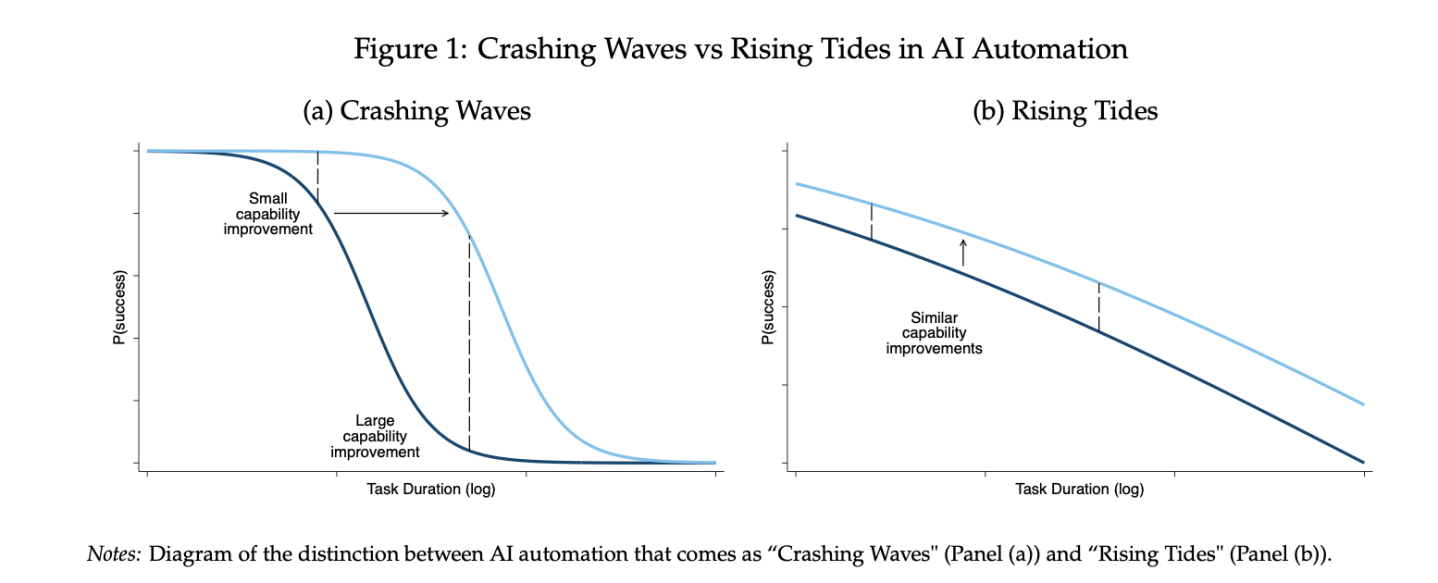
Researchers at MIT FutureTech published findings this week showing that AI’s march through the labor market looks far less like a sudden catastrophe and far more like a slow, rising flood — serious and accelerating, but not the overnight apocalypse that has dominated headlines and executive anxiety for the past two years.
“Rather than arriving in crashing waves that transform a certain set of tasks at a time,” the researchers write, “progress typically resembles a rising tide, with widespread gains across many tasks simultaneously.”
The study, titled “Crashing Waves vs. Rising Tides,” is one of the most comprehensive empirical examinations of AI’s real-world task performance to date. The team of nine researchers led by Matthias Mertens and Neil Thompson collected more than 17,000 evaluations of LLM outputs from domain-expert workers across more than 3,000 labor market tasks drawn from the U.S. Department of Labor’s O*NET classification system. Those tasks spanned everything from legal analysis to food preparation, management to computer science. More than 40 AI models were tested, ranging from GPT-3.5 Turbo to GPT-5, Claude Opus 4.1, Gemini 2.5 Pro, and DeepSeek R1.
For anyone gripped by FOBO, the core question the researchers asked is also the most unsettling one: Can AI complete these tasks well enough that a manager would accept the output without any edits? The answer is already yes — frequently.
Across all models and job categories tested, AI successfully completed roughly 50% to 75% of text-based labor market tasks at a minimally acceptable quality level. That’s not a future projection. That’s today. More specifically, the study found that by the third quarter of 2024, frontier AI models were already hitting a 50% success rate on tasks that take humans about a full workday to complete.
The improvement trajectory is steep. Between the second quarter of 2024 and the third quarter of 2025, frontier models went from clearing a 50% success threshold on 3- to 4-hour tasks to clearing the same bar on tasks that take humans an entire week. Failure rates are halving roughly every two to three years across the board, which translates to annual gains of 15 to 16 percentage points in success rates.
Extrapolating those trends — and the researchers are careful to note this represents an optimistic, upper-bound scenario — AI systems could complete most text-based tasks with 80% to 95% success rates by 2029 at a minimally sufficient quality level. For the majority of survey tasks, which take a few hours for a human to complete, the projected 2029 success rate approaches 90%.
MIT doesn’t use the phrase but this is FOBO, calibrated. The fear isn’t irrational — it’s premature. The water is rising. But the MIT data suggests the floorboards won’t be underwater by next Tuesday. The researchers’ most consequential line for anxious workers: “Workers are likely to have some visibility into these changes, rather than facing discontinuous jumps in AI-driven automation.” The rising tide gives you time to move. The question is whether you’re moving.
FOBO at the institutional level
Here’s the irony: even as MIT documents AI’s sweeping capability gains, most companies have yet to deploy the tools at all. FOBO isn’t just a personal condition, then — it’s an organizational one. According to Goldman Sachs economists Sarah Dong and Joseph Briggs, citing Census Bureau data in their March 2026 AI Adoption Tracker, fewer than 19% of U.S. establishments have adopted AI. Goldman projects that adoption will reach only 22.3% over the next six months.
Compounding that paralysis: only about one-third of workers say their employer is providing adequate AI training, guidance, or reskilling opportunities — down nearly 10 percentage points from 2024, according to research from workforce nonprofit JFF. Most companies are leaving workers to manage FOBO alone, without the infrastructure that would actually resolve it.
That gap has a measurable cost. Enterprise workers who do use AI are recapturing 40 to 60 minutes per day, according to OpenAI enterprise data from December 2025, and 75% say they can now complete tasks they previously couldn’t do at all.
“We continue to observe large impacts on labor productivity in the limited areas where generative AI has been deployed,” Goldman’s economists wrote. “Academic studies imply a 23% average uplift to productivity, while company anecdotes imply slightly larger efficiency gains of around 33%.”
Put simply: the companies using AI are pulling ahead. And the math is unforgiving. Across a team of 50, that 40-to-60-minute daily time saving translates to 33 to 50 hours of recovered productivity every single day. The race is on, then, but many companies are still strapping on their running shoes and waiting for the whistle to blow.
FOBO with a corner office
The MIT data lands at a moment when corporate leaders are scrambling to get their arms around a technology that, as one senior executive put it, is “outpacing the ability for humans and businesses to adopt it.” Joe Depa, the global chief innovation officer at EY, told Fortune in a recent interview that “the technology is in many ways ready, but it’s taking some time for us to … take advantage of it.”
Depa, who oversees AI strategy for one of the world’s largest professional services firms, described the pressure he sees across industries as relentless. “Every day there’s a new headline, every day there’s a new, you know, something that we have to get ready for. Every day, I get an email from my boss asking about some new event that happened somewhere in the world that’s raising the stakes of how fast things are moving within AI.”
That pressure is sharpened by a stark internal reality at many companies: 83% of executives — drawn from a survey of 500 business leaders — say they lack the right data infrastructure to fully leverage AI.
EY’s clients, based on 4,500 surveys, say they still lack the right data infrastructure to fully leverage AI. In other words, the technology is racing ahead while the organizational plumbing needed to actually use it lags far behind.
FOBO’s cruelest irony
That’s where the “rising tide” framing offers some reassurance to the many companies grappling with this dynamic. The MIT findings directly challenge research from METR, a prominent AI safety organization, which has argued that AI capabilities surge abruptly for specific sets of tasks — a “crashing waves” model that implies workers could suddenly find themselves obsolete with very little warning. “We find little evidence of crashing waves,” they wrote, “but substantial evidence that rising tides are the primary form of AI automation.”
The MIT data, drawn from realistic and representative job tasks rather than stylized benchmarks, consistently shows a flatter performance curve. AI doesn’t suddenly master a narrow set of tasks and leave everything else untouched. Instead, it gets broadly, incrementally better across nearly all task types and durations simultaneously.
“Workers are likely to have some visibility into these changes,” the researchers write, “rather than facing discontinuous jumps in AI-driven automation.” More broadly, the projection of AI improvement to a near-perfect automation level through the next three years, not the next 18 months of doomsday scenarios, provides what the researchers call “a window for worker adjustment, particularly in tasks with low tolerance for errors.” Furthermore, their estimates assume AI progress continues at the pace seen over the last two years, meaning it’s an upper-bound or particularly fast scenario. AI just may not keep evolving and advancing as fast as it has recently.
That matters for how companies plan and how workers prepare. A crashing-wave model demands emergency triage; a rising-tide model demands strategic adaptation. The MIT researchers argue the latter is the more accurate frame — though they’re emphatic that “gradualism is not inherently protective.”
There are meaningful differences by profession. Legal work had the lowest AI success rate among the domains tested, at just 47%. Installation, maintenance, and repair work — for text-based tasks specifically — topped the chart at 73%. Management tasks came in around 53%; healthcare practitioners at 66%; business and financial operations at 57%. In other words, no white-collar sector is immune, but some are considerably closer to the inflection point than others.
Depa said he sees this sorting happening in real time inside EY’s own workforce, and humans are acting unpredictably, even strangely at the prospect of this strange new work partner. The firm is the third-largest Microsoft Copilot user in the world, he shared, and the adoption data tells a generational story: junior employees are all in; senior leaders are lagging. “When I look at the breakdown,” he said, “two of my junior levels — high adoption, right out of the gate … and then when you get to the more senior levels, that’s where the adoption starts to drop off.”
He described a particularly worrying cohort: skilled, experienced workers who are simply refusing to use AI tools. “We’ve got some software engineers that are 10x, 20x more productive than last year using AI, like, they’re just killing it.” He said he’s seen workers go from “mediocre” to really “at the top of their game” once they master these new tools. At the same time, you have others “that used to be really, really strong software developers that are somewhat resistant to using AI,” he said. They have an attitude that they can do it better, so they don’t need the tool. “And they’ve gone from being top of their class to now bottom of the peer group, right. And those are the ones I worry about the most.”
The fear of becoming obsolete, in other words, is accelerating the very outcome that workers dread most. Left untreated, a serious case of FOBO becomes self-fulfilling.
These AI resisters, with tremendous functional skills and experience that are super critical, but productivity lagging their peer group at 10x or even 20x, “at some point, those individuals would have to find a different role,” Depa said. “And I think those are the ones that we’re trying to figure out.”
What’s still missing from the AI-at-work story
The MIT team is careful not to oversell its own findings. High task-level success rates, they note, don’t automatically translate into job displacement. The “last-mile costs” of integrating AI into actual workflows — organizational friction, liability concerns, the economics of deployment at smaller firms — remain significant barriers that are poorly captured by any benchmark.
Near-perfect AI performance on most tasks also remains years beyond 2029. The flat logistic curve that makes the rising tide gradual also means the final climb toward 99%-plus reliability is a long one, a meaningful buffer for error-intolerant professions in law, medicine, and engineering.
“While progress is significant,” the researchers write, “widespread automation, particularly in domains with low tolerance for errors, may still be some distance away.”
The bottom line is more complicated than either the doomers or the dismissers want to admit. AI is already capable, improving fast, and headed for most of your inbox in the next three to five years. But the transformation is likely to arrive as a steady, visible tide rather than a sudden drowning, which means the window to adapt is real, if not infinite. If you want to adapt, that is.
FOBO is rational. The MIT data confirms it. But the antidote isn’t denial or paralysis — it’s exactly what the workers thriving inside EY are already doing: treating AI as a tool, not a verdict. The window is open. The question is whether you’ll walk through it.
American schools are at a crossroads. Artificial intelligence companies say their technology will completely reshape the workforce, and no one knows how, as the definition of career readiness is being rewritten. Education advocate Ted Dintersmith believes the stakes couldn’t be higher.
“It’s a world where all of these jobs are going to just vanish. We don’t have time to mold this for 10 years,” Dintersmith told Fortune. “Would you rather spend thousands of hours on math you’ll never use in school, or get really good at something that can help you pursue a career you find fulfilling and can support yourself. What do you care about: the future of a kid or data for the state rankings?”
Dintersmith, in his new book, Aftermath: The Life-Changing Math That Schools Won’t Teach You, argues that the education system is designed to fail students. It’s still teaching kids to learn things a machine can easily do, and it isn’t offering real world knowledge. He argues that math taught in schools has little relevance to real work or life, and it’s undermining American society. Kids should be learning real-world probability and statistics instead of algebra and calculus equations.
The book is the culmination of 15 years studying the American education system strengths and weaknesses. He sees a system that defines academic success on “high-stakes” standard exams that ask questions that a computer could easily answer, while failing to give students skills that would prepare them for their lives and careers. If the American education system doesn’t change, millions will enter adulthood unprepared, sowing “the seeds for democracy’s collapse,” said Dintersmith.
Beyond math, he believes Americans need to rethink the automatic high-school-to college-pipeline, in a world where more college graduates feel like their degrees are not worth the cost.
In 2023, Dintersmith visited a school district in Winchester, Va., a small town of about 28,000 located an hour and a half outside Washington, D.C. He met students learning at the Emil & Grace Shihadeh Innovation Center, a technical training center for high school students. While technical education offerings are typical of many secondary schools across the country, Winchester’s approach is different, Dintersmith said, because vocational education is not stigmatized as a place to dump students who weren’t college-bound.
It wasn’t treated like an afterthought, Dintersmith said, and he found that about 90% of the district’s high schoolers take a class at the center. What he saw inspired him to make the film Multiple Choice in 2025. It was shown at the Sundance Film Festival earlier this year.
An unlikely advocate
Dintersmith, 73, is an unlikely candidate taking up the charge of transforming American education. After attending the College of William & Mary in 1974 and getting a PhD in engineering from Stanford University in 1981, Dintersmith worked at a microchip startup for seven years, beforebecoming a venture capitalist and general partner at Charles River Ventures, where he worked for more than 20 years, and has since stayed on a partner emeritus.
While at CRV, he managed a number of funds ranging from $50 million to upwards of $450 million. He was even ranked by Business 2.0 as the country’s top-performing venture capitalist between 1995 to 1999. But Dintersmith credits having children later in life for his seemingly abrupt career shift.
Turning his attention to education, Dintersmith said, came as a surprise to himself as well.
“I never imagined doing anything related to school,” Dintersmiths said. “And then, honestly, when my kids got to middle school, I just said, ‘Whoa. None of this makes any sense to me.’” His interest started in 2011, when his son’s middle school began offering a program on life skills, but Dintersmith didn’t find any of the skills relevant to real life. His son and daughter are now in their 30s, he said.
Since then, Dintersmith has written three books and produced nine documentaries about the failures of the American educational system. His work also led him to take an education odyssey during the 2016 school year, he visited 200 schools across 50 states to see how different schools across the country functioned. And detailed the experience in a book What School Could Be, published in 2018.
Vocational training opens doors
At Winchester’s Innovation Center students didn’t have to choose between welding or Advanced Placement Chemistry to convey that they were an academically rigorous student to colleges because vocation training was the norm. They could take classes on carpentry, welding, plumbing, and electrical work, or train to be EMTs, lab technicians, firefighters, and nursing aides. The courses are tied to the needs of the local economy, and many instructors are business owners or experts who work in the area and volunteer their time to work with the students. Several students have gone on to start careers at their instructors’ companies.
Liz, a student featured in the documentary, is now a pre-law student at the University of Virginia who wrote about her experience taking welding classes in her college applications. Another student, Malachi, came to a firefighting class asking the instructor for “guidance in life and discipline.” Outside of his classes, he became a volunteer firefighter, and the local station became a place where he could be mentored or just have a place to call home.
“They were really focused on helping every kid find their lane, and it was tied to what skills would help that local community,” Dintersmith said.
Winchester can serve as a model for other schools, Dintersmith said. Many high schools offer some form of career and technical education, so “they’re not starting from zero,” he added. Community input is key, he explained. To build the 54,000 square-foot Innovation Center, a local philanthropist donated $1 million, and the State of Virginia and the local community also contributed to the project.
“It’s really just bridging the gap between finishing high school and being able to say, I’m good at something that matters to the adult world,” he said.