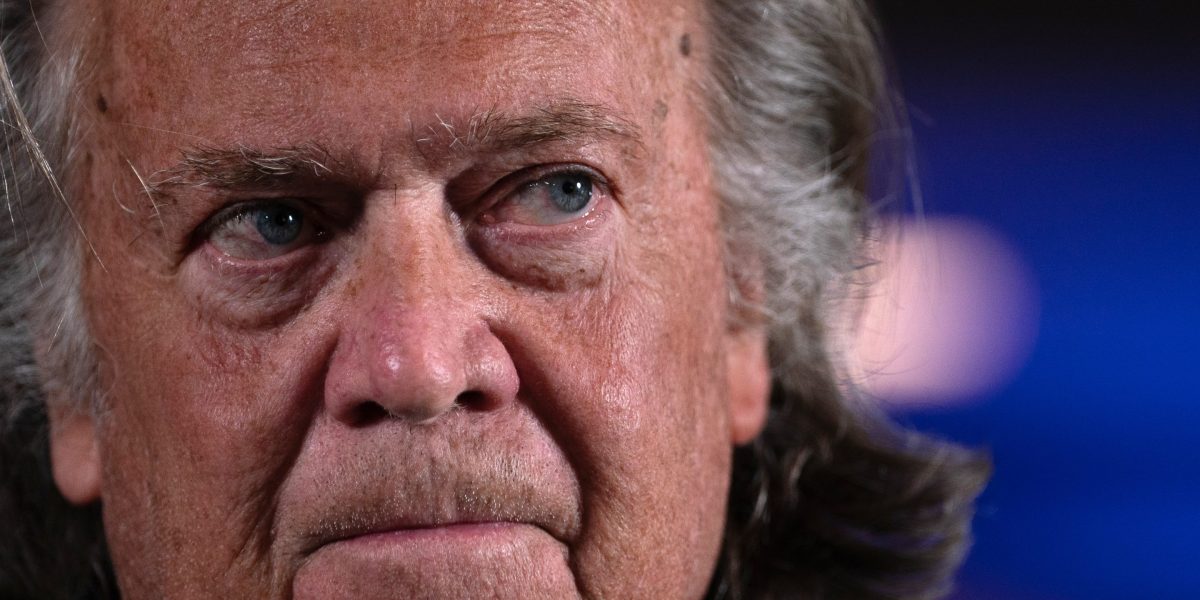
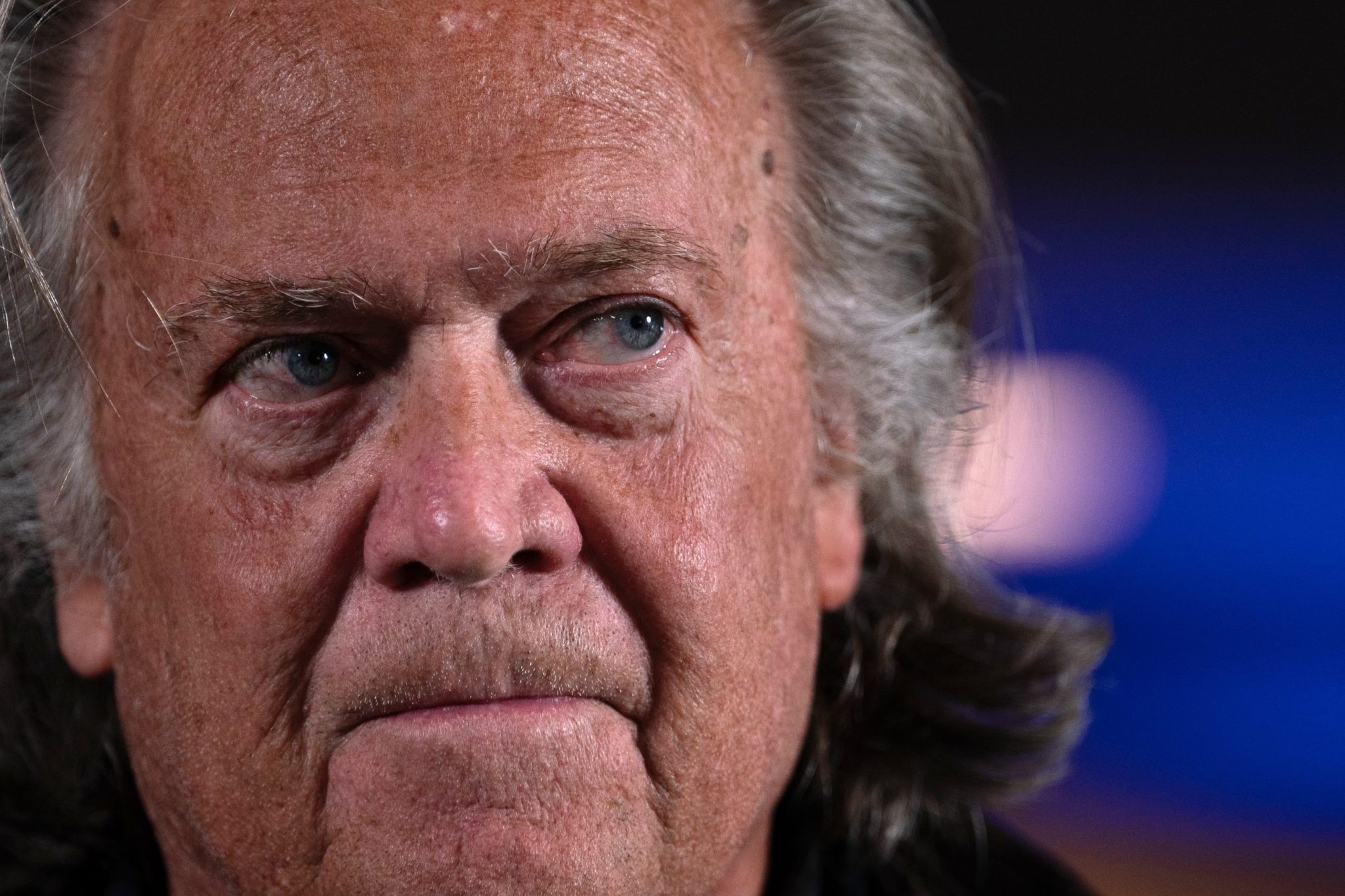
Steve Bannon, a longtime ally of President Donald Trump, on Monday won a Supreme Court order that is expected to lead to the dismissal of his criminal conviction for refusing to testify to Congress.
Prodded by the Trump administration, the justices threw out an appellate ruling upholding Bannon’s conviction for defying a subpoena from the House committee that investigated the Jan. 6, 2021, attack by a mob of Trump supporters on the U.S. Capitol.
The move frees a trial judge to act on the Republican administration’s pending request to dismiss Bannon’s conviction and indictment “in the interests of justice.”
The dismissal would be largely symbolic. Bannon served a four-month prison term after a jury convicted him of contempt of Congress in 2022. A federal appeals court in Washington had upheld the conviction.
The justices also issued a similar order in the case of former Cincinnati Councilman P.G. Sittenfeld, who was pardoned by Trump last year.
Sittenfeld had served 16 months in federal prison after a jury convicted him of bribery and attempted extortion in 2022. The high court order allows a lower court to consider dismissing his indictment.
The Justice Department brought the case against Bannon during Democrat Joe Biden’s presidency, but it changed course after Trump took office again last year.
Bannon had initially argued that his testimony was protected by Trump’s claim of executive privilege. But the House panel and the Justice Department contended such a claim was dubious because Trump had fired Bannon from the White House in 2017 and Bannon was thus a private citizen when he was consulting with the then-president in the run-up to the Capitol riot.
Bannon separately has pleaded guilty in a New York state court to defrauding donors to a private effort to build a wall on the U.S. southern border, as part of a plea deal that allowed him to avoid jail time. That conviction is unaffected by the Supreme Court action.
The Fortune 500 Innovation Forum will convene Fortune 500 executives, U.S. policy officials, top founders, and thought leaders to help define what’s next for the American economy, Nov. 16-17 in Detroit. Apply here.
As of 9 a.m. Eastern Time today, oil sold for $111.25 per barrel (using Brent as the benchmark, which we’ll get into momentarily). That’s $2.78 lower than yesterday—but approximately a $47.50 rise over the past year.
Oil price per barrel
% Change
Price of oil yesterday
$114.03
-2.43%
Price of oil 1 month ago
$83.87
+32.64%
Price of oil 1 year ago
$63.72
+74.59%
Price of oil yesterday
Oil price per barrel
$114.03
% Change
-2.43%
Price of oil 1 month ago
Oil price per barrel
$83.87
% Change
+32.64%
Price of oil 1 year ago
Oil price per barrel
$63.72
% Change
+74.59%
Will oil prices go up?
It’s impossible to predict the future of oil prices. Several factors determine the movement of oil, but it ultimately boils down to supply and demand. Again, when threats of economic downturn, war, etc. are high, the oil trajectory can turn rapidly.
How oil prices translate to gas pump prices
When you pay for gas at the pump, you’re paying for more than just the crude oil itself; you’re also springing for links along the chain, such as the refineries and wholesalers—not to mention taxes and local gas station markups.
Still, the crude oil aspect affects the final price most dramatically, as it typically accounts for more than half the price per gallon. When oil prices spike, so do gas prices. And frustratingly, when oil prices drop, gas prices tend to take their time drifting down to the lower price (sometimes referred to as “rockets and feathers”).
The role of the U.S. Strategic Petroleum Reserve
In case of emergency, the U.S. has a store of crude oil known as the Strategic Petroleum Reserve. Its primary purpose is energy security in case of disaster (think sanctions, severe storm damage, even war). But it can also go a long way toward softening crippling price hikes during supply shocks.
It’s not a long-term answer—more of an immediate relief to assist the consumer and keep critical parts of the economy running, like key industries, emergency services, public transportation, etc.
How oil and natural gas prices are linked
Oil and natural gas are both major energy fuels. A big change in oil prices can affect natural gas by extension. For example, if oil prices increase, some industries may swap natural gas for some segments of their operations where possible—which increases demand for natural gas.
Historical performance of oil
When examining oil’s performance, there are generally two major benchmarks:
Brent crude oil is the main global oil benchmark.
West Texas Intermediate (WTI) is the main benchmark of North America.
Between the two, Brent better represents global oil performance because it prices much of the world’s traded crude. And, it’s often the best way to track historical oil performance. In fact, even the U.S. Energy Information Administration now uses Brent as its primary reference in its Annual Energy Outlook.
Looking at the Brent benchmark across several decades, oil has been anything but steady. It’s seen spikes due to factors such as wars and supply cuts, and it’s also seen crashes from global recessions and an oversupply (called a “glut”). For example:
The early 1970s brought the first big oil shock when the Middle East cut exports and imposed an embargo on the U.S. and others during the Yom Kippur War.
Prices dropped in the mid-1980s for reasons such as lower demand and more non-OPEC oil producers entering the industry.
Prices spiked again in 2008 with increased global demand, but it soon plummeted alongside the global financial crisis.
During the 2020 COVID lockdown, oil demand collapsed like never before—bringing prices below $20 per barrel.
All to say, oil’s historical performance has been anything but smooth. Again, it’s hugely affected by wars, recessions, OPEC whims, evolving energy initiatives and policies, and much more.
Energy coverage from Fortune
Looking to stay up-to-date regarding the latest energy developments? Check out our recent coverage:
Frequently asked questions
How is the current price of oil per barrel actually determined?
The current price of oil per barrel depends largely on supply and demand, including news about potential future supply and demand (geopolitics, decisions made by OPEC+, etc.). In the U.S., prices also move based on how friendly an administration is to drilling, as it can affect future supply. For example, 2025 saw the Trump administration move to reopen more than 1.5 million acres in the Coastal Plain of the Arctic National Wildlife Refuge for oil and gas leasing, reversing the Biden administration’s policy of limiting oil drilling in the Arctic.
How often does the price of oil change during the day?
The price of oil updates constantly when the “futures” markets are open. A futures market is effectively an auction where people agree to buy or sell oil in the future. As long as people and companies are trading contracts, the oil price is changing.
How does U.S. shale oil production affect the current price of oil?
In short, shale is rock that contains oil and natural gas. Think of shale as energy yet to be tapped. The more shale the U.S. accesses, the more energy we’ll have—and the more easily oil prices can keep from spiking as much thanks to a greater supply.
How does the current price of oil impact inflation and the broader economy?
When oil is expensive, it tends to make everyday items cost more. This can be related to energy (your heating, gas utilities, etc.), but it’s also due to the logistics involved with making those items accessible to you. Shipping, for example, can affect the price of things at the grocery store, as it’s more expensive to get those products from warehouses and farms onto the shelf.
Good morning. Fears that AI could render traditional software vendors obsolete triggered a broad SaaS and cloud sell-off in February, a rout that some investors dubbed “SaaSpocalypse.” The catalyst: Anthropic’s addition of a legal task plug-in to its Claude AI, which wiped roughly $285 billion in tech market value within 24 hours.
The anxiety was straightforward. If AI can perform the tasks once handled by specialized software, or generate bespoke code on demand, why keep paying for software platforms at all? In a Fortune feature, my colleague Jeremy Kahn, Fortune’s AI editor, argues that this framing misses the larger pattern. New technologies rarely eliminate their predecessors outright. More often, they reshape markets, compress margins, and shift where value accrues. Desktop publishing didn’t kill commercial printing, for instance. It democratized it.
For CFOs and finance leaders, this moment isn’t about whether SaaS disappears. It’s about how the economics of software are changing, and what that means for the buy-versus-build calculus. In fact, AI may actually fuel the software industry rather than gut it.
As Kahn notes, by lowering the barriers to writing code, AI could unleash a new wave of companies building specialized business applications, no longer dependent on scarce, expensive coding talent. Finance leaders should expect a shift in value from standalone products to integrated ecosystems.
SaaS profit margins may compress and consolidation may follow, but not because AI cannibalized the industry, Kahn explains. “It will happen because AI fed SaaS,” he writes. You can read Kahn’s deep dive including insights from leading experts here.
I recently spoke with Intuit CFO Sandeep Aujla, who sees the current volatility as part of a familiar cycle. From Y2K to the rise of the internet, each wave of technological change has sparked predictions of disruption while underestimating the durability of established business models, he said.
At the same time, large language model providers are increasingly partnering with incumbent software companies, particularly in regulated environments where accuracy and trust matter. The relationship, Aujla suggested, is less competitive than it appears. “These LLMs are not looking to work against us,” he said. “They’re actually looking to work with us.”
Is AI changing how you think about SaaS or just accelerating trends already underway? I’d like to hear how you’re approaching it. Send me an email.
Adrianne Lee was appointed SVP and CFO of Sally Beauty Holdings, Inc. (NYSE: SBH), effective April 28. Lee succeeds Marlo Cormier, who will be leaving the company, effective April 11 to pursue other opportunities. Lee most recently served at Bed Bath & Beyond, joining as CFO in 2020, becoming chief administrative officer in 2024, and president in 2025. Before that, she held senior executive roles at The Hertz Corporation, including SVP and CFO of North America rental car and car sales, and VP of global financial planning and analysis. Earlier in her career, Lee held finance-focused roles at Best Buy Co., Inc., PepsiAmericas, Inc., Allianz Life and Price Waterhouse Coopers.
R. Brent Jones was appointed CFO of ESAB Corporation (NYSE: ESAB), an industrial compounder, effective in early May. Jones succeeds Kevin Johnson, who is leaving ESAB to pursue a CFO opportunity at a privately held company. Jones brings over three decades of experience to ESAB. Most recently, he served as CFO at Avantor. Previously, Jones was chief financial and operating officer at LifeScan. Earlier in his career, he served as CFO at Klöckner Pentaplast Group. He also held the role of interim CFO at Pall Corporation.
Big Deal
The U.S. Labor Department reported on Friday that employers added 178,000 new jobs last month. And the unemployment rate dipped to 4.3%. The hiring marked a rebound from the loss of 133,000 jobs in February. The job gains were about three times what economists had forecast.
Leisure and hospitality had the strongest month of job growth in two and a half years, with a gain of 44,000 jobs. Construction added 26,000 jobs, perhaps a bounce back related to weather-related distortions in February. Health care and construction were the main drivers of job growth.
“The word resilience gets thrown around a lot, but it’s merited,” according to Appcast Chief Economist Andrew Flowers. “Despite the rollercoaster readings of recent months, and the Iran war triggering deep economic turbulence last month, the underlying labor market trends over the past year have remained intact. Job growth is slowing, yes, but not in freefall, thanks to health care.”
Going deeper
“How to Find Leaders Early Using Neuroscience and AI” is a report in Wharton’s business journal that discusses new research on how organizations can identify potential leaders based on cognitive and behavioral signals rather than relying on formal experience. Elizabeth “Zab” Johnson and Michael Platt of the Wharton Neuroscience Initiative provide research that shows how neuroscience-informed, AI-enabled assessments can add a powerful new layer to leadership pipelines, especially at early career stages.
Overheard
“Warren Buffett’s GEICO spends more than $2 billion a year on advertising. Almost none of it describes a policy. Almost all of it produces comedy.”
—Stuart N. Brotman, digital media laureate and distinguished senior fellow at The Media Institute, writes in a Fortune opinion piece titled “The billion-dollar bet that turned insurance into entertainment.” Brotman served as president and CEO of The Museum of Television & Radio (now The Paley Center for Media).
Gen Z can’t catch a break. They’re struggling with mass unemployment as entry-level jobs vanish. Some 40% of bosses have admitted they plan to hire even fewer grads this year because AI can do the same job cheaper, preferring instead to keep only seasoned staffers on board. But at one AI company, the less experience you have, the better.
Alon Chen, founder and CEO of Tastewise—a generative AI platform trusted by PepsiCo, Nestlé, and Mars—is actively looking for Gen Zers with zero experience and no degree required. And he has a very specific reason why.
“There are some positions where you actually want people that do not have the prejudice or the old way of working,” Chen tells Fortune. “because it’s just not relevant anymore.”
In the last few years, there’s been an explosion of new tools, job functions, and ways of working thanks to AI—and in his eyes, younger workers are the best place to take advantage of these.
“I’m hiring entry-level because they have no boundaries or limitations in how they think about the world. They’re almost like AI natives themselves, having been born and raised in this new realm of opportunities. And I see some of the best ideas coming from the younger generation that have not yet been in the job market.”
Is more experience less important in this new AI era?
Chen knows a thing or two about betting on unconventional talent. At 15, Chen had already started his own business, selling computers to thousands of small and medium-sized businesses in Israel.
He became CMO at Google at 28 with no marketing degree—and went on to build the $2 billion product line, Google Partners. He then walked away to found Tastewise, which has raised $71.6 million and now works with more than half of the Fortune 100 food and beverage companies. He’s fully invested, and he’s hiring.
And in an era where AI is moving fast, he says experience is no longer the currency it once was.
“The playbook is irrelevant today, because there are so many new ways to do this, the very same job,” he explains.
The more deeply someone has learned the old way of doing something, the harder it is to get them to see past it. Chen doesn’t have that problem with a 22-year-old who’s never had a way of doing things.
“When you come as someone who just sees the problem and finds the best way to solve it,” Chen says, “it’s sometimes better than someone who has been doing the same job for so long and may just try to redo what’s been working for them in the past.”
To be clear: Chen isn’t only hiring Gen Z. For R&D, he still wants seasoned people. But within certain departments, like customer insights—where employees help clients get more value out of Tastewise’s AI—he’d rather have someone who’s never done the job before.
And these entry-level hires aren’t just temporary—complete this job and then you’re out. Chen says they’re becoming “pivotal” across the company—moving fluidly among technology, business, and client in ways that more siloed senior employees simply aren’t.
Other CEOs prefer to hire ‘less biased’ Gen Z, too
Chen isn’t alone in this thinking. Ricardo Amper, founder and CEO of $1.25 billion AI company Incode Technologies, has made the same bet—and put it more bluntly. “My belief is that coming out with a fresh mind, first principles, is important. That’s why young people are particularly helpful in tech, because they’re less biased,” he previously told Fortune. “I think too much knowledge is actually bad in tech: you’re biased.”
Despite getting flak for being lazy—including showing up late to work, ghosting job interviews, refusing to put in any overtime for free—the $62 billion consumer giant Colgate-Palmolive isn’t buying it. Chief human resources officer Sally Massey previously told Fortune that young digital natives bring “new ideas, new perspectives, curiosity… They’re pushing us to get better and to do things differently—I think it’s great.”
Steven Bartlett, founder and host of The Diary of a CEO podcast, took it even further—hiring a candidate whose CV was literally two lines long, with zero formal experience, after she thanked the security guard by name on the way into her interview. Six months later, she had become one of the best hires he’d ever made.
And the cofounder of the $12 billion crypto company Paradigm, Matt Huang, is so convinced by his youngest hires that he’s been promoting them into the C-suite. His first hire in 2018 was Charlie Noyes, a 19-year-old MIT dropout who walked into his first 10 a.m. meeting five hours late. By 2025, before exiting the crypto company, he was a general partner at just 25.
“They create an absurd amount of chaos sometimes and you want to pull your hair out,” Huang said of Gen Z hires. “But then you see what they can do and it’s like, holy crap, nobody else in the world could do that.”
For Chen, the message to Gen Z is simple: the door is open. You just have to be worth letting in.
“I would come to a job interview with a portfolio of what I’m able to do and show for,” he says. “Execution is everything.”
“I think there is actually an opportunity for younger people,” he adds, “if they are resourceful and can actually flag in some way that they’re better than others, and more determined to succeed than others.”
On November 7, 2023, my career ended. Not with a dramatic firing, not with a bitter exit, but with an acquisition that made my role redundant. Nearly three decades in the industry. Nine years in an executive role at a biotech company. And then: nothing.
I didn’t just lose a job. I lost the scaffolding I’d built my professional identity on. I told myself it was a blip. I was wrong.
What followed was something I’ve come to call “professional identity purgatory”—a seemingly endless holding pattern with no title, no structure, and no clear direction. It’s the space between who you were professionally and who you might become.
In Catholic theology, purgatory is the in-between—not heaven, not hell, but a passage of purification before something better. That’s the metaphor I keep returning to because “professional identity purgatory” isn’t failure, it’s transition with no timeline. It’s the disorienting gap between losing an identity you’d spent decades building and not yet knowing what replaces it.
We are currently in a period defined by significant professional transition. Millions of people are likely about to enter “professional identity purgatory” thanks to AI. I’m not an economist or a technologist, but what I do know—from living it, and from watching peers navigate it—is that the threat AI potentially poses to professionals goes deeper than lost tasks or restructured roles. It strikes at something more fundamental: the sense that what you spent your career mastering still matters. For generations, professional identity was durable—you built expertise, accumulated knowledge, climbed. Technology is disrupting that continuity in ways that are genuinely hard to sit with, not because the work disappears overnight, but because professional relevance starts to feel less certain. For people whose self-worth is tied to that relevance, the uncertainty alone can be destabilizing.
For people who’ve built their self-worth around titles, expertise, and relentless forward momentum, purgatory is particularly brutal. We don’t do well in holding patterns. We fill them with activity, with meetings, projects, and anything that mimics the rush that comes with progress. We avoid the discomfort at all costs, because the discomfort forces a reckoning we’ve spent our careers outrunning: Who am I without the work?
What I’ve Learned (and am Still Learning) Inside Purgatory
I want to be clear: I don’t have a framework, tools or tips on how to handle purgatory because I’m not on the other side yet. But I’ve been living in “professional identity purgatory” long enough to offer a few observations for those who may join me soon.
Stop filling voids with noise.My first instinct after leaving was to pack my calendar with things that felt familiar—networking coffees, mentoring conversations, advising. All legitimate. All also avoidance. Purgatory is uncomfortable by design. It’s trying to tell you something. The busier you stay, the harder it is to hear the message.
Let your identity be provisional.I still catch myself introducing myself with my old title—only now with a “former” as a qualifier. There’s no shame in that. Shaping your identity isn’t a quick iPhone OS update. The work in purgatory is learning to hold your professional self loosely—to try on new versions of yourself rather than defend the old one.
Redefine what expertise means.AI may automate much of the world around us. But it can’t touch judgement. Relationships. Context. The capacity to ask the right question rather than just answer the one in front of you. Those things don’t disappear with your title. They just need a new vehicle.
“Professional identity purgatory” is not a detour. For many of us, it may be the most important time in our careers—the place where the question we’ve been outrunning finally catches up: not “What do I do now?” but “Who am I when I’m not doing it?”
The professionals facing AI-driven disruption in the coming years won’t all lose their jobs overnight. But when it does happen, many will be met with the realization that their professional role was directly tied to their sense of self. The structure. The daily purpose. The identity.
When that happens, the instinct will be to run—to fill the void, project confidence, land the next thing as fast as possible. I’ve tried all of it. I understand the impulse.
But the purgatories we run from are very often the ones we need most. I’m still in mine. I’m tired of running. And for the first time in thirty years, I’m learning what it feels like to simply be still.
Geoff Curtis is the former executive vice president, corporate affairs and chief communications officer at Horizon Therapeutics. During his nearly 30-year health care communications career, he has worked domestically and internationally in various roles on both the client and agency side. This column is adapted from his book, Embracing Your Own Purgatory, which is available now.
The CEO candidate seemed like a perfect fit. Blackstone, the private equity titan, had acquired a real estate company and was searching for the ideal leader to helm it. The candidate had excelled as a senior executive at another Blackstone-owned real estate company and had greatly impressed interviewers on the CEO search committee.
But soon after he was hired to the new position, problems began to surface. The role required a chief executive who had a strong grasp of the local market, relationships with regional policymakers, and expertise in managing regulatory affairs—areas where his experience was limited. Within six months, it was clear that the CEO was struggling. The company had fallen significantly behind on its growth plan and failed to meet key financial milestones. Blackstone initially attempted to hire its way out of the problem, adding a chief transformation officer, an executive to restructure costs, and a more active advisory board chair. The CEO was also given feedback and coaching. But despite those efforts, his tenure lasted only two years.
“If we had simply stepped back and asked ourselves, ‘What do we uniquely need this CEO to do to get us where we need to be?’ we would have realized he wasn’t the right fit,” admits Courtney della Cava, Blackstone’s senior managing director and global head of portfolio talent and organizational performance. “Instead, we became enamored with his past success—and it set us back.”
It was a costly error, but one that Della Cava says highlights the importance of Blackstone’s current approach to hiring CEOs for the 250 companies in its portfolio.
This story was featured in The Reader, a weekly newsletter of the biggest stories from Fortune. Sign up here.
Blackstone has reached the top of the private equity pyramid by mastering the art of acquiring promising companies, improving their operations and profitability over a few years, then selling them at a higher value. It’s a strategy that has grown its portfolio of companies and real estate assets to a value of $1.1 trillion—a nearly 13- fold increase compared to the $88 billion in assets under management when it went public in 2007.
The success of this model hinges on having the right leaders in place. And Della Cava was hired in 2021 to transform the firm’s CEO recruitment from an art to a more precise science.
Landing a C-Suite role at a Blackstone portfolio company is exceptionally competitive, and most candidates won’t make the cut, says Dan Kaplan, a senior client partner at Korn Ferry’s CHRO practice. “Everyone wants to be there,” Kaplan says. “It has become a brand synonymous with being best in class.”
Under Della Cava, each aspiring company leader now undergoes a rigorous and time-consuming three- to four-month recruitment process that includes nearly a dozen interviews with Blackstone stakeholders, advisors, and consulting partners, as well as board presentations, third-party assessments, exhaustive feedback from references, and a nearly five-hour psychometric evaluation that’s designed to deeply probe the candidate’s cognitive ability, character, motivations, and essence as a leader.
Selecting a CEO is about betting on potential, and Della Cava has found that each component of Blackstone’s search process improves the likelihood of making the right appointment. This playbook, she says, is especially critical for a role that is grueling, fast-paced, and requires a person who can handle the volatility of being celebrated as a hero one day and criticized as a villain the next.
“Being a CEO is a high-intensity sport,” says Della Cava. “For the right person, it’s extraordinary. But it’s not for everyone.”
Blackstone’s CEO recruitment framework, which Della Cava and her team have refined over the past four years, has quickly become the envy of other private equity firms, according to several executive recruiters. Her 11-person team often works on dozens of companies’ leadership searches at once.
With billions of dollars at stake, the importance of selecting the right CEO for a Blackstone portfolio company is extraordinarily high—for not only a company’s financial success but also its culture. “An underperforming leader results in an underperforming company,” says Della Cava. Put simply, she says: “Leadership is the No. 1 driver of value creation.”
And getting a hire wrong can be a cascading disaster. Studies conducted by management consulting firm ghSMART found that a typical hiring mistake costs a company 15 times the employee’s base salary in hard costs and lost productivity. For example, a single error in hiring a $100,000 employee could result in losses exceeding $1.5 million. The stakes are even greater for executive roles.
Born and raised in San Diego and now living in San Francisco, Della Cava defies the stereotype of the laid-back, sun-chasing Californian. Impeccably dressed, well-groomed, and tall, she exudes a polished self-assuredness and sophistication reminiscent of a corporate Manhattan power player. She’s warm and highly personable, but also mentally shrewd, with a thoughtful and deliberate way of choosing her words.
Della Cava says she has always been introspective, and was curious from a young age about what drives people’s actions and decisions—partly the result, she says, of being the youngest of four kids. “I was the kid who put herself to sleep,” she recalls. “When you’re the baby in a large family, you become self-sufficient, and I became very observant, which turned out to be a gift.”
Her father, an attorney, and her mother, a homemaker, often hosted dinner parties. “I would sit under the dining room table as a kid and just listen,” she says. “My parents didn’t know I was there, but it was a wonderful learning experience. I was enthralled by their conversations, trying to connect the dots and understand what they were discussing.”
This fascination with people and their motivations initially led Della Cava to a career in marketing. “I wanted to understand why people make the choices they do. Why Pepsi over Coke? Why Mazda over other car companies?” she says, seated in a 43rd-floor boardroom at Blackstone’s headquarters overlooking Manhattan’s Park Avenue.
Her career eventually shifted to management consulting, including stints at Bain & Company and Russell Reynolds. At Bain, much of her work centered on “the what”—as in, the strategy, she explains: “How do you figure out a business model quickly? What are the market dynamics, and what adds value?”
In 2010, Della Cava joined Russell Reynolds as the firm transitioned from being generalist to becoming expert in select industries. It was there that she had a pivotal realization: While much of the management consulting industry focuses on “the what,” success largely hinges on finding the right “who” to execute it: the staff, and especially company leaders.
This epiphany came from her relationship with a longtime client, a retail CEO, who followed Della Cava from her previous role in management consulting to her new position in executive search. Their dynamic evolved from “sterile” strategy discussions to deeply personal coaching about his ambitions, legacy, succession planning, and building a strong executive talent pipeline.
“I had this aha moment,” she explains. “If we could help companies get the right people in, they could figure out the ‘what’ because good leaders know the right questions to ask. But equally, you can’t get the right people in until you’re clear on strategy.”
From her front-row seat working with Fortune 500 clients, Della Cava found that the most successful companies focus intensely on the “what” and the “who.” Both are encompassed in what Blackstone calls an “investment thesis” for each company.
$1.1 trillion
Value of the 250 companies and thousands of real estate assets in Blackstone’s portfolio
A Blackstone investment thesis identifies three to five key levers for creating maximum value, which may include M&A, digital investments, or expansion into adjacent markets, and always incorporates a leadership component. It also sets the time horizon for achieving these objectives and, if applicable, outlines the exit plan.
The CEO selection process is extensive—and can be exhausting for candidates going through its many phases. It begins during the due-diligence process for a potential new investment. “Step one is figuring out how to drive the most value for the company,” says Della Cava. “Step two is finding leaders who can stay the course and deliver on it.”
Della Cava’s group assesses the company’s organizational structure, culture, and incumbent C-Suite. They collaborate with external advisors, business heads across private equity and real estate, and Blackstone’s network of approximately 100 senior advisors to translate the emerging investment thesis into leadership requirements.
About 85% of the time, there is some C-Suite reshuffling, which Della Cava acknowledges can be anxiety-inducing for incumbent executives. But she stresses that the process is not a one-sided slashing and burning of the existing leadership team. “It’s a transparent dialogue where we’re assessing whether the current team has the capabilities and skills required,” she explains. “And they’re also determining if they want to stay.”
For each mission-critical C-Suite and board role, Della Cava’s team creates a leadership scorecard that aligns their responsibilities with value-driving levers. After a deal is finalized, the CEO search begins in earnest. Blackstone works with executive recruitment firms such as Spencer Stuart to identify potential candidates to replace the current leadership.
During the early stages of a CEO search, around 10 to 15 candidates are considered, with only two advancing to the final stages. The process typically takes 90 to 120 days, with CEOs selected after an executive chair has been appointed.
“Being a CEO is a high-intensity sport. For the right person, it’s extraordinary. But it’s not for everyone.”
Courtney Della Cava, Blackstone
In some cases, no changes are made to the C-Suite. Other times, a new role is added, or an existing executive is promoted. By the end of the first year of the investment, however, the go-forward team is firmly in place.
In November 2022, Ross Shuster, then CEO of Scotland-based industrial company Howden, got such a call from Spencer Stuart. Would he be interested in a CEO opportunity at a Blackstone portfolio company?
The previous month, Blackstone had announced its $14 billion acquisition of a majority stake in the engineering firm Emerson’s climate technologies business, forming a new company later named Copeland. It was a complex transaction: Though Blackstone had acquired the business, Emerson retained a 40% equity stake. Copeland, an HVAC compressor company, needed a CEO capable of carving out and transforming a noncore division of a larger conglomerate into a stand-alone entity—all while driving significant growth.
What followed for Shuster was an intensive four-month process that included multiple interviews with nearly a dozen people. He flew from the U.K. to New York City twice to meet the Blackstone team and spent countless hours preparing for each interview and the final board presentation—while still managing his CEO responsibilities at the time. “It was definitely time-consuming,” says Shuster, who officially assumed Copeland’s corner office in April 2023. “But it was intentional. It was focused.”
The most probing interview that Shuster went through before he was hired was with Rosanna Trasatti, a clinical psychologist and leadership consultant who has helped administer many of Blackstone’s psychometric analyses.
Trasatti’s job is to get past the spiel that most candidates come prepared to deliver. Those who have reached the highest levels of corporate America tend to present a polished persona. “They’ve reflected deeply, are self-aware, and have crafted a well-rehearsed narrative they’ve shared countless times,” says Trasatti.
Ross Shuster, CEO of the climate tech firm Copeland.
The nearly five-hour psychometric assessment, with its probing and incisive questions, is designed to push candidates to move beyond their practiced narratives and offer deeper insights into how they think, learn, lead, and communicate. “By hour three—and certainly by hour four— most candidates let their guard down,” says Trasatti. “It’s challenging to maintain a polished story for that long.”
Some of the questions prompt candidates to provide specific examples of their tasks and results, while others are designed to encourage deeper reflection on the candidate’s life journey. “We take people back to their childhood and ask them to explore where they believe their drive originates,” she explains.
For instance, prospective CEOs might be asked to select six colleagues from the past five years and explain how those coworkers would describe them. This encourages candidates to imagine themselves through the eyes of peers, reports, and bosses. “We’re cognitively playing with getting them to access and share their stories in different ways,” says Trasatti. “I don’t allow them to sit in a space of practiced responses or emotional detachment from their narrative.”
The psychometric results are shared with participants during the session, where they’re able to discuss and pressure-test them. Sometimes candidates get defensive because they don’t agree with the results. Sometimes the insights challenge their understanding of their own leadership style. If a candidate’s analysis suggests they thrive in entrepreneurial environments with minimal structure, for example, Trasatti might ask how they would handle implementing extensive structured processes. Doing so allows candidates to engage with the data, reflect on whether it resonates, and navigate unexpected or even difficult conversations that deviate from their prepared narrative.
For Shuster, the assessment highlighted his leadership style as that of a team builder. While capable of taking charge when necessary, he prefers to act as a facilitator, empowering others and fostering a shared ownership of decision-making. “My ideal executive team is, if someone walked into a room and saw the 12 of us talking, it would be hard to identify who the CEO, CFO, or CHRO is because everyone is passionate about every aspect of the business,” says Shuster.
The psychometric analysis also assesses the traits that are predictive of high performance, grouping them into “success modes” and “failure modes.” Success mode traits include resilience, grit, humility, and a track record of cultivating loyalty and followership, while failure modes often involve insecurity and low cognitive ability.
“Cognitive ability” might seem too obvious a requirement to note. But there’s more to the quality than simple intelligence. Candidates complete a timed test to measure their mental processing speed and gauge whether they can operate at the fast pace required for the corner office. “It’s not ‘Are you smart or stupid?’” says Della Cava. “It’s ‘Can you keep up? Do you have the cognitive speed, the ambition, the intellectual rigor, and mental agility to meet the demands of the role?’”
While candidates who score well below a certain threshold are more likely to fail as CEOs, a higher-than-average cognitive score does not necessarily predict success. “You kind of have to be tall enough to ride the ride, but being taller doesn’t make you enjoy the Ferris wheel more,” Trasatti explains.
References offer yet another assessment opportunity. Della Cava’s team goes beyond the references provided by CEO candidates, back-channeling and reaching out to its own network for deeper insights into the candidate’s work history. The group could include board directors, CEOs, customers, clients, former sponsors, or direct reports.
By the time candidates reach the board presentation stage, Blackstone has narrowed the CEO pool to two or three finalists. These hour-long presentations provide candidates with an opportunity to share their thoughts on the investment thesis and outline their plans for execution. “It’s a bit of a dress rehearsal for how they’ll engage with us,” says Della Cava.
It’s an incredibly comprehensive approach, but as with anything involving human judgment, it’s not 100% error-free. Missteps have occurred when the firm overlooked obvious warning signs or overestimated its ability to mitigate them, says Della Cava.
Even with all the information and data gleaned from the extensive selection process, she concedes that it’s easy to become enamored with a candidate. “You start to build a character in your head instead of asking, ‘What do I uniquely need them to do? What specific qualities should I prioritize? What are the pragmatic tradeoffs, and how can we address their shortcomings with the right support and scaffolding?’”
The recipe for success as a Blackstone portfolio CEO
Blackstone’s rigorous process for selecting C-Suite executives to run its portfolio companies includes a nearly five-hour psychometric evaluation to assess whether candidates possess the qualities required to excel in these high-pressure roles. Based on hundreds of assessments of C Suite candidates, the firm has identified key traits that indicate a candidate’s potential for success—or risk of failure. Here are a few of them.
Success modes
Resilience: Leaders are able to thrive under pressure, steadily managing a rapid pace, complex changes, ambitious goals, and constant scrutiny without buckling.
Confident leadership: Leaders can rally their staff during periods of change because they have a compelling presence and can quickly capture attention, establish credibility, and earn trust.
High emotional intelligence: Leaders have emotional awareness and empathy and can self-regulate their feelings. They build strong relationships, navigate complex interpersonal dynamics with ease, and are exceptional communicators.
Self-awareness: Leaders demonstrate humility, take accountability for their mistakes, understand the impact of their behavior on the company, and understand their strengths and weakness.
Failure modes
Below-average cognitive heft: Candidates whose problem-solving ability and mental processing speed are below average relative to their executive peers are unlikely to succeed.
Inflexibility: An unwillingness to adapt, change, or compromise in response to new circumstances or ideas works against candidates.
Insecurity: Candidates who often seek reassurance and answers from others, or who try to keep up an appearance of success by withholding information, avoiding issues, or presenting an overly optimistic outlook increase their risk of failure.
This article appears in the February/March 2025issue of Fortune with the headline “The Blackstone edge.”
Business leaders look everywhere for inspiration, from eyeing their peers’ successes to tapping industry vets for insight. But Delta’s CEO, Ed Bastian, chose to form a close relationship with seven-time Super Bowl champion Tom Brady to shape the airline giant’s leadership—and Brady’s wisdom is revamping the company’s playbook.
“He’s a great leader,” Bastian recently toldFortune’s Editor-in-Chief Alyson Shontell on the Fortune 500: Titans and Disruptors of Industry podcast. “He’s got a great mind. He’s [got] a way of continuing to push the envelope.”
The leader of the $42.2 billion business doesn’t want his operating philosophy to exist in an echo chamber. Bastian explained that after a number of years at the top, companies don’t appreciate how hard it is to maintain their success. Many may fall into the trap of repeating the same formula over and over again in hopes of sustaining that momentum—but the Delta CEO says that’s the wrong approach. What really fuels success is constantly evolving.
“What got you to the top is continuing to reinvent, continuing to think differently, to be bold, push against all the strategies that made you great in order to sustain even greater performance,” Bastian continued. “And I don’t know anyone, at least in the sports world, for a longer time on a global stage that did that better than Tom did.”
The football star is bringing his own leadership flair to the company’s more than 100,000 employees with his “Tom Brady playbook.” Young staffers pose questions on how to succeed, move forward, and grapple with challenges; he’s also part of a video series that Delta workers complete as part of the company’s learning and development experience.
Staffers hear directly from Brady on his own personal career lessons—and Bastian says he leans on the quarterback legend “for an awful lot” in the transformation.
“Rather than just hearing from me all the time, having different voices come into our room and our leadership meetings and our 100,000 people, to share what greatness means—not to get there, but to sustain it—Tom is a great advocate for it,” the CEO said.
Brady’s post-football retirement in the corporate world
Brady first partnered with Delta Airlines in 2023, when the champion athlete, whose mother was, fittingly, a flight attendant, signed on as a strategic advisor to the Fortune 500 company. Bastian said his team needed continued inspiration to keep climbing up the industry ranks, and the five-time Super Bowl MVP was a perfect fit.
“He’s going to be talking to our people about greatness, about resilience, about excellence, about performance,” Bastian told CNBC in 2023, right after announcing their partnership. “He played with the greatest teams in the world. I think we run the greatest team in the airline space in the world, and putting our two brands together, magic is going to happen.”
Earlier that year, Brady had retired from an iconic 23-season stint in the NFL; however, he wasn’t ready to throw in the towel on his career just yet. Since 2023, he’s staked a claim in the business world as well; he’s become a part-owner of companies like NoBull and CardVault, while also speaking at major businesses, including Cisco and Cloudera. At Delta, he says he’s helping inspire people and grow a great team of workers.
“In this next chapter of my life, to continue to do things like that really stimulates my own personal growth in a lot of ways,” Brady told CNBCalongside Bastian in 2023. “I’m excited to share a lot of the lessons I’ve learned.”
The football icon says that successful teamwork “always starts at the top”; leaders should inspire others to maximize their opportunities and potential. And even though he spent decades performing at the top of the game, Brady says he’s not immune to criticism. In fact, he encourages it; Brady says resting on his reputation would be “the worst thing to do.” Throughout his football career, and in his current partnership as a strategic advisor, he still values being coached to sustain his ongoing success.
“I’m always one of the teammates,” Brady told Bastian in a 2024 Delta Gaining Altitude podcast episode. “Some of these guys were brand-new, but I wanted them to treat me like it was my first day on the job, too.”
Even during the early days of his football career, success didn’t come immediately, and Brady learned a lot from failure. He got his start as a benched, second-string quarterback on his California high school team, which didn’t win a single game. Even though he played at University of Michigan as a starting quarterback, he was a sixth-round pick in the 2000 NFL draft, selected 199th overall. Still, he persisted and became one of the greatest athletes of all time. Staying resilient in the face of failure is key to success in any profession, from sports to business.
“The reality of your business and career is overcoming adversity,” Brady told Shontell at the Fortune Global Forum in 2024. “The only way to do that is to fail, and the only way to fail is to put yourself in uncomfortable positions.”
“If you fail, and then you figure out a solution for the people you work with to overcome the failure, you gain a lot of self-confidence, and if you gain self-confidence, you’ll get a better chance for the next opportunity to succeed.”
Tehran has been embolden by its ability to maintain tight control over the Strait of Hormuz and its own population. But even if the regime survives the war against the U.S. and Israel, its biggest challenge may come afterward.
For now, there’s little sign of de-escalation as President Donald Trump has vowed to obliterate Iran’s economy if Tehran doesn’t reopen the strait in the next few days, while the Islamic republic continues bombarding its Persian Gulf neighbors.
Both sides are already targeting civilian and energy infrastructure, boosting postwar rebuilding costs everyday. But while the Gulf states boasted thriving business sectors before the conflict, Iran’s economy was already in shambles, leading to domestic unrest that prompted a brutal crackdown.
Still, the regime’s ability to stay in power, resist Trump’s threats, and weaponize the Strait of Hormuz shouldn’t be mistaken as evidence it will survive, according to Burcu Ozcelik, a senior research fellow for Middle East security at the Royal United Services Institute.
“It risks treating a political outcome as predetermined, leaving too little room for the possibility that pressures from below, including from Iranian opposition voices and a war-weary public, could still shape the direction of events,” she wrote in an analysis on Thursday. “It also overlooks the possibility that hardening may generate not only endurance, but brittleness: a post-war system that appears more entrenched yet is less capable of absorbing internal shocks without fracturing.”
Once the fighting ends, Tehran must somehow rehabilitate relations with its neighbors to restore the commercial and financial channels that gave the regime access to the global economy, Ozcelik explained.
Gulf states were vital conduits for Iran in skirting Western sanctions, allowing it to generate oil revenue. But after the war, they are unlikely to go back to the earlier status quo without guarantees from Tehran on their future safety, she added.
In fact, there may be no going back. The United Arab Emirates, which long had deep commercial ties with Iran, is revoking visas of Iranians in the UAE and may freeze Iran’s assets in country.
Gulf neighbors have also signaled that Trump must continue the war until Iran’s hold on the Strait of Hormuz is broken, with the UAE and Saudi Arabia even contemplating joining the fight.
Unless the war ends with substantial easing of sanctions, Iran’s “economic strain ahead will be shaped by the war’s extensive damage and by Iran’s own exposure to the consequences of escalation,” Ozcelik predicted.
She also pointed out that prolonged disruption of the oil trade drives up market volatility, threatens Iran’s export position, and risks angering its main oil buyer, China. At the same time, Iran can’t put its economic recovery hopes on being a “toll booth” in the Strait of Hormuz, where it acts as a gatekeeper and collects payments from ships it approves.
‘Creating different incentives for the elite’
Instead, Tehran may have to look to negotiated, conditional sanctions relief—but that’s where the catch is, according to Ozcelik.
Bringing more of Iran’s economy out of the shadows and into formal, regulated channels could weaken some of the structures that empowered pillars of the regime, like the Islamic Revolutionary Guard Corps, she said.
That doesn’t mean lifting sanctions will lead to democracy in Iran, and the war will strengthen the IRGC in the near term, Ozcelik cautioned.
“But the scale of reconstruction required after damage to major energy and industrial infrastructure will be severe, and that will put pressure on the very patronage system that has helped hold the regime together,” she wrote. “Over time, conditional re-entry into regulated economic channels could begin to weaken parts of the pre-war economy, creating different incentives for the elite and create opportunities for domestic political opposition.”
However, a critical question is whether the U.S. will have the patience to wait and see how changes in Iran’s political economy actually shift “the balance of interests inside the system,” Ozcelik warned.
Indeed, the war may come to a head in the next few weeks as Trump deploys thousands of troops to the region for a potential ground assault meant to reopen the strait.
But in the meantime, Iran’s economy continues to deteriorate. Inflation has worsened and apparently is so bad now the government issued its largest-ever currency denomination: the 10 million rial note (equivalent to about $7).
The new currency went into circulation last month, according to the Financial Times, and came just a month after the prior record holder, the 5 million rial, came out.
As prices continue to spiral higher while the war boosts demand for cash, long lines formed to withdraw the fresh banknotes, and supplies quickly ran out. Doubts about the viability of the banking system have grown during the war as the U.S. and Israel target the regime’s levers of control.
In addition to bombing IRGC and Basij paramilitary forces, a data center for Bank Sepah was also hit on March 11. Sepah is the country’s largest bank and is responsible for paying salaries to the military and IRGC.
“Iran is already in the middle of a severe cash liquidity crisis,” Miad Maleki, a senior advisor at the Foundation for Defense of Democracies and a former Treasury Department official, said on X last month. “As of Jan 2026, banks were running out of physical banknotes daily, with informal withdrawal caps of just $18–$30/day. Cash in circulation surged 49% YoY due to panic hoarding. The regime simply cannot pivot to cash payments, there isn’t enough physical currency in the system.”
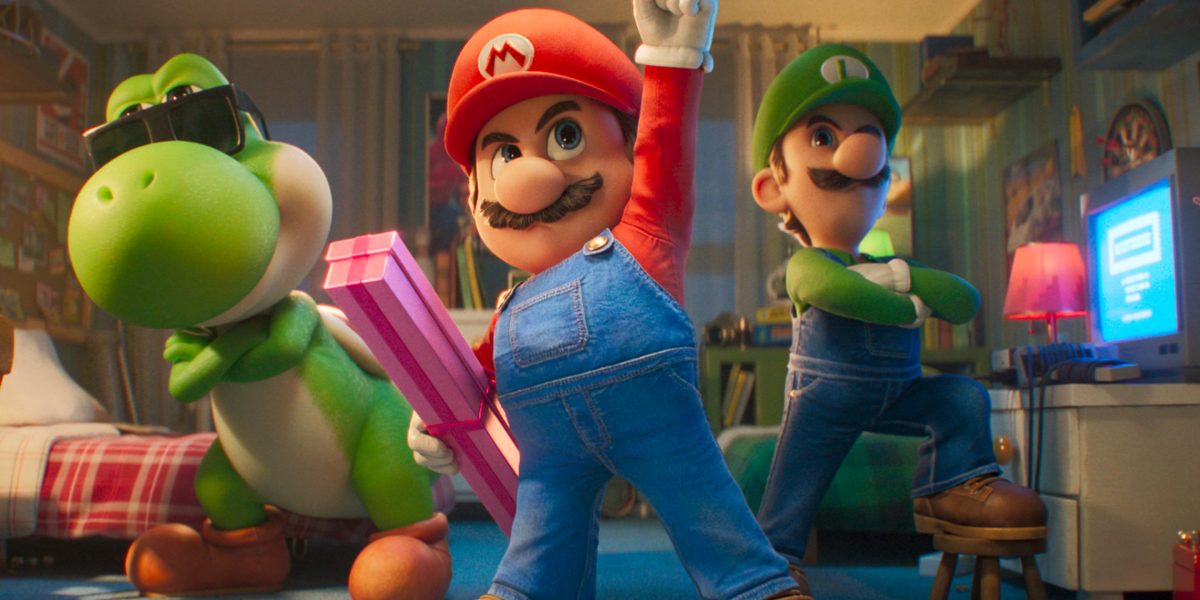
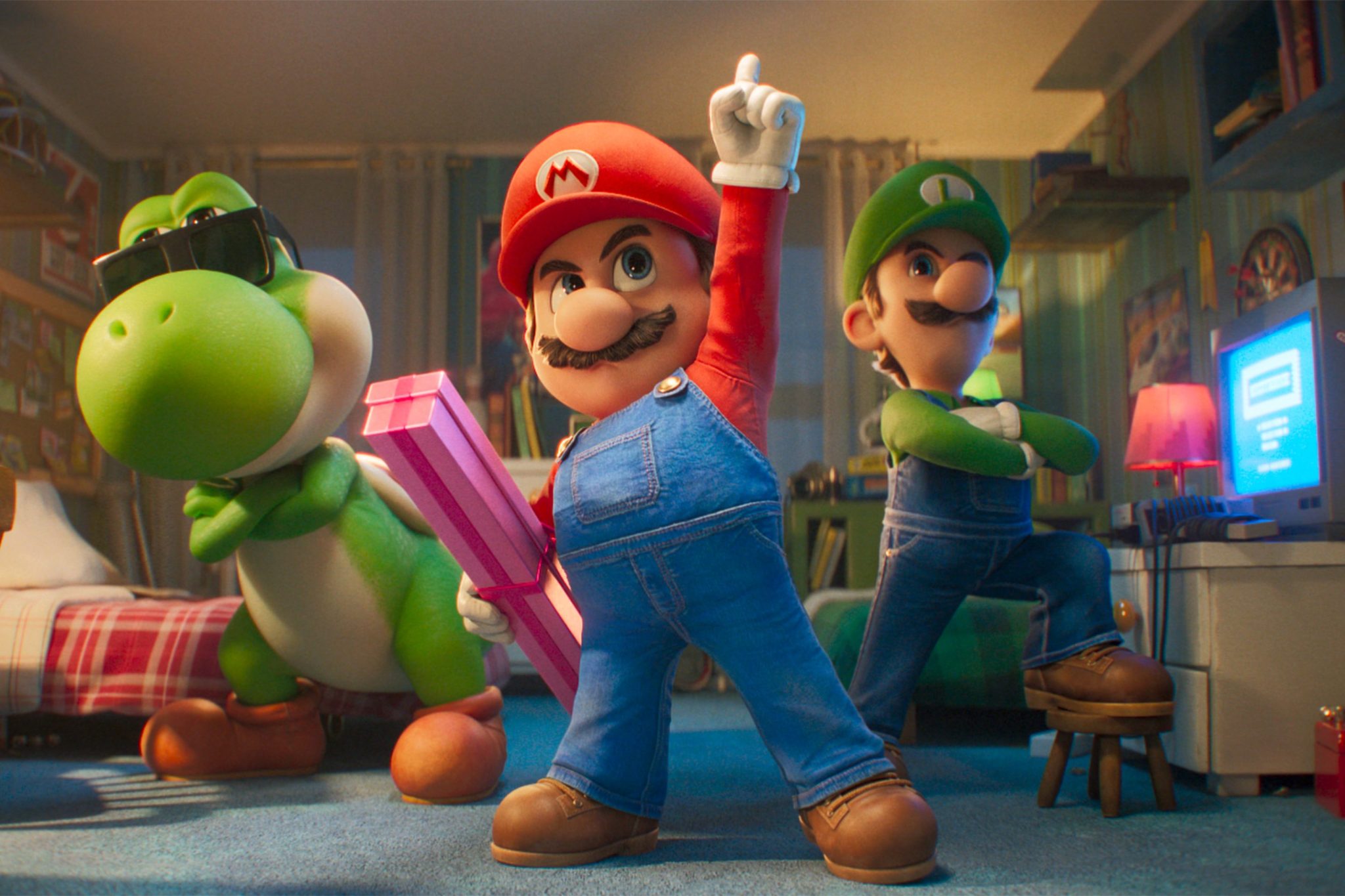
Mixed reviews didn’t dissuade mass audiences from buying tickets to the “The Super Mario Galaxy Movie,” which scored the biggest opening of the year for a Hollywood movie. The Illumination and Nintendo co-production earned $130.9 million over the weekend and a massive $190.1 million in its first five days in North American theaters, according to studio estimates Sunday.
Universal Pictures released the sequel globally on Wednesday, capitalizing on kids’ spring break vacations in the week leading up to the Easter holiday. With an estimated $182.4 million from 80 overseas markets, the film is looking at an astronomical $372.5 million debut — the latest hit for the PG rating. Mexico is leading the international bunch with $29.1 million from 5,136 screens, followed by the U.K. and Ireland with $19.7 million.
The animated sequel, Illumination CEO Christopher Meledandri’s 16th movie in 16 years, is the industry’s biggest debut since “Avatar: Fire and Ash” launched over Christmas. The Chinese movie “Pegasus 3,” which was not a Motion Picture Association release, has the slight edge for the 2026 global record, however.
It’s also a dip from the first film, which opened to $204 million domestically during the same five-day time frame in 2023 ($147 of that was from Friday, Saturday and Sunday). “The Super Mario Bros. Movie” went on to be the second biggest movie of 2023, with over $1.3 billion in box office receipts.
“The Super Mario Galaxy Movie,” which features returning voice actors Chris Pratt, Jack Black, Anya Taylor-Joy and Charlie Day, had a massive footprint in the U.S. and Canada, where it played in 4,252 theaters, including 421 IMAX and 1,345 premium large format screens. It made $15 million from the IMAX screens alone.
“It’s exactly the kind of broad, crowd-pleasing release that brings people into theatres,” AMC Chairman and CEO Adam Aron said in a statement.
It also cost around $110 million to make, not including marketing and promotion expenses. But it arrived on a wave of less-than-stellar reviews. Its Rotten Tomatoes score is currently sitting at a lousy 40%. Ticket buyers were more enthusiastic, however.
The family audience gave the movie five out of five stars according to PostTrak exit polls, while general audiences gave it four stars and an A- on CinemsScore. Audiences skewed male (61%) overall, although when it came to families attending there were slightly more moms (52%) than dads.
“These kind of audience reaction scores just point to a ridiculously strong run, not only throughout the spring, but likely into the summer as well,” said Jim Orr, Universal’s president of domestic distribution.
“The Super Mario Galaxy Movie” will open in Japan later this month.
Last year, the first weekend in April hosted the launch of another video game blockbuster, “A Minecraft Movie,” which had a bigger three-day debut ($162.8 million) but didn’t have a “Project Hail Mary” in a strong second place, meaning the weekend overall is still up around 5%.
As expected, “The Super Mario Galaxy Movie” ended the two-week reignof the Ryan Gosling-led sci-fi hit “Project Hail Mary,” which landed in second its third weekend in theaters where it added $30.7 million, bringing its running domestic total to $217.2 million. Worldwide, it’s made $420.7 million to date.
Third place went to A24’s provocative new movie “The Drama,” starring Zendaya and Robert Pattinson, which made an estimated $14.4 million from 3,087 theaters. The film’s stars have been on a massive and charming press blitz to promote their R-rated movie about a engaged couple grappling with an unnerving revelation, which cost a reported $28 million to produce. The reveal has drummed up a fair amount of cultural discourse. While reviews have been more positive than not (82% on Rotten Tomatoes), it got a less promising B CinemaScore.
“Hoppers” and “Reminders of Him” rounded out the top five. And the box office outlook looks bright overall, up around 30% from last year.
“There’s no better opening act for a great summer than a huge month of April powered by a mega blockbuster like the ‘The Super Mario Galaxy Movie,’” said Paul Dergarabedian, comscore’s head of marketplace trends.
Top 10 movies by domestic box office
With final domestic figures being released Monday, this list factors in the estimated ticket sales for Friday through Sunday at U.S. and Canadian theaters, according to Comscore:
The United States pulled off a daring rescue of two aviators whose fighter jet was shot down by Iran, plucking the pilot from behind enemy lines before setting off a complicated extraction of the second service member who hid deep in the mountains as Tehran called for Iranians to help capture him.
The CIA looked to throw off Iran’s government before the crew member was found, launching a deception campaign to spread word inside the Islamic Republic that it had already located him.
Even as President Donald Trump and other U.S. officials described an almost cinematic mission, rescuers faced major obstacles, including two Black Hawk helicopters coming under fire and problems with two transport planes that forced the U.S. military to blow them up.
“This is the first time in military memory that two U.S. Pilots have been rescued, separately, deep in Enemy Territory,” Trump wrote early Sunday on his Truth Social platform. “WE WILL NEVER LEAVE AN AMERICAN WARFIGHTER BEHIND!”
US officials stayed silent as the operation played out
In a pair of social media posts, Trump said the operation over the weekend required the U.S. to remain completely silent to avoid jeopardizing the effort, even as the president and top members of his administration continuously monitored the airman’s location.
The White House and the Pentagon refused to publicly discuss details about the downed fighter jet for well over 24 hours after the initial crash, particularly about the first crew member rescued from the F-15E Strike Eagle— an effort that Trump later said took seven hours in broad daylight over Iran.
The United States and Iran’s government then were both racing to find the second crew member, a weapons systems officer, whose location neither side knew.
The CIA spread word that the U.S. had found him and were moving him by ground to get him out of Iran, according to a senior Trump administration official who spoke on condition of anonymity to discuss details not yet made public.
The confusion allowed the CIA to uncover the location of the service member, who was hiding in a mountain crevice, the official said. The intelligence agency sent the coordinates to the Pentagon and the White House, where Trump ordered a rescue operation.
Iran urged the public to look for the ‘enemy pilot’
Meanwhile, an anchor on a channel affiliated with Iranian state television had been urging residents in the mountainous region of southwest Iran where the fighter jet went down to hand over any “enemy pilot” to police and promised a reward for anyone who did.
Trump said the American aviator was being “hunted down” by enemies who were “getting closer and closer by the hour.” The United States was monitoring his location continuously, he said.
At the right moment, Trump said, he directed the military to send dozens of heavily armed aircraft to rescue the crew member, who the president said is “seriously wounded” but will recover.
Iranian state media reported that airstrikes in southwestern Iran on Saturday killed at least three people and wounded others, in the same area where the missing American crew member was believed to be.
American rescuers face obstacles with aircraft during the operation
The American rescue mission ran into major challenges behind enemy lines. Iran’s joint military command claimed it struck two U.S. Black Hawk helicopters taking part in the operation.
A person familiar with the situation said the two helicopters were able to navigate to safe airspace, although it’s unclear if they landed or if crew members were injured. The person spoke on the condition of anonymity to discuss the sensitive information.
Then, the U.S. military was forced to bring in additional aircraft to complete the rescue of the second service member due to a technical malfunction, according to a regional intelligence official briefed on the mission. The U.S. blew up two transport planes it was forced to leave behind because of the mishap, said the official, who spoke on condition of anonymity to discuss the covert mission.
Iran’s state television on Sunday aired a video showing what it claimed were parts of a U.S. aircraft shot down by Iranian forces, along with a photo of thick, black smoke rising. The broadcaster said Iran had shot down a transport plane and two helicopters that were part of the rescue operation.
Iran’s joint military command said the destroyed aircraft included two C-130 military transport aircraft and two Black Hawk helicopters in the province of Isfahan, where the rescue took place.
“The fact that we were able to pull off both of these operations, without a SINGLE American killed, or even wounded, just proves once again, that we have achieved overwhelming Air Dominance and Superiority over the Iranian skies,” Trump said on social media.
A second US military jet also was shot down
Trump, however, did not mention that a second military jet also went down the same day as the F-15E.
Iranian state media said Friday that a U.S. A-10 attack aircraft crashed after being struck by Iran’s defense forces.
A U.S. official, speaking on condition of anonymity to discuss a sensitive military situation, confirmed a second U.S. Air Force combat aircraft went down in the Middle East on Friday.
An additional U.S. pilot was rescued but details were not available given the security concerns, another person familiar with the situation said.
Neither provided more information, including whether it was the A-10.