What this borrowing (and its related interest payments) will ultimately mean for the economy remains to be seen: Theories range from a market “reckoning” through to public investment being crowded out by spending on debt maintenance. Others suggest inflation will merely be allowed to rise, ultimately lowering the real value of the debt.
JPMorgan Chase CEO Jamie Dimon, however, is alarmed: The Wall Street veteran knows better than to predict when the issue may come to a head—but he is certain that the nation’s fiscal trajectory cannot be ignored forever.
“The best way to deal with the problem is to actually deal with the problem, to acknowledge it, to work on it,” Dimon told NPR’s Newsmakers podcast. “Years ago, we had a solution, the Simpson-Bowles Commission. It didn’t get done. I wish it had gotten done. It would have been a home run for all of Americans, and it would have resolved some of these issues.”
Dimon was referring to the work of President Obama, who oversaw the creation of the bipartisan National Commission on Fiscal Responsibility and Reform, commonly known as the Simpson-Bowles (or Bowles-Simpson) Commission. The ensuing report made several recommendations: cutting discretionary spending, reforming tax law, and reshaping health care spending.
While many of the suggestions from the commission have proved a basis for policy arguments when it comes to government spending, none of the conclusions of the report were ever formally brought into law.
Dimon highlighted that a vast chunk of government spending (and hence, borrowing) is “set in stone” because it relates to Medicare, Medicaid, and Social Security. According to the Congressional Budget Office’s (CBO) most recent full-year calculations, this mandatory spending accounted for $4.2 trillion of a total $7 trillion spending for 2025.
“I think we should work on it, but I don’t know—and again, I don’t think anyone can predict: Does it become a real problem in six months, six years? I don’t know—I do know it will become a problem, and the way it would exhibit itself is volatile markets, rates going up … bond vigilantes, people not wanting to buy United States Treasuries, [the U.S.] will still be the best economy, but they’ll not want to own U.S. Treasuries,” Dimon explained. “So we should deal with it sooner than later maybe, and if it gets done that way, it’ll be kind of crisis management which we’ll get through—it’s just not the right way to do it.”
A bipartisan issue
Over the years, both Republicans and Democrats have failed to meaningfully address the issue.
Proposals have been put forward by independent groups: The Committee for a Responsible Federal Budget has continually advocated for a federal unified budget deficit at or below 3% of GDP. (At the moment it’s around 6%.) This idea has been backed by Rep. Bill Huizenga (R-Mich.) and Rep. Scott Peters (D-Calif.), the cochairs of the Bipartisan Fiscal Forum. Indeed, the entire steering committee for the forum has supported the notion and introduced a resolution to that effect.
“Neither Democrats or Republicans have really focused on this for a while. It comes up all the time and you talk and you walk the halls of Congress, I mean, almost everyone knows,” Dimon added. “It’s just we haven’t had the will yet to actually deal with it, and it’s unfortunate because it can end up with a real problem, worse than it would otherwise have been. Good policy is free.”
Indeed, economists and analysts aren’t necessarily worried about the level of government debt, rather the debt-to-GDP ratio. Depending on who you ask, the debt-to-GDP ratio stands at around 122% of GDP at present. This measure demonstrates an economy’s spending versus its growth, and the risk associated with lending to a nation that isn’t growing fast enough to handle its spending. To rebalance that ratio, an economy could either cut spending or increase growth—the latter being by far the less painful option.
Dimon is bullish on the strength of the U.S. economy, saying it should aspire to hit 3% growth if not “even better than that.”
“If we grew at 3% and not 2% … the debt to GDP would start going down,” he added. “This is the most innovative nation the world’s ever seen. And so I think we should focus a little bit in that to solve the problem too, not just raise taxes or cut expenditures.”
The publishers, music producers, and film directors who make up the creative economy would say yes — as would many of the artists and writers they work with. But some in Big Tech are beginning to push back, arguing that ideas—like information—should be free, accessible, and repurposeable for anyone. When it comes to ideas, they argue, even those which spring directly from our own heads are the product of every other idea, environment, and person we’ve come into contact with. As such, they are fair game for training the large language models (LLMs) behind the AI platforms many of us have become reliant upon.
The argument has become increasingly urgent as generative AI companies build powerful models—and attract huge investment—by ingesting vast amounts of online text, images, and video, including books, journalism, and art created by humans.
This is the existential issue facing, among others, the international publishing giant Hachette. David Shelley, the company’s U.K. chief who also became U.S. CEO in January 2024, is joining the fight on behalf of creatives everywhere.
Shelley is a publisher through and through. The son of antique booksellers, he grew up above a bookshop and got his first industry role fresh out of university. You would be hard-pressed to find someone more passionate about, and invested in, the future of publishing. “We’re at an absolutely pivotal moment,” he says. “We need to stand up for the rights of the authors we work with and for the whole of the creative industries.”
Hachette vs. Google
This is not mere lip service. This January, Hachette asked a U.S. federal court for permission to intervene in a proposed class action lawsuit against Google. Along with Cengage, an education technology provider, the publisher claims the tech giant copied content from Hachette books and Cengage textbooks to train its large language model, Gemini, without asking permission. Google argues that training LLMs on vast text-based datasets is a transformative process which analyzes patterns in language, rather than reproducing the original works and, as such, qualifies as fair use.
Shelley isn’t buying it. “It’s just another form of theft,” he says. “We know these LLMs basically stole our authors’ work.”
This isn’t the first time Hachette has taken legal action against those looking to steal from it. In 2023, the company took on Internet Archive, an online library which offers users a free, digitized archive of music, books, and other publications. Hachette, along with Penguin Random House, HarperCollins, and Wiley, claimed the platform allowed people to download copyrighted books for free, against the authors’ wishes. In March 2026, Hachette Book Group, the American arm of the business, took on what it alleges is a pirate site, Anna’s Archive, for the same reasons.
Hachette has an impressive portfolio to protect. As one of the Big Five major global publishing houses, it is the force behind bestsellers from Donna Tartt’s The Goldfinch to Stephenie Meyer’s Twilight saga, as well as nonfiction titles such as Malcolm Gladwell’s Outliers and Mitch Albom’s Tuesdays With Morrie. Parent company Hachette Livre’s 2025 revenues exceeded €3 billion ($3.44 billion), driven by the work of popular authors across the 13 regions it operates in.
The Google lawsuit is just one of many examples of creatives taking on Big Tech. Across the U.S. and Europe, dozens of lawsuits have now been filed by individuals and organizations seeking to stop AI companies from training their models on copyrighted material without permission.
62%
Revenue growth since Shelley took the helm
€3 billion
Total revenue for Hachette Livre in 2025
14%
Hachette’s share of the U.K. publishing market
Last year, three authors won a landmark victory against AI company Anthropic, resulting in a $1.5 billion settlement. It is worth noting, however, that they did not win on the grounds of breach of copyright. The judge ruled that Anthropic’s use of the authors’ work was “exceedingly transformative” and therefore allowed under U.S. law. Unfortunately for Anthropic, over 7 million of the books it had used to build its training library were pirated copies, each of which carried a potentially steep penalty.
For Shelley, this is really an issue of semantics. “Copyright and piracy often go hand in hand,” he says. He cites children’s writer Enid Blyton’s estate, which the publisher owns, as an example. “Blyton spent her whole life writing those books — that was her achievement. If you can then ingest those into an LLM and the model can use that to create copies, to me, it’s very clear that it’s her intellectual property that has been ingested and is being monetized.”
And here is the crux of the issue. Someone is making money from the use of these ideas—but it’s not the author, it’s the LLM companies. The commercial stakes are enormous: the global generative AI market was valued at $103.58 billion in 2025 and is projected to be $161 billion in 2026, according to Fortune Business Insights.
“Success in this lawsuit would be recognition that our creators’ work belongs to them, and they must be able to decide what is done with it,” says Shelley. “So, if they want to allow a platform to use it for the LLM, they should be remunerated for that. Or they should have the right to say, ‘I do not want my work to be used in that way.’”
And lawsuits such as this one are about far more than a single company or an individual artist. At stake is the economic model that underpins the entire creative industry.
The future of the creative economy
Shelley does not mince words when describing the current approach many AI companies are taking when it comes to intellectual property. “It’s basically parasitic,” he says. “The monetization happens from the tech platforms—the fans are still getting content, but that content is based on original creative work by humans who get nothing for it.”
And if it should be allowed to continue? “It would be completely devastating,” he says.
The current creative ecosystem is simple but effective. Creators use their imaginations to create things; organizations such as publishers partner with them to distribute those things. People pay to consume the creations, and both publisher and creator get a share of those sales. “[But] if the writers aren’t getting any money, frankly, then we aren’t getting any money—and then what is the point of publishing houses if there’s no income stream?” he says.
While few would feel compelled to pull out their tiny violins for the fate of multibillion-dollar businesses in this situation, the consequences could be far more serious, Shelley points out.
One logical conclusion is a return to the early days of publishing, when only the super-wealthy (or those lucky enough to have a rich patron) could afford to write for a living. Whether it is writing or music or illustration, “the fact you can make a good living in all of these fields is a really strong incentive,” says Shelley. Without the economic model, “the talent pool shrinks.”
Worse still, we face a future where the only art available is an iteration of an iteration on an iteration. “LLMs are just predictive text,” says Shelley. “If you starve the supply, then there will be no new stories. As humans, we need new stories, we need new art, we need new ideas, and to get that, the economics need to work for the people who make those things.”
What is most frustrating for Shelley is that there already exists a robust mechanism for ensuring this doesn’t happen: copyright law. “Copyright essentially exists to ensure creators are able to earn a living,” he says. “I don’t think it needs to change, but it does need to evolve.”
Our legal system often operates by looking at precedent, and it is here that Shelley sees some hope. He cites high-profile music cases, such as Pharrell Williams v. Bridgeport Music, in which the producer-songwriter and artist Robin Thicke had to pay millions of dollars in damages to the estate of Marvin Gaye for mimicking the “feel” of some of Gaye’s work in their 2013 hit “Blurred Lines.”
“It’s not an exact science,” says Shelley. “But there is enough case law now to say, ‘This is what’s right.’ Not everyone will agree with every judgment, but there is a framework in place.”
How Hachette is using AI
Shelley is also realistic about the need to work with Big Tech in order to achieve Hachette’s mission (“to make it easy for everyone to discover new worlds of ideas, learning, entertainment, and opportunity”).
“As business leaders, we need to be able to hold lots of contradictory ideas in our head at once, and we need to have nuanced relationships,” he says. For publishers, that tension is particularly acute: The technology platforms Hachette is challenging in court are also vital in shaping how readers discover books—from search engines to social media communities like TikTok’s BookTok.
Pharrell Williams was one target of a copyright lawsuit and had to pay millions in damages for imitating the “feel” of a Marvin Gaye song.
David Buchan—Getty Images
He points out that no company in the digital age can afford not to work with the likes of Google, even if it disagrees with certain elements of the platforms’ operation. In an ideal world, the key is to work with the platforms to make systems more fair for everyone.
Neither can companies afford to shy away from the transformative potential of AI, however cynical they may be about the motives of the platform owners. For Shelley, the key is to have very clear boundaries from the start, about where the publisher will and will not use the technology.
“We will use it operationally, where we think it helps to get a writer’s work to more readers,” he says. At Hachette, that means implementing it for heavy-lift data entry, such as bibliographic metadata required for online shops; warehouse-demand planning; and simple customer service matters such as “When will my books arrive?” queries.
Where the company will not embrace AI’s usage is in creation. “We have literally no business without authors, translators, illustrators, and the wider creative economy,” says Shelley. “We are very clear about AI not competing with them.” I ask whether this means that Hachette would make the decision never to publish AI-written books, and his answer is clear: “Yes. I don’t see the value in that at all.”
Indeed, there is a growing trend on both sides of the Atlantic for using human creation as a badge of honor. In early 2025, the U.S.-based Authors Guild launched a “Human Authored” certification, with the U.K.’s Society of Authors following suit in March 2026. The certification allows for minor AI assistance—such as spell-checking or brainstorming—but the text itself must be human-written.
As with the hipster revival of the word “artisanal” in the mid-2000s, the AI age is beckoning in new terms to connote great value and desirability. Now, instead of coffee made from rare Southeast Asian beans or blankets knitted in little-known Nordic communities, the focus is on content. From books to marketing campaigns, experts suggest that, in a world flooded by AI-generated work, those who can will pay for what is being called the “human premium” by some thought leaders.
Protecting creativity, a call to arms
Of course, business leaders must play their part in protecting the economic ecosystem that makes this possible.
To these leaders, across industries, Shelley is using the Google lawsuit to issue a rallying cry: “Look, it would be totally disingenuous of me to pretend I wasn’t trying to preserve our business, but fundamentally I think it will be an enormous loss to society if copyright law were to be ignored.”
He explains that publishing can be something of a “quiet industry,” but for an issue of this magnitude, it’s crucial to get past the discomfort of speaking out. He is calling on leaders to lobby governments; do crucial public affairs work; talk to the press about issues that matter; and where necessary, pursue legal action.
“The nature of a changing world—particularly when it comes to one governed by technology—is that you have to keep litigating,” he says. “It’s a crucial way of updating case law. People take copyright for granted, but it came about through humans lobbying for it.”
This is, in some ways, easier to do in the States, where the culture of litigiousness means the process is more common. There are, however, some societal trends which make the battle seem more daunting. “One of the issues we’re experiencing in the U.S. is book banning,” says Shelley.
Here, again, is an issue which appears, on the surface, to be unique to the publishing industry, but which could have severe consequences for businesses of all sectors. For Shelley, freedom of expression is no longer merely a cultural issue—it is a leadership and governance one.
“A workplace is not a hermetically sealed environment,” he says. “All business is reflective of everything that’s going on in the wider world.” The real risk for leaders is a future workforce of people who cannot or will not challenge their own preconceptions; who cannot embrace new ideas or work well with those whose views differ from their own. The downside of the hyper-personalization of content that LLMs allow is the creation of echo chambers, where consumers are fed ideas which already mirror their own. In banning books or limiting the possibility of new stories from a diverse range of sources, society risks losing generations of free thinkers.
“There are some things where you feel you’re just doing your job and it’s just business, and some where you feel a sense of mission,” says Shelley. “For me this is both. I feel so strongly from a business point of view and a moral and societal point of view that there will be bad outcomes if we don’t step up.”
200 years of great ideas
When Louis Hachette opened his titular bookshop in Paris in 1826, it is unlikely he could have foreseen how global his legacy would become. The publisher, which now exists as Hachette Livre in Europe and Hachette Book Group in the U.S., is owned by French multinational Lagardère, which is, in turn, owned by Fortune 500 Europe member, the Louis Hachette Group.
The business operates in 13 regions, from its native France to New Zealand, China, and sub-Saharan Africa. Its sub-brands include heritage publishers such as Hodder & Stoughton and John Murray (which published the first edition of Charles Darwin’s On the Origin of Species), and its titles, from Hamnet to The Queen’s Gambit, have been transformed into some of the most talked-about film and TV in recent years.
The bookshop that started it all. Brédif, which later became L. Hachette et Compagnie, was founded by Louis Hachette in 1826 in Paris’s Latin Quarter.
Courtesy of Hachette
Given Hachette’s French roots and global outlook, some might find it surprising that Shelley’s English-language section of the business is a major growth driver.
But Shelley has form when it comes to making publishers money. At age 23, he took the helm at Allison & Busby in 2000 and needed just five years to take the publisher from heavy losses to profitability. Now he is having a similar impact at Hachette. By the end of his first year as head of Hachette Book Group, sales were up 7% on 2023. And 2025 was another bumper year for Lagardère, with revenues growing by 3%, driven largely by the success of Shelley’s operation.
When I ask Shelley how he balances innovation with a 200-year-old legacy, his answer comes not in the lofty language of ideas and freedom of expression but in terms much more common to today’s business world. “I believe very strongly in being customer-obsessed,” he says. “It’s about giving consumers what they want, being where they are, and not being too protectionist or tastemaking about it.”
In practice, this does mean embracing all things digital. Shelley describes Hachette as being “forensic” about removing friction for readers, doubling down on ebooks and audiobooks across a range of platforms. But it also means the opposite: betting big on analog. Across the U.K. and the U.S. markets, Hachette is exploring a range of adjunct products, including jigsaw puzzles, tarot cards, and luxury stationery, as consumers increasingly seek out ways to log off from the online world. It is also investing in making books that are beautiful objects in and of themselves, such as special editions with sprayed edges and their own display boxes.
And true to Shelley’s ideal of serving customers rather than trying to shape their tastes, Hachette is also expanding its range of “romantasy” titles—the romance-fantasy genre which is a firm favorite of the BookTok community.
Whether such moves are enough to safeguard the company at a time when its lifeblood is increasingly under threat remains to be seen, but Shelley is optimistic.
When it comes to copyright law, “we have something that is so fit-for-purpose, that has served humanity so well for such a long time, all we need is a slight evolution,” he says.
“If our eventual aim is for creators to be able to benefit from their ideas then that’s the place we’ll end up.”
As a business founded in 1939, HP is no stranger to wartime turbulence and geopolitical volatility. But the recent conflicts and their resulting economic uncertainty pose challenges for every business. In this first installment of a new series, we check in with Neil Sawyer, HP’s managing director for Northern Europe, on how he’s leading his team through an unsettled period.
Priorities: What’s your big focus for 2026?
Navigating our business—as well as our clients—through a lot of macroeconomic conditions. This sort of disturbance can create a lot of new opportunities for us, but we also need to make sure that we manage the status quo within our business.
It’s an interesting time, technology is forming a big part of the investment envelope for our customers, so our second priority is understanding our customers’ objectives more as technology transitions into being their primary cost.
The third point is making sure that, from a prioritization point of view, we continue to diversify our business into longer-term solutions and services-oriented value propositions. We’re looking at that from a supply chain perspective, in terms of where we produce, but also making sure we deliver on the security criteria that many of our customers need.
Pep talks and preparation: How did you motivate your team at the beginning of the year?
I seem to give a motivational speech almost on a daily basis at the moment!
My current pep talk is: ‘HP is a commercial entity and there will always be winners in a market where there is macroeconomic turbulence. We have a very strong proposition that is diverse, that addresses different technology needs, that we can deliver through our partners and to our customers. So, let’s make sure that we are the winners. Let’s not look at the downsides that can present itself. Let’s look at the upsides and make sure that we retain and build on our winning culture.’
When it comes to this macroeconomic turbulence, it wouldn’t be right, as a leader, not to recognize that there are concerns for people, both personally and professionally, and we’ve got to make sure that we support our people throughout that. But we are a big, resilient, diverse business and we should capitalize on winning because we know that technology choices are directly shaping how companies invest and how people work.
Worries: What’s keeping you up at night?
Well, I have a new, six-week-old dog, so that definitely keeps me up at night, wondering what it’s eaten today!
“‘HP is a commercial entity and there will always be winners in a market where there is macroeconomic turbulence…”
Neil Sawyer, HP’s managing director for Northern Europe
On the business side, it would be remiss not to acknowledge what is happening in terms of the military action that’s happening in many countries across the Middle East. It’s important for me to maintain our focus on how we deliver confidence in supply in this time.
We also recognize that, because of some of these macroeconomic considerations, some of our customers will need to make tough choices about the technology that they invest in, looking at what they’ve invested in in the past relative to what they will invest in in the future. To that end, I want to make sure that we continue to deliver the highest level of customer satisfaction possible.
We know that there is more turbulence in the market, not created by the industry itself, and we need to navigate that as a manufacturer and a supplier. We not only have to be reliable, but we also have to demonstrate stability.
So that, aside from the dog, is the thing that keeps me awake at night, and I’m very pleased to say that we’re making good progress.
Trade-offs: What’s one compromise you’ve made this year to reach a more strategic goal?
We’re letting go of the way in which we’ve adopted practices previously. A good example of this is how we respond to our customers. Where previously, we have worked through our supply chain and had an order book that is largely driven by what our customers want and need to buy, now we have also introduced the opportunity to shape demand as well.
What we want to do is make sure we maintain the highest level of customer fulfillment, so we’re making sure that we’re consulting more than ever before with our customers around what technology is available and what the alternatives are that can deliver the same solution, oftentimes in a more cost-effective way.
Magic metrics: What is one number you’re looking for at the end of this month to signal it’s been a success?
We spend a lot of time focused on our Net Promoter Score.
Of course, there are commercial metrics around revenue, profit, market share, but those metrics are cared for by the fact that we deliver a high level of customer satisfaction. So, if pushed for just one metric, I would say always our net promoter score, because it fuels the results that we see in the others.
Last week, in Queens, I met up with Infinite Machine CEO Joseph Cohen at his startup’s new vibey office space in Long Island City. After a brief tour, Cohen and I donned motorcycle helmets and went for a ride, spinning through the cobble and paved roads and bike lanes on Infinite Machines’ new e-bike, the Olto. The Olto is quick, fun, and smooth, and it was a blast.
As Cohen and I waited at a traffic light, people on the corner pointed at us, grinning. Olto’s sleek and modern design—like a Cybertruck for the bike lane—tends to grab attention. But is it really a bike?
The Olto follows all the technical parameters of a Class 2 e-bike, where you don’t need a license plate or registration, and it’s allowed in the bike lane. Legally, it’s a bike. In motion, it felt more like I was riding a moped. The Olto is a whopping 176 pounds, has a moped-style seat position, and uses a throttle that gets it up to 20 miles per hour—or more if you’re in a city like New York where higher speeds are allowed.
While there technically are pedals, Cohen advised me not to use them, and said that customers keep the pedals in the locked position—like pegs. Almost as proof of this, the chain on the Olto I rode was really rusty, and a piece of black plastic covered most of it, which I couldn’t help but notice would make the chain impossible to lube or service.
Courtesy of Infinite Machine
For Cohen, these quirks are exactly the point. He and his brother, Eddie, wanted to design a brand new kind of two-wheel transit option designed for both the road and the bike lane. The two spent a lot of time riding their Vespas during Covid, and Cohen says they realized “that two wheels is kind of a hack for New York.” Infinite Machine started manufacturing its first vehicle, an electric moped the P1, and later this e-bike Olto, which they started delivering to customers last year, though he wouldn’t tell me how many had been sold yet
Infinite Machine, which launched a moped motorcycle before the Olto, is already dabbling in what other kinds of vehicles it can build next—and how the startup could (eventually) plug in some sort of autonomy to its e-bikes and scooters. It’s a well-funded venture, with $14.2 million from investors including a16z’s American Dynamism fund (a little funny when you consider that Infinite Machine, like many transit companies, has its scooters and e-bikes assembled in Shenzhen, China). Cohen and his brother, Eddie are energetic and bubbly about their sleek designs and where they see the future of transit going. When you’re talking with them, it’s hard not to get excited right along with them.
At the same time, it’s hard to imagine Infinite Machine won’t run into some trouble as they scale. The e-mobility space is notoriously difficult and full of cautionary tales, but more than that, I wonder what the reaction will be from cyclists like me to have something like Olto passing them in the bike lane. At a speed of 20 or 25 miles per hour, a 176-pound bike carries much more energy than a traditional bicycle, and collisions don’t look the same. E-bike accidents are drawing additional scrutiny from residents in cities, including New York, where some groups are pushing for more parameters for e-bikes and scooters.
After thinking all of that over for a few days, I called up Cohen yesterday and asked about some of those concerns. He said that Infinite Machine is proactive with regulators and has built a “good relationship” with the New York City transportation department, and pointed out that he hadn’t heard of any complaints so far. From his perspective, he wants customers to ride in the bike lanes as a safety precaution from cars and dangerous drivers. “The real threat to safety is from cars and trucks, not from e-bikes,” he said.
Olto isn’t the only vehicle that may redefine the bike lane. Last week, I saw Amazon’s new four-wheel “e-cargo quadricycle” pedaling through the Lower East Side and making last-mile deliveries. It’s a stretch, but the enormous quadricycle technically meets all of the qualifications of a bike, even though it weighs many hundreds of pounds.
It’s hard not to feel that these new modes of transportation may erode the social order of the bike lane—the idea that bike lanes are solely for lower-speed vehicles and the commuters who are most vulnerable on the road. I’m a cyclist with four bikes—I use bike lanes all the time—and can’t help but wonder as some of these new designs get prolific, whether it could start to feel hostile to the people who are actually pedaling.
Joey Abrams curated the deals section of today’s newsletter.Subscribe here.
VENTURE CAPITAL
– E2, a Menlo Park, Calif.-based developer of medical technology designed for venous thromboembolism, raised $80 million in Series C funding. GildeHealthcare and Norwest led the round and were joined by existing investors.
– TrueFootage, an Austin, Texas-based residential appraisal and appraiser services company, raised $40 million in Series C funding from CoxEnterprises, NavaVentures, RogerFerguson, PilotEnterprises, and others.
– MembraneTechnology & Research, a Newark, Calif.-based industrial membranes company, raised $27 million in Series B funding. ClimateInvestment led the round and was joined by HartreePartners.
– HexemBio, a New York City-based biotech company focused on blood stem cell rejuvenation therapy, raised $10.4 million in seed funding. DraperAssociates led the round and was joined by SOSV, Seraphim, and others.
– CONXAI, a Munich, Germany-based agentic AI platform designed to automate construction workflows, raised €5 million in pre-Series A funding. BayBGVentureCapital and CapricornPartners led the round and were joined by PiLabs, Earlybird, Noa, ZacuaVentures, and ArgonauticVentures.
– FLORAFertility, a Calgary, Canada-based fertility insurance platform, raised $5 million in seed funding. ManchesterStory led the round and was joined by Slauson & Co., BDC, MarathonFund, and AdaraVenturePartners.
– Felix, a Prague, Czech Republic-based AI workflow platform designed for legal, finance, and insurance professionals, raised $1.7 million in pre-seed funding. XYZVentureCapital led the round and was joined by angel investors.
– PrismLayer, a Washington, D.C.-based AI-powered platform for enterprise risk management, raised $1 million in pre-seed funding. FenwaySummer led the round and was joined by PluralVC and others.
PRIVATE EQUITY
– BayCollective, backed by SixthStreet, agreed to acquire Sunderland AFC Women, a Sunderland, U.K.-based women’s soccer club. Financial terms were not disclosed.
– Caylent, backed by GryphonInvestors, acquired Pronetx, a Columbia, Md.-based customer experience consulting firm. Financial terms were not disclosed.
– FirstReserve acquired a majority stake in LindseySystems, an Azusa, Calif.-based designer and manufacturer of electric transmission and distribution equipment. Financial terms were not disclosed.
EXITS
– GamutCapitalManagement agreed to acquire AcoustiEngineeringCompany, an Orlando, Fla.-based ceiling, drywall, flooring, and specialty interior services provider, from Ardian. Financial terms were not disclosed.
– TritonPartners agreed to acquire Integris, an Amsterdam, The Netherlands-based ballistic protection company, from AgilitasPrivateEquity. Financial terms were not disclosed.
FUND OF FUNDS
– Eclipse, a Palo Alto, Calif. and New York City-based venture capital firm, raised $1.3 billion across two funds focused on companies in physical industries.
PEOPLE
– 500Global, a Palo Alto, Calif.-based venture capital firm, hired NadiaKarkar as managing partner. Previously, she was with TPGRise.
– H.I.G. Capital, a Miami, Fla.-based private equity firm, promoted BrianSchwartz to CEO.
– RallyVentures, a Menlo Park, Calif.-based venture capital firm, hired LizBenz as operating partner. Previously, she was Chief Sales Officer at Jamf.
When Bed Bath & Beyond announced last week it was buying the Container Store for a pittance, CEO Marcus Lemonis touted the deal as a key component of his plan to create a home-oriented conglomerate that includes retail brands, home services, installable products such as flooring and cabinetry, insurance, and more.
“We are building the first Everything Home Company,” he said in a release, explaining that it is “designed to make home ownership and living simpler and more affordable through a disciplined, interconnected ecosystem.”
Snagging the Container Store for $150 million, a fraction of its market capitalization high of $1.64 billion more than a decade ago, will allow Bed Bath & Beyond to add the popular modular storage system Elfa and the higher-end customizable Closet Works service to its array of offerings. And—excitingly for those nostalgic for Bed Bath & Beyond’s candle-scented stores, the last of which closed in 2023 following the chain’s bankruptcy filing—the move will be a return to brick-and-mortar retail: The 100 Container Store locations will be rebranded as The Container Store / Bed Bath & Beyond.
Overstock.com purchased the company after its spectacular flame-out three years ago, then changed its name to Beyond Inc, and then last year to Bed Bath & Beyond. Other brands under the BB&B umbrella include BuyBuy Baby and Brand House Collective, a home furnishings company previously called Kirkland’s Home.
Lemonis deserves credit for having a vision for what the company’s components could amount to in the aggregate. But there was some skepticism from Wall Street about the move. Morningstar analyst David Swartz told real estate industry publication CoStar News that Bed Bath & Beyond was “a conglomerate of failing businesses,” and that he wasn’t surprised that investors were balking at Lemonis’ strategy. (Shares are down 15% since January, when Lemonis became CEO after first serving as executive chairman.) GlobalData managing director Neil Saunders has called the company “a bit of a hodgepodge” collection of brands.
And indeed, both Bed Bath & Beyond and the Container Store, which had its own bankruptcy in late 2024, are weak businesses that are a fraction of the size they were at their peaks. When brands are struggling, one plus one is unlikely to equal three.
What’s more, it does not appear to have been smooth sailing behind the scenes at Bed Bath & Beyond. The company has undergone a few rebrands, churn in its C-suite, and quick changes in strategy—offering little evidence of the internal cohesion necessary to make a portfolio of brands gel.
There is no shortage of cautionary tales of retail industry marriages that went awry: Men’s Wearhouse’s acquisition of Joseph Abboud in 2013 yoked together two brands struggling for growth, and it was not transformative for either. Canada’s Hudson’s Bay Company conglomerate, long gone, brought a number of department store chains, all having a hard time—The Bay, Lord & Taylor and Saks Fifth Avenue—in different countries under one portfolio company; most have sought bankruptcy or gone out of business. Even a broadly well-run company like Tapestry can struggle to integrate a weak business: It has taken a few write-downs on its 2017 acquisition of Kate Spade.
However good Lemonis’s vision might look on paper, he’ll have to act fast to show it works: Bed Bath & Beyond had net income losses totaling $650 million, on revenue of $4 billion, in its last three full years.
Asian markets surged Wednesday morning as investors welcomed a two-week ceasefire between the U.S. and Iran, even if details of what the temporary truce means for transit through the strategic Strait of Hormuz remain unclear.
As of 2:30am Eastern time, South Korea’s KOSPI is up by 7.1%, while Japan’s Nikkei 225 rose 5.5%. Taiwan’s TAIEX is jumped 4.6%. Hong Kong’s Hang Seng Index, back from a long holiday weekend, also gained 3.1%, while Australia’s ASX 200 is up by 2.6%.
Benchmark indices in Vietnam, Indonesia and the Philippines rose by more than 2.0%. (Investors may have also been cheered by indexmaker FTSE’s signal that it will upgrade Vietnam to emerging market status, and won’t downgrade Indonesia to a frontier market). Singapore’s Straits Times Index and Malaysia’s KLCI both rose by less than 1.0%.
Airline stocks, which have been hard hit by fuel shortages, jumped on Wednesday. Australian flag carrier Qantas rose by 10%, while budget airline AirAsia surged by 6.9%. Hong Kong’s Cathay Pacific jumped by 4.7%.
Late on Tuesday, U.S. President Donald Trump announced the start of a two-week Pakistan-brokered ceasefire with Iran. The news came just 90 minutes before Trump’s self-imposed deadline of 8:00pm Eastern, after which he had threatened to start bombing Iranian civilian infrastructure, like power plants and bridges.
After the ceasefire news, oil prices plunged below $100 a barrel, much to the relief of Asia’s oil-importing nations such as China, South Korea, Singapore and the Philippines. Both West Texas Intermediate and Brent crude fell by over 13%.
Is the Strait of Hormuz open?
Any reopening of the Strait of Hormuz, even a partial one, will be welcomed by world governments staring down an energy crisis not seen since the 1970s. The strait, closed since the start of the Iran conflict, is the key shipping route for goods flowing to and from the Middle East.
Much of the oil and gas that travels through the strait is bound for Asia, and is now blocked due to the conflict.
At least 800 ships are trapped in the Gulf due to the closed waterway. Beyond oil and gas, the strait is also a key route for commodities like fertilizer and helium.
Yet both the U.S. and Iran are releasing mixed signals on what the ceasefire entails. Trump said the ceasefire is conditional on the “complete, immediate and safe opening of the Strait of Hormuz.” In contrast, Abbas Aragachi, Iran’s foreign minister, said passage was “possible via coordination with Iran’s armed forces.”
An unnamed regional official later told the Associated Pressthat the ceasefire deal allows both Iran and Oman, which border the Strait, to charge transit fees. Iranian officials previously suggested it would impose a $2 million fee per ship in negotiations with the U.S.
The few ships that have crossed the Strait in recent weeks have reportedly done so after negotiations with Tehran and payment of fees in Chinese yuan.
How Asian governments are grappling with the crisis
Asian governments have maintained a cautious stance amid mixed messages from the White House, which combined leaks of ongoing negotiations with aggressive social media posts by Trump (including one on Tuesday that warned “an entire civilization will be destroyed”).
On April 7, Singapore announced nearly 1 billion Singapore dollars ($784 million) in relief measures for local households and businesses. The country also announced its intention to increase its fuel reserves, with Home Affairs Minister K. Shanmugam calling the move “costly” but “necessary.”
Malaysia, too, warned citizens to brace for the impact of rising fuel and transport costs, adding that global energy supplies will take time to stabilize due to severe infrastructural damage in the Middle East.
“Higher global fuel prices will lead to increased costs for petrol, diesel and air travel, compounded by rising logistics and insurance expenses,” Malaysian deputy prime minister Fadillah Yusof said on Monday, according to Sarawak news outlet Dayak Daily. “We need to plan ahead so that we can manage whatever challenges that arise.”
Governments across the region have instituted fuel rationing, reopened coal plants, and banned exports of refined fuel products to address shortages. Even if Hormuz reopens, it will take time for energy exporters to rebuild infrastructure damaged in the conflict.
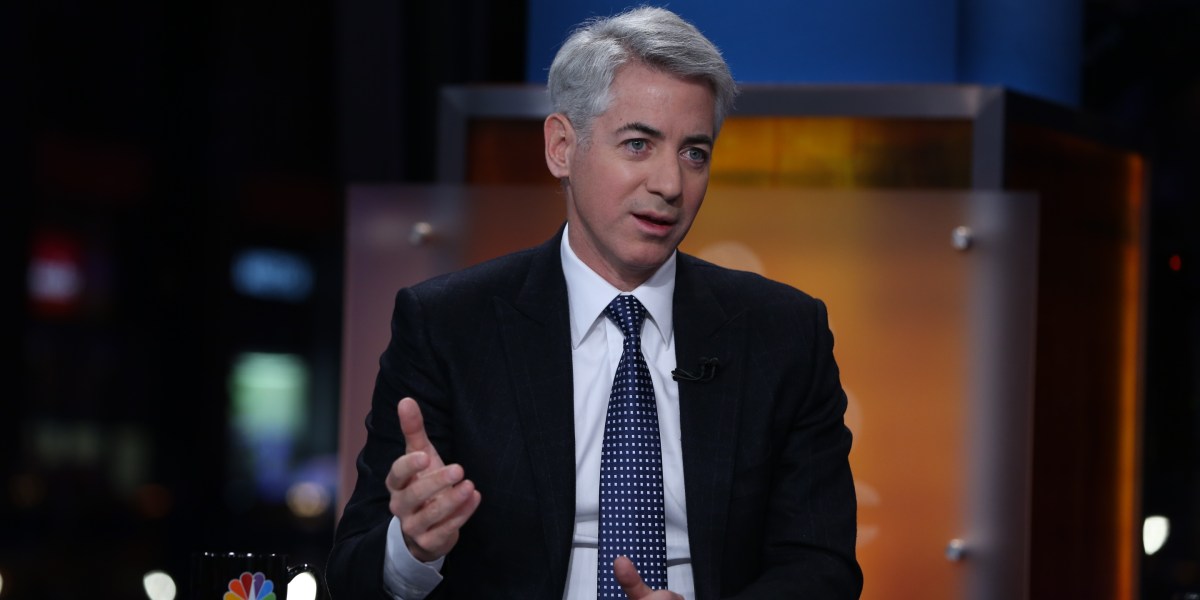
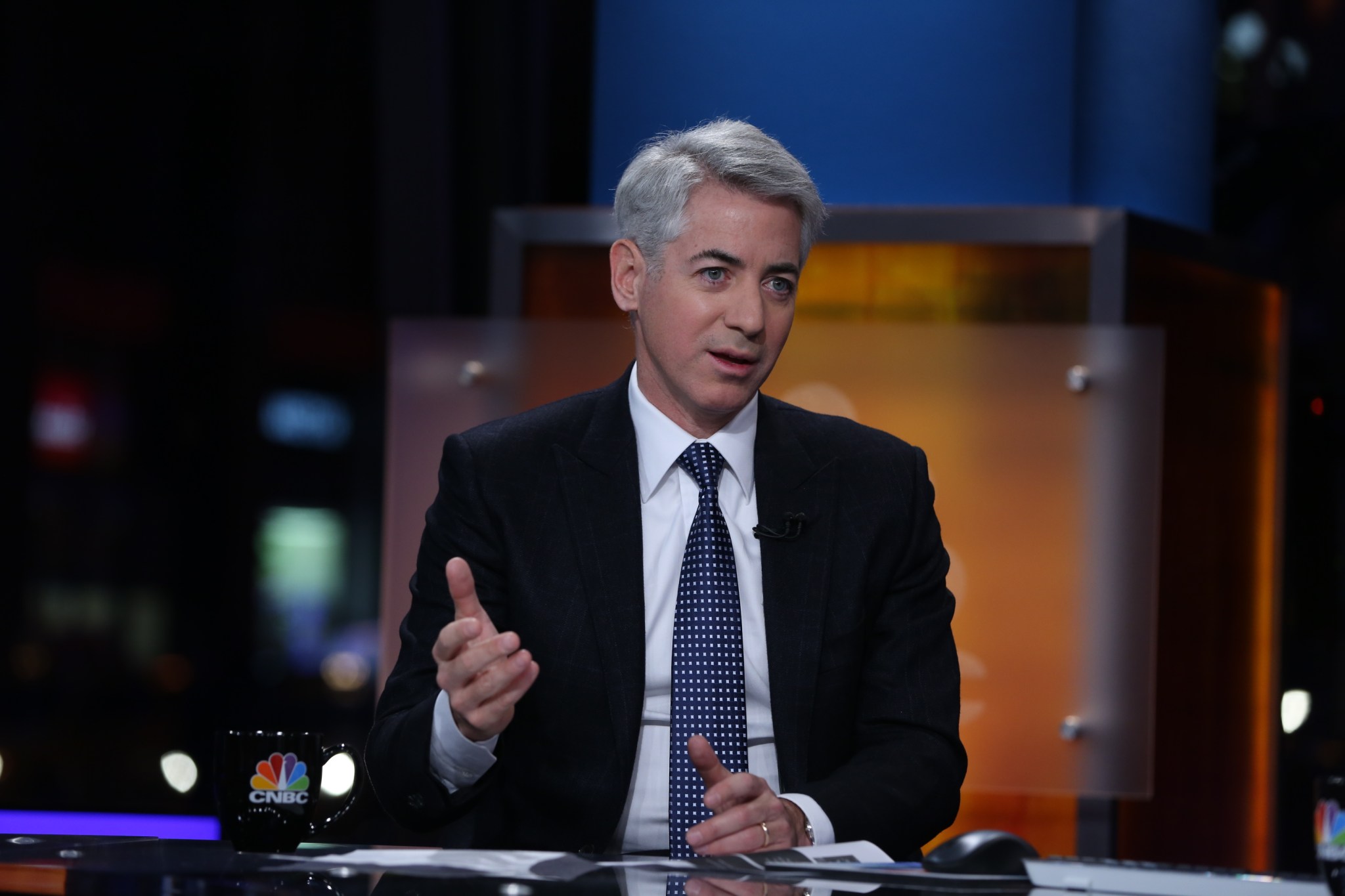
Billionaire investor Bill Ackman’s hedge fund, Pershing Square Capital, is planning to buy Universal Music Group (UMG), the world’s largest music company, which represents artists including Taylor Swift, Bad Bunny, Bob Dylan, and the Beatles.
The $64 billion pitch announced Tuesday is Ackman’s latest move to turn Pershing into a “modern-day” Berkshire Hathaway and make him the next Warren Buffett. Pershing currently controls 4.6% of UMG shares. The deal would merge UMG and Ackman’s Pershing Square SPARC Holdings as a joint entity to be listed on the New York Stock Exchange by the end of the year.
“The company’s management have done an excellent job nurturing and continuing to build a world-class artist roster and generating strong business performance,” Ackman said in a statement. “However, UMG’s stock price has languished due to a combination of issues that are unrelated to the performance of its music business, and importantly, all of them can be addressed with this transaction.”
The move comes weeks after Pershing filed to be listed on the New York Stock Exchange, marking Ackman’s latest attempt to go public in the U.S. The hedge fund has a market cap of $11.27 billion, $28 billion in assets under management, and Ackman is worth $8.13 billion.
Ackman, a self-described “Buffett devotee,” is following in his idol’s footsteps by attempting to acquire UMG. The IPO and joint listing with UMG would help Pershing gain access to “permanent capital,” a key part of Buffett’s investing playbook. Investors can pull their money out of a hedge fund quarterly or annually, requiring fund managers to keep cash on hand and putting them at risk of having to sell their holdings. After the IPO, Pershing would have access to capital in its closed-end fund that can’t be directly revoked; investors have to sell their shares on the open market instead.
Pershing declined to comment further on the proposal. Universal Music Group did not immediately respond to Fortune’srequest for comment.
‘Be greedy when others are fearful’
Buffett, who has freely shared his investing advice for decades, is best known for one recommendation: “Be greedy when others are fearful and fearful when others are greedy.”
With this deal, it appears Ackman could be following that advice. Before the announcement, UMG’s stock, which is traded on the Euronext Amsterdam exchange, was down about 22% year to date. Today the stock is trading at 19.06 euros ($22.06), up about 2 euros ($2.32).
Pershing laid out what it sees as UMG’s weaknesses in the pitch’s announcement, explaining that the postponement of listing the company on a U.S. exchange, underutilization of the company’s balance sheet, and poor investor relations and communications are reasons for the company’s “underperformance.”
Buffett’s 1988 purchase of Coca-Cola stock stands as an instructive lesson for what Ackman is attempting with Universal Music Group. Buffett moved aggressively into Coca-Cola in the aftermath of the 1987 Black Monday crash, building a $1.3 billion stake in a brand that many investors had soured on. Just as Buffett saw Coca-Cola’s unmatched brand moat and pricing power as advantages that the market was temporarily mispricing, Ackman is betting that UMG’s enduring position in the music industry represents an irreplaceable investment that will reward patient capital.
This is not the first time Ackman has followed Buffett’s advice to take advantage of cheaper stocks, and Ackman has called on others to do the same. Last month, in a post on X, Ackman told investors to get over the war in Iran and buy Fannie Mae and Freddie Mac stocks, the two government-sponsored enterprises designed to prop up the mortgage market.
“Some of the highest quality businesses in the world are trading at extremely cheap prices,” Ackman wrote in the post. “Ignore the MSM [mainstream media]. One of the most one-sided wars in history that will end well for the U.S. and the world. And we have the potential for a large peace dividend.”
When markets opened the next day, Fannie Mae’s stock market climbed as much as 41%, and Freddie Mac surged as much as 34%, the largest single-day moves for each stock since May 2025. Fortune previously reported that Ackman’s tweet was the only obvious driver of the surge.
Learning from the past
Ackman’s play for UMG requires the faith of the company’s investors, something he has fallen short of in the past. He was unable to convince Pershing’s own investors to back the company’s $25 billion IPO goal in 2024 after a series of errors. Ackman downplayed the IPO risks to investors and argued that the company could achieve a “sustained premium” to its net asset value, defying the fund’s regulatory prospectus.
The move was so disastrous that Pershing had to “disclaim” Ackman’s comments and in the following week, Ackman cut the fundraising target from $25 billion to $4 billion to $2 billion, before putting the IPO off completely.
With the hedge fund’s latest attempt, Ackman has tempered his expectations and is aiming to raise between $5 billion and $10 billion. He has changed his approach by trying to list both the closed-end fund and Pershing’s parent company. To encourage investors, every 100 shares of the closed fund they buy will automatically grant them 20 free shares of Pershing Square Capital Management.
This approach is a departure from Ackman’s past head-over-heel dealings. In 2016, Ackman stood by former investor darling Valeant Pharmaceuticals, even as criticism mounted over the company’s aggressive drug price hikes and misleading SEC disclosures. Ackman eventually reversed course and sold the stocks, but not before losing Pershing $3.2 billion.
Ackman is also known for his unrelenting attitude toward his rivals. In 2012, he began a short-selling campaign against Herbalife, which sells weight-loss shakes and vitamins. Ackman accused the company of operating illegally and of being a “pyramid scheme,” and tried to drive the company’s stock price down for five years. In the end, Ackman cut his losses, and Pershing dumped all the stock.
In 2024, six years after the dispute, Ackman relished Herbalife’s stock plunging to a 14-year low.
“It is a very good day for my psychological short on Herbalife,” Ackman wrote in a post on X six years after the dispute. “And it is an even better day for the world to see one of the biggest pyramid schemes fail.”
Correction, April 7, 2026: A previous version of this article misstated the share of UMG shares Pershing Square controls.
Curtis Campbell knows exactly what kind of company people think H&R Block is.
It is the place you go in late winter or early spring when your W-2s, 1099s, deductions, and deadlines are piling up, your refund feels urgent, and your anxiety is rising. It is familiar, local, and useful, but not the kind of company that usually comes to mind when people think about product velocity, AI deployment, or a culture of experimentation.
Campbell wants to change that.
The new CEO, who previously served as H&R Block’s president and chief product officer, is trying to turn the 70-year-old tax preparation giant into something more expansive: a year-round financial platform powered by software, data, and AI, while preserving the human trust that has long set the company apart. That means reimagining H&R Block not just as a seasonal tax brand, but as a business that can advise creators, serve small businesses, help customers manage money, and use technology to automate the most tedious parts of tax prep, so employees can focus on judgment, relationships, and guidance.
For Campbell, this is an operational exercise rather than a branding one. “Fundamentally, we do taxes, but we’re really not in the tax business,” he tells Fortune. “We’re in the business of trust and confidence.”
Campbell is leading H&R Block through a volatile tax period, as sweeping tax-law changes collide with a significantly downsized IRS. What he hears from the field is that clients want help understanding what the changes mean and reassurance that they are not missing out on money or making mistakes.
That urgency could benefit assisted tax preparation in the near term. But Campbell’s ambition reaches well past one potentially chaotic filing season.
More than a tax company
Campbell’s core thesis is that H&R Block should no longer think of itself as a company that shows up for customers once a year. He wants it to be present throughout the year, serving customers on their journey toward financial freedom.
Such a pivot requires looking beyond tax preparation, he says, to adjacent services such as payroll, bookkeeping, tax advisory, small-business support, and banking. It also means using the company’s enormous dataset and physical footprint to build continuous relationships with customers.
Campbell describes a future in which H&R Block becomes more embedded in clients’ lives, moving from “a once-a-year engagement” to “a multiyear engagement.”
He sees a strong opening in the growing ranks of independent workers, creators, and influencers who are suddenly operating as small businesses without fully understanding the financial infrastructure that comes with that shift. H&R Block launched a Creator Suite earlier this year, bundling tax help with bookkeeping, payroll, and related services for people whose work may span multiple income streams and business entities.
“That’s a really interesting group for us to target,” Campbell says of creators. “They’re folks whose tax situation becomes more complex over time, so they’re more needy because they’re advancing their business, they’re growing their sort of portfolio of different services and offerings.”
The same logic applies to small businesses, which Campbell calls H&R Block’s fastest-growing business and one he believes Wall Street still undervalues. The opportunity is straightforward: Small-business owners do not want to spend their time on payroll, bookkeeping, and tax compliance. They want to run their businesses.
“I’ve yet to meet a small-business owner who loves taxes or payroll or bookkeeping,” he says. “They just love the thing that they do.”
The AWS playbook comes to tax prep
What makes Campbell an intriguing fit for this moment is that he does not fit the stereotype of a tax executive. He is a Southern-born tech leader who spent years at Dell and AWS, companies known for fast-moving product cycles and quick execution. He talks in the language of critical assumptions, hypotheses, road maps, and experiments. He sounds more like a cloud executive than the steward of a legacy tax brand. That is partly the point.
Campbell is trying to make H&R Block more technologically fluent, not just in what it sells but in how it operates. He says the company has spent considerable time defining its “ideal state,” mapping the assumptions required to get there, and building a long-term road map. From there, teams identify the questions they need to answer and the experiments required to answer them. Its pace has picked up sharply in recent years.
“Before I joined H&R Block, on average, we ran about five experiments a year,” he says. “This year, we’re going to average about 123.”
That shift is partly cultural. Campbell has pushed H&R Block to act more like a learning organization, drawing on a lesson from Amazon: The companies that build the fastest feedback loops are often the ones best positioned to win over time.
That has also required changing the company’s approach to failure. In the past, new ideas often carried a stigma if they did not work. Campbell wants teams to see failed tests as useful if they produce insight. In his view, a good experiment creates learning, whether it ends in a win or a loss.
That mentality is straight out of Big Tech. But tax preparation is not cloud software, and Campbell is quick to acknowledge that speed has to be handled differently in a business where mistakes carry real consequences.
“You don’t have to risk the business to test an idea,” he says. “You could say, ‘Hey, I’ve got a concept that’s X, Y, and Z. How can I test this within 10 customers to gain knowledge?’ If that proves to be successful, you can then start to scale it.”
Building an AI tax company
The most visible expression of H&R Block’s transformation is its use of AI.
Campbell is in an unusual position here. Unlike many CEOs who inherit someone else’s technology stack, he helped build the systems now being stress-tested under his leadership.
One of those tools is AI Tax Assist, built into H&R Block’s DIY product in partnership with OpenAI. Campbell describes it as an on-demand guide for customers who get confused while filing online and need quick answers. Users can ask whether an expense qualifies as a deduction or what a move might mean for their taxes, and the system responds in real time.
He recently tried it on his upcoming move from Dallas to Kansas City, asking about the tax implications of going from Texas, which has no state income tax, to Missouri, which does.
The company has also developed an AI assistant for tax professionals, code-named Sidekick, built directly into the software H&R Block’s preparers use every day. Campbell says tax pros have responded enthusiastically because the tool lets them ask highly specific questions and get answers grounded in the company’s own tax institute, an internal bench of enrolled agents, CPAs, and tax attorneys who monitor regulatory changes and work closely with the IRS and state authorities.
Campbell argues that AI can make H&R Block more tech-forward without stripping out the human element that customers value most. He divides tax prep into two kinds of work: the mechanical tasks of collecting information, entering it, and calculating outcomes, and the relational work of advising clients and earning their trust.
He bets that AI can take on more of the first category, freeing tax professionals to spend more time on the second. Today, he says, most office time still goes to transactional work. His ideal model flips that, with technology handling much of the back-end processing, so client conversations become the focus.
H&R Block is already testing that approach in five offices. “At the end of the day, [tax pros] view their success based on their client’s success. If we enable them to do more of that, they’re going to feel more fulfilled.”
Becoming a year-round financial platform
H&R Block’s innovation push extends well beyond tax prep. Campbell’s larger goal is to use software, data, and AI to build the company into a year-round financial platform with a deeper role in customers’ lives. As he sees it, financial pain points do not fit neatly into a filing deadline or a single season.
Spruce, the company’s mobile banking product, is one example. Campbell frames it as a logical extension of H&R Block’s expanding suite of financial services, part of a broader effort to remain relevant to customers year-round.
He also believes H&R Block’s footprint of roughly 9,000 offices still matters in a digital future. As the company becomes more virtual, Campbell expects more customers to engage with tax pros through software and mobile devices. But he sees the storefronts as a key part of H&R Block’s omnichannel advantage, especially in communities where trust is still built face-to-face. “It is important for us to be where our clients are,” he says.
That line captures the core of Campbell’s strategy. He is trying to modernize H&R Block without losing its local presence, human expertise, and credibility within the tax space.
The challenge is persuading the market to see H&R Block as all of those things at once: a techie tax company with thousands of offices; a compliance-heavy business trying to move faster and experiment more; a human service brand adopting AI aggressively; and a seasonal name aiming to become a year-round financial platform.
Campbell seems comfortable with that tension. If he succeeds, H&R Block’s next chapter will be about more than improving tax prep. It will be about turning the company into a more innovative business with a deeper presence in Americans’ financial lives.
JPMorgan CEO Jamie Dimon has long been among the crypto sector’s most notable skeptics. Dimon vowed in 2017 to fire any JPMorgan trader who traded bitcoin and has called the oldest cryptocurrency a “fraud” and a “pet rock.” More recently, though, Dimon has become more open to the technology and, this week, he acknowledged that blockchain-based companies are now among his bank’s competitors.
In his annual shareholder letter published on Monday, Dimon said “a whole new set of competitors is emerging based on blockchain, which includes stablecoins, smart contracts and other forms of tokenization.”
Dimon added that JPMorgan will need to up its game to ward off competition from the upstarts, writing: “We need to roll out our own blockchain technology.”
JPMorgan has been quietly rolling out its own blockchain technology for several years now. The bank unveiled its JPM Coin running on a permissioned blockchain in 2019. More recently, its Kinexys blockchain unit has continued to expand into areas like tokenization and payments. JPMorgan has explored permissionless blockchains, too: The co-CEOs of Commercial and Investment Banking at the firm recently touted its involvement in the 2025 U.S. commercial paper issuance on Solana for Galaxy Digital Holdings.
Dimon’s views on crypto began to change in earnest last year. In July, he proclaimed himself to be a “believer in stablecoins” and, during the Fortune Most Powerful Women Summit in October, he reiterated that “blockchain is real” and predicted it would replace elements of the financial system. His latest comments underscore how the crypto sector has now become something else: a competitor to JPMorgan itself.
Awaiting clarity
Dimon’s latest comments on blockchain come as the bank has been sparring with the crypto industry in Washington, D.C. over a closely-watched piece of crypto legislation known as the CLARITY Act.
The bill would establish a U.S. regulatory framework for crypto, resolving long-running ambiguities involving the responsibilities of different financial regulators and registration criteria for crypto firms. Proponents of the law argue that clearer crypto rules can protect consumers while reversing a “regulation-by-enforcement” approach that has historically stifled crypto innovation in the U.S.
CLARITY passed the House but hit a snag in the Senate earlier this year over provisions that sought to make it harder for stablecoin issuers to offer rewards to holders. The GENIUS Act, a legislative framework for stablecoins passed in 2025, restricts stablecoin issuers from paying yield to holders. However, crypto exchanges such as Coinbase are able to custody stablecoins for issuers and pass along rewards to holders. Banks have lobbied Congress to close this “loophole,” arguing that yield-bearing stablecoins could be a potential substitute for bank deposits, which could significantly reduce banks’ deposit base.
Coinbase CEO Brian Armstrong came out against a draft of CLARITY in January partly because, in Armstrong’s telling, banning stablecoin rewards allows banks to “ban their competition.” Coinbase earns a significant amount of revenue from USDC interest, and a ban on stablecoin rewards could presumably hurt the company’s bottom line. Amid the back-and-forth, Dimon reportedly accosted Armstrong at the World Economic Forum in Davos, telling the Coinbase CEO he’s “full of shit.”
In a Fox Business interview April 1, Coinbase Chief Legal Officer Paul Grewal said the banks and stablecoin companies are “very close to a deal.”
With more crypto-friendly regulators in charge under the Trump administration, companies in the crypto sector have lately shown a willingness to become more bank-like. A number of crypto firms have received conditional approval for a national trust banking charter from the Office of the Comptroller of the Currency. These bank charters, while somewhat narrow, enable crypto firms to do things like custody user assets.
As crypto competitors have become more formidable, JPMorgan has also bolstered its crypto functions. In an investor report penned Monday, the co-CEOs of the firm’s Commercial and Investment Banking division noted that transactions on JPMorgan’s blockchain-based products had grown thirtyfold since 2023.
Two Supermicro board members are spearheading an internal investigation following a federal indictment alleging one of the company’s cofounders orchestrated the routing of $2.5 billion in servers packed with Nvidia’s highly prized GPUs to China, in violation of export controls.
The independent investigation comes two years after an independent director on the board previously investigated Supermicro and found “no evidence of fraud or misconduct on the part of management or the board of directors.” Supermicro is facing scrutiny among investors who are concerned that its compliance issues and reputational risk could strain its relationship with $4 trillion chipmaker Nvidia, which supplies Supermicro with chips for customers’ purchase orders.
The board’s newest director, Scott Angel, who was appointed to be the independent leader on the board, is running point on the latest investigation, along with audit committee chair Tally Liu, the company announced on Tuesday. Details on the investigation are sparse, but the board has hired law firm Munger, Tolles & Olson to advise the independent directors. Munger, Tolles brought in consulting firm AlixPartners for forensic accounting and audit expertise. The two firms will work with Supermicro’s auditor, BDO USA, and will “report their findings directly” to Angel and Liu, the company said.
The Department of Justice charged Supermicro cofounder Yih-Shyan “Wally” Liaw and two others last month for allegedly conspiring in 2024 and 2025 to route Supermicro servers to an unnamed Southeast Asian company as a front for the true buyers, who were in China. Liaw, Ruei-Tsang “Steven” Chang, and Ting-Wei “Willy” Sun allegedly arranged for thousands of fake replica servers to be stored in a warehouse to trick government auditors tasked with verifying the technology wasn’t being sent into the wrong hands. The group allegedly organized a team on site in Southeast Asia to set up the thousands of fake servers, and even arranged for the team’s meals and van transportation. The trio went to great lengths to perpetrate the subterfuge, the indictment claims, including using hair dryers to remove packaging labels that were then reaffixed to thousands of fake replica servers.
During the time period alleged in the indictment, Liaw was a board member and senior executive. He co-founded the company in 1993 with CEO and chairman Charles Liang, and Liang’s wife and co-founder, Sara Liu. (Supermicro confirmed Sara Liu is not related to Tally Liu.) Supermicro was not named in the indictment and says it is cooperating with the government.
Liaw retired in February 2018 following a third board-led investigation connected to a Nasdaq delisting and an SEC investigation into its accounting that ultimately saw Supermicro settle with regulators and pay $17.5 million. Liaw then served as president at French server company 2CRSi from June 2020 to April 2021, before he returned to Supermicro as a consultant in May 2021. He became a full-time executive in August 2022 and was reappointed to the board in December 2023. He resigned from the board on March 20, the day after he was arrested.
Liaw and Sun pleaded not guilty and Chang remains at large, according to authorities. Supermicro CEO Liang has told investors the company was a victim of the scheme itself.
“Our internal review and the independent directors’ investigation are being conducted in line with our commitment to ensuring our technology is handled with the highest level of ethical and legal scrutiny,” Liang said in a statement on Tuesday.
2024 internal investigation found no evidence of circumventing export controls
Supermicro last conducted a board-led independent investigation in 2024 following the stunning resignation of its previous auditor, Ernst & Young, in the middle of an audit. EY stated in its resignation letter that it could no longer rely on Supermicro management.
Supermicro then faced being delisted from Nasdaq due to not filing its audited financials on time, and the board appointed its—at the time—newest director Susie Giordano to serve as a special committee of one to investigate. Giordano in 2024 worked with law firm Cooley and forensic accounting firm Secretariat Advisors. Giordano reviewed the rehiring of employees “who resigned in 2018” following the 2017 investigation, export control matters related to prevention of sales or diversion to restricted countries, and current sales and revenue recognition practices around quarter-ends.
The committee reviewed 11 export transactions and “did not see any evidence suggesting that anyone at the company tried to circumvent export control regulations or restrictions, or that anyone at the company was aware that any of its products might be diverted to a prohibited end user or location.” The committee did not identify products that were sold to Russian customers or shipped to Russia “in violation of export controls or sanctions laws that were in place when products were shipped.” Disclosures to investors about the 2024 investigation did not mention China.
Based on the results of that independent probe, the committee determined that Supermicro’s CFO, David Weigand, should be replaced with a “new CFO with extensive experience working as a senior finance professional at a large public company.” Weigand remains the CFO. The committee’s other recommendations included appointing a general counsel and expanding the legal department, appointing a chief compliance officer, and a chief accounting officer.
In tandem with the latest board investigation, Supermicro also announced it has initiated an internal review of its global trade compliance program, led by general counsel Yitai Hu. All findings will be reported directly to the independent board directors, the company said.
Angel joined the board in March 2025 after 37 years in audit and assurance at Deloitte, including more than two decades in Silicon Valley. Liu joined the board in 2019 after retiring as CEO of supply chain solution company Wintec Industries.