Blog

  • Trump agrees 2-week ceasefire, says Iran has proposed a ‘workable’ 10-point peace plan

    Trump agrees 2-week ceasefire, says Iran has proposed a ‘workable’ 10-point peace plan

    [ad_1]

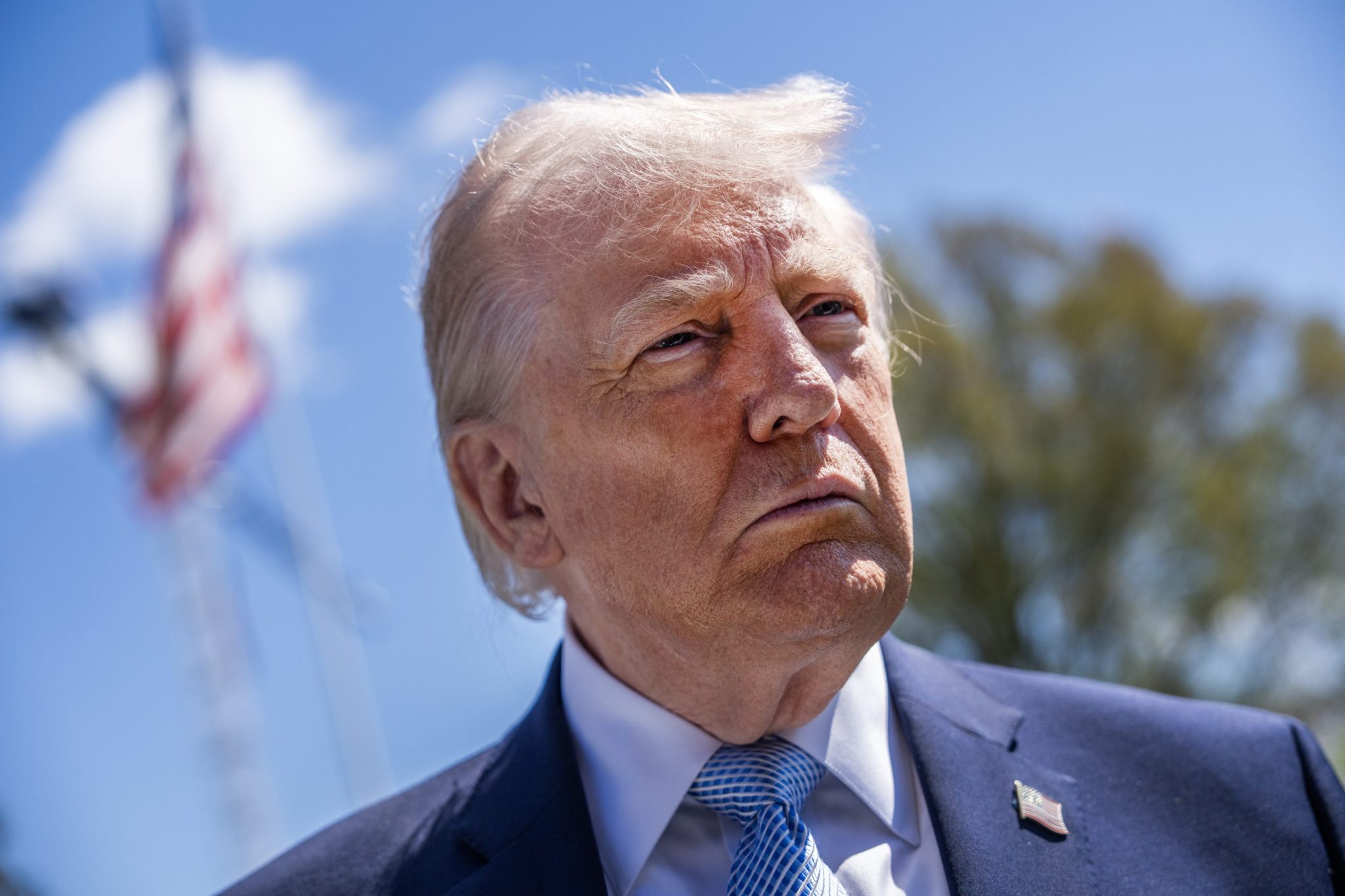
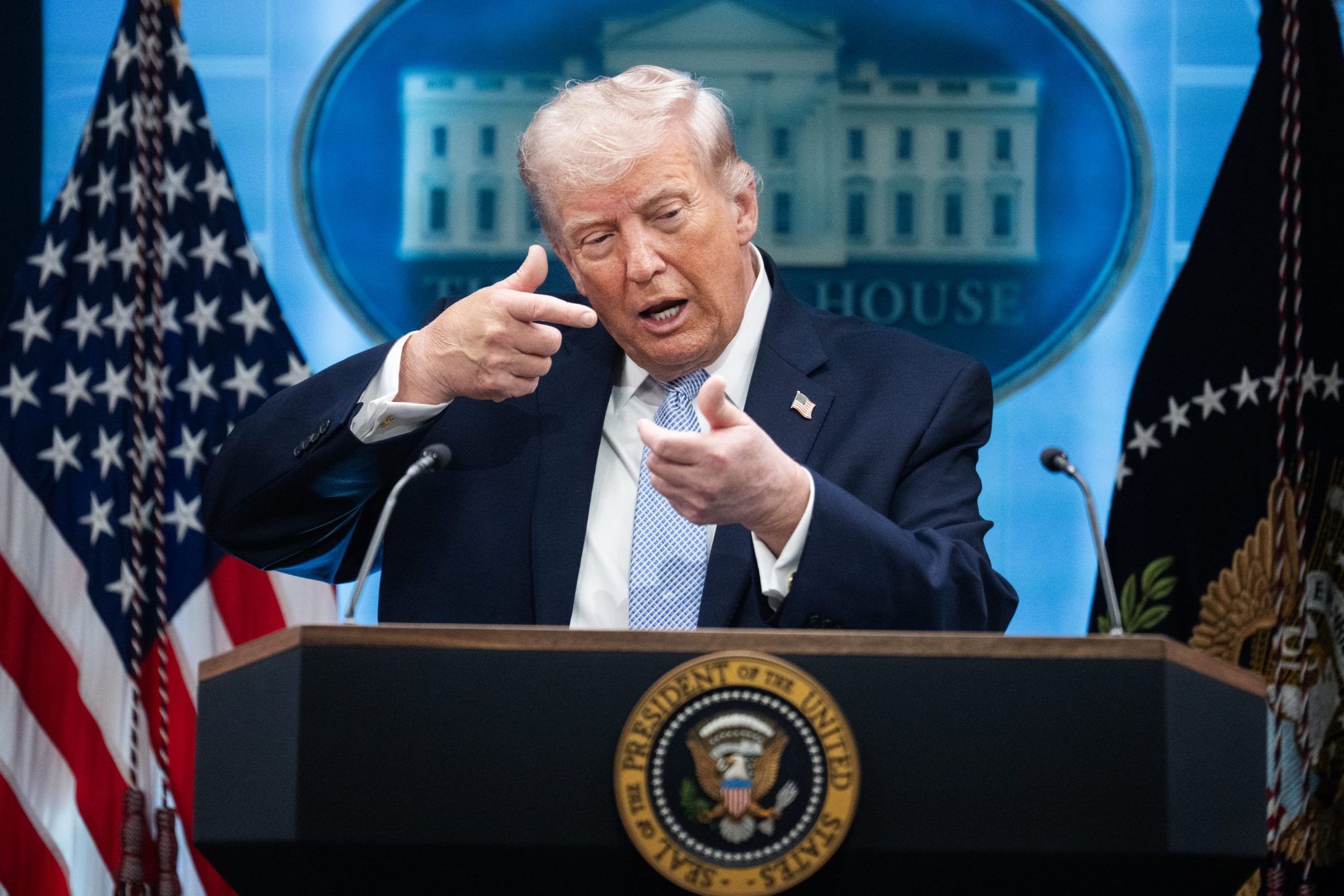
    U.S. President Donald Trump said late Tuesday he’s pulling back on his threats to launch devastating strikes on Iran, swerving to deescalate the war less than two hours before the deadline he set for Tehran to capitulate or else a “whole civilization will die tonight.”

    Trump said he was holding off on his threatened attacks on Iranian bridges, power plants and other civilian targets, subject to Tehran agreeing to a two-week ceasefire and reopening of the Strait of Hormuz, the pivotal waterway through which a fifth of the world’s oil is transported during peacetime. He also said Iran has proposed a “workable” 10-point peace plan that could help end war the U.S. and Israel launched on Feb. 28.

    Iran’s Supreme National Security Council said it has accepted a two-week ceasefire in the war and that it would negotiate with the United States in Islamabad beginning Friday. “It is emphasized that this does not signify the termination of the war,” the council’s statement said.

    In a post on his social media site, Trump said that provided Iran agreed “to the COMPLETE, IMMEDIATE, and SAFE OPENING of the Strait of Hormuz” he would “suspend the bombing and attack of Iran for a period of two weeks.”

    Since the war began on Feb. 28, Trump has repeatedly backed off of deadlines just before they expire.

    In doing so again Tuesday, Trump said he had come to the decision “based on conversations” with Pakistan Prime Minister Shehbaz Sharif and Gen. Asim Munir, Pakistan’s powerful army chief.

    Sharif, in a post on X hours earlier, urged Trump to extend his deadline by two weeks to allow diplomacy to advance. He used the same post to ask Iran to open the strait for two weeks.

    The president said in his social media post that Iran has presented “a workable basis on which to negotiate.”

    “Almost all of the various points of past contention have been agreed to between the United States and Iran, but a two week period will allow the Agreement to be finalized and consummated,” Trump said.

    Earlier Trump threats raised alarms

    Trump’s expansive threat Tuesday did not seem to account for potential harm to civilians, prompting Democrats in Congress, some United Nations officials and scholars in military law to say such strikes would violate international law.

    Tehran’s representative at the U.N., Amir-Saeid Iravani, said the threats “constitute incitement to war crimes and potentially genocide” and that Iran would “take immediate and proportionate reciprocal measures” if Trump launches devastating strikes.

    The U.S. and Israel have battered Iran with attacks targeting its military capabilities, leadership and nuclear program. Iran has responded with a stream of strikes on Israel and Gulf Arab neighbors, causing regional chaos and outsized economic and political shock.

    Late Tuesday, Pakistan’s prime minister urged Trump to extend his deadline by two weeks to allow diplomacy to advance. In a post on X, Shehbaz Sharif, whose country has been leading negotiations, also asked Iran to open up for two weeks the Strait of Hormuz.

    Before the deadline, airstrikes hit two bridges and a train station, and the U.S. hit military infrastructure on Kharg Island, a key hub for Iranian oil production.

    Trump has extended deadlines before

    Since the war began, Trump has repeatedly imposed deadlines linked to threats, only to extend them. Tehran previously rejected a 45-day ceasefire proposal by Egyptian, Pakistani and Turkish mediators, saying it wants a permanent end to the war.

    Iran’s president said 14 million people, including himself, have volunteered to fight. That’s despite Trump saying that U.S. forces could wipe out all bridges in Iran in a matter of hours and reduce all power plants to smoking rubble in roughly the same time frame.

    It was not clear if airstrikes against Iran on Tuesday were linked to Trump’s threats to widen the civilian target list. At least two of the targets were connected to Iran’s rail network, and Israeli Prime Minister Benjamin Netanyahu said Israeli warplanes struck bridges and railways in Iran.

    Tehran fired on Israel and Saudi Arabia, prompting the temporary closure of a major bridge.

    While Iran cannot match the sophistication of U.S. and Israeli weaponry or their dominance in the air, its chokehold on the strait since the war began in late February is roiling the world economy and raising the pressure on Trump both at home and abroad to find a way out of the standoff.

    Trump keeps an off-ramp open

    “A whole civilization will die tonight, never to be brought back again,” if a deal isn’t reached, Trump said in an online post Tuesday morning. But he also seemed to keep open the possibility of an off-ramp, saying that “maybe something revolutionarily wonderful can happen.”

    Earlier, Iranian official Alireza Rahimi issued a video message calling on “all young people, athletes, artists, students and university students and their professors” to form human chains around power plants.

    Iranians have formed human chains in the past around nuclear sites at times of heightened tensions with the West. State media posted videos online that showed hundreds of flag-waving people massed at two bridges and at a power plant hundreds of kilometers (miles) from Tehran, though it was not clear how widespread the practice was.

    “They’re not allowed to do that,” Trump said in a phone call with NBC News.

    A general in Iran’s Revolutionary Guard general warned that Iran would “deprive the U.S. and its allies of the region’s oil and gas for years” and expand its attacks across the Gulf region if Trump carries out his threat.

    In Tehran, the mood was bleak. A young teacher said that many opponents of Iran’s Islamic system had hoped Trump’s attacks would quickly topple it. As the war drags on, she fears U.S. and Israeli strikes will spread chaos.

    “If we don’t have the internet, and if we don’t have electricity, water, and gas, we’re really going back to the Stone Age, as Trump said,” she told The Associated Press, speaking on the condition of anonymity for her safety.

    Growing criticism of threats

    In Rome, Pope Leo XIV said Tuesday that the threats were “truly unacceptable” and that such attacks would violate international law.

    French Foreign Minister Jean-Noël Barrot said that attacks targeting civilian and energy infrastructure could constitute a war crime. Such cases are notoriously difficult to prosecute. Trump has said he’s “not at all” concerned about committing war crimes.

    A spokesman for U.N. Secretary-General Antonio Guterres said he was “deeply troubled” by the threats, saying no military objective justified targeting civilian infrastructure.

    Airstrikes hit Iran, which fires on Saudi Arabia and Israel

    Intense airstrikes pounded Tehran, including in residential neighborhoods. In the past, such strikes have targeted Iranian government and security officials.

    The Israeli military said it attacked an Iranian petrochemical site in Shiraz, the second day in a row it hit such a facility. The military later said it also struck bridges in several cities that were being used by Iranian forces to transport weapons and military equipment.

    A U.S. official, who spoke on condition of anonymity to discuss sensitive military operations, described the strikes on Kharg Island as hitting targets previously struck and not directed at oil infrastructure.

    Saudi Arabia said it intercepted seven ballistic missiles and four drones launched by Iran. Iran also fired on Israel.

    More than 1,900 people have been killed in Iran since the war began, but the government has not updated the toll for days.

    In Lebanon, where Israel is fighting Iran-backed Hezbollah militants, more than 1,500 people have been killed. and more than 1 million people have been displaced. Eleven Israeli soldiers have died there.

    In Gulf Arab states and the occupied West Bank, more than two dozen people have died, while 23 have been reported dead in Israel, and 13 U.S. service members have been killed.

    ___

    Gambrell reported from Dubai, United Arab Emirates. Magdy reported from Cairo. Associated Press writers John Leicester in Paris; Nicole Winfield in Rome; Amir-Hussein Radjy in Cairo; Natalie Melzer in Jerusalem; Farnoush Amiri at The United Nations; and Konstantin Toropin, Seung Min Kim, Michelle L. Price, Joshua Boak and Will Weissert in Washington contributed to this report.

    [ad_2]

    Source link

  • A councilman backed a data center project. Then 13 bullets and a ‘No Data Centers’ note hit his home

    A councilman backed a data center project. Then 13 bullets and a ‘No Data Centers’ note hit his home

    [ad_1]

    As backlash to AI infrastructure intensifies nationwide, it just turned violent in Indianapolis.

    Ron Gibson, a city-county councilmember, woke up just before 1AM on Monday to find 13 bullet holes in his home, along with a note on his doorstep  that read “No Data Centers.” He and his 8-year-old son were home at the time, according to a statement released by the councilmember on Monday, though neither reported injuries.

    “Just steps from where those bullets struck is our dining room table, where my son had been playing with his Legos the day before,” Councilmember Gibson wrote in a statement. “That reality is deeply unsettling.”

    The shooting appears to have been politically motivated, tied to a proposed data center in Indianapolis’s Martindale-Brightwood neighborhood. Less than a week prior to the incident, Gibson had voiced his support for the construction of a data center in his district. The Indianapolis Metropolitan Development Commission approved a rezoning petition on April 1 in a 6-2 vote for a 14-acre $500 million data center project for Metrobloks, an LA-based data center developer, as reported by Mirror Indy. Gibson isn’t on the commission that voted to approve the rezoning measure, but he supported the commission’s decision in a statement last week as the data center construction site falls in his district. 

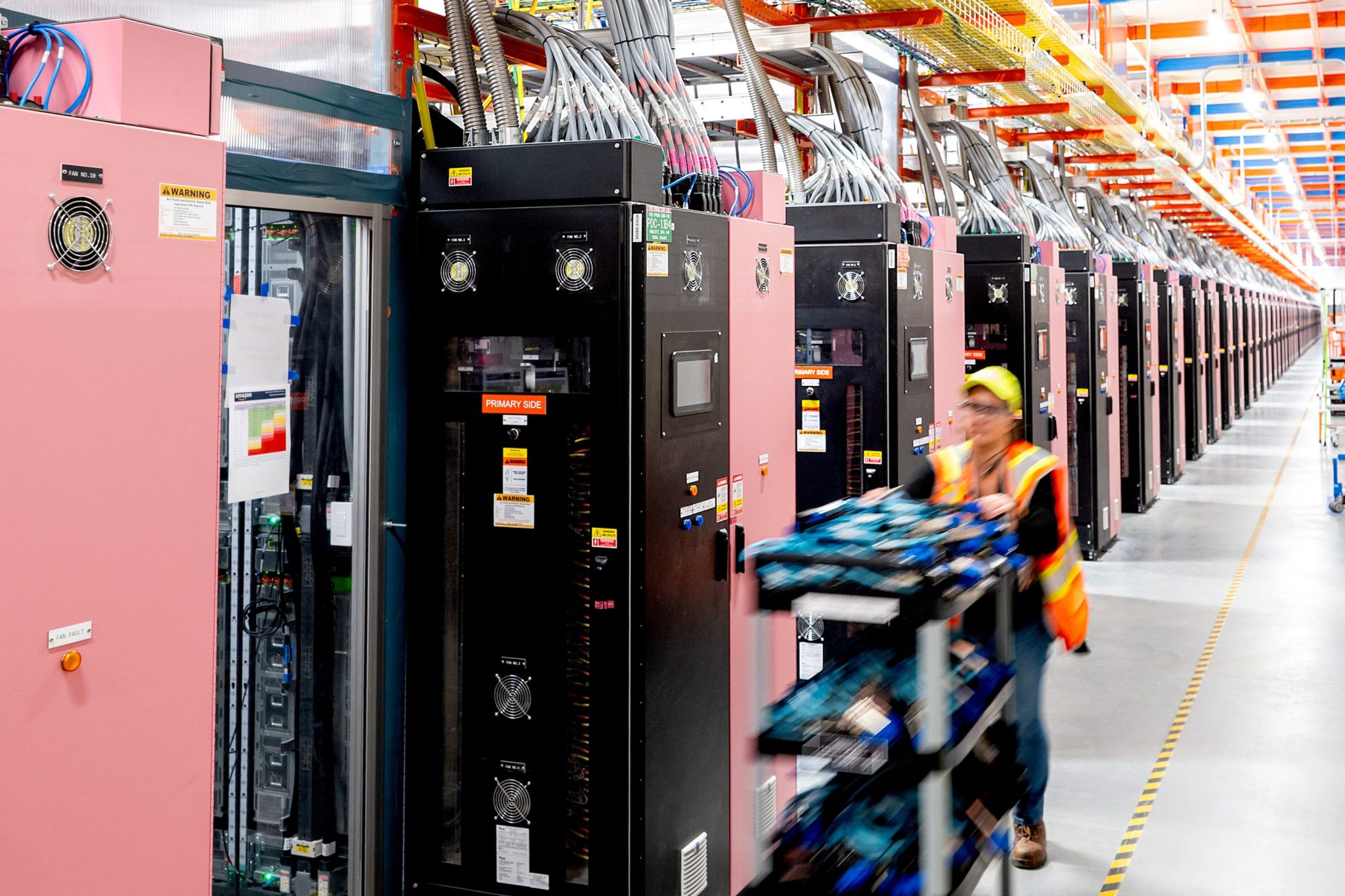
    The clash reflects a broader tension playing out across the U.S. as hyperscalers like Amazon, Microsoft, and Google race to expand data center capacity to meet surging AI demand. Data centers projects, which are necessary to power AI, are increasingly running into resistance from communities concerned about energy use, water consumption, noise, and land use. 

    Growing backlash to AI data centers across the U.S.

    In suburban and rural towns where tech companies are pouring significant investment into AI infrastructure, residents are increasingly pushing back against the development. Nonprofit organization Environmental and Energy Study Institute has reported complaints from communities in Arizona, Mississippi, Virginia, and Texas about the noise and environmental impacts of data centers. Researchers have warned data centers could negatively impact their surrounding environments, including creating “heat islands” that warm the surrounding six miles. 

    In Southaven, Miss., for example, residents have complained of a “jet engine roar” from a gas turbine powering a data center for Elon Musk’s AI firm xAI, NBC News reported.

    The rezoning proposal to construct the data center in Indianapolis faced backlash last week, Mirror Indy reported. Several community leaders and clergy members opposed the project during a public hearing prior to the vote. Many cited environmental pollution concerns, as well as fear of rising energy costs.

    Americans are increasingly likely to say they dislike AI. A recent poll of registered voters found that just 26% of Americans have a favorable view of AI, and 46% held a negative view. That’s led many politicians to seize upon the backlash to the technology. Politicians of both parties across the country have introduced AI regulation bills, including data center moratoriums in multiple states. Political violence has been on the rise, too. In September, conservative commentator Charlie Kirk was assassinated at Utah Valley University. Perpetrators carried out two attempted assassinations on President Donald Trump in the lead up to the 2024 presidential election.

    Gibson, a Democrat who has served on the Indianapolis City Council since 2023, thanked the Indianapolis Metropolitan Police Department, as well as the FBI and Homeland Security for their work on the investigation. The Indianapolis Metropolitan Police Department didn’t immediately respond to Fortune’s request for updates to the investigation into the incident.

    The councilmember forcefully condemned the attack in his statement. “I understand that public service can bring strong opinions and disagreement, but violence is never the answer, especially when it puts families at risk,” he wrote.

    [ad_2]

    Source link

  • The megamanager era: AI is doubling bosses’ workloads—and the costs are just beginning to show

    The megamanager era: AI is doubling bosses’ workloads—and the costs are just beginning to show

    [ad_1]

    The average American manager now oversees 12 direct reports, and the data suggest AI is both the cause and the justification for this quiet but seismic shift in how the U.S. workplace is organized. It is one of the starkest structural changes in the modern American office, and it is happening with relatively little public debate about what, exactly, is being traded away in the name of efficiency.

    Call it the megamanager era. Driven by AI-enabled cost-cutting, leaner bureaucracies, and a relentless corporate push to rationalize headcount, companies have spent the past three years gutting their middle-management ranks, leaving whoever survives with a dramatically larger portfolio of people. The data is as official as it gets, coming straight from the Bureau of Labor Statistics. The average number of a manager’s direct reports has nearly doubled since Gallup began tracking the figure in 2013.

    If AI can handle scheduling, summarize performance reviews, monitor project timelines, and surface early warning signals about team dysfunction, do you really need as many human coordinators? Meta’s new applied AI engineering division has taken the logic to its most aggressive extreme, deploying a 50-to-1 employee-to-manager ratio—roughly double what was once considered the outer limit of a functional organizational structure. Whether the rest of corporate America follows that example or it becomes a cautionary tale may define the future of work for the next decade.

    The pros: speed, savings, and structural clarity

    For companies, the immediate math looks appealing. Fewer managers mean lower headcount costs, flatter hierarchies, and (in theory) faster decision-making. When a senior vice president no longer has to relay information through two or three layers of middle management before it reaches the people doing the actual work, information can travel faster, and accountability can land closer to the front lines. A 2024 Gartner analysis predicted that one in five businesses plan to use AI specifically to streamline organizational layers.

    AI is also genuinely helping some managers cope with the expanded workload. Tools that automate administrative tasks—flagging performance issues, synthesizing team data, drafting communications, and coordinating schedules across large groups—are reducing the friction that once consumed hours of a manager’s week. Done well, this kind of AI augmentation could make the megamanager model viable: a skilled, well-supported boss leading a dozen people might be more effective than a distracted, paper-buried boss leading six.

    The productivity case has deep historical precedent. A sweeping analysis published this week by Morgan Stanley looked at five prior American innovation waves — from the first Industrial Revolution through the internet—and found a consistent pattern: transformative technologies raise output per worker, particularly when paired with deliberate organizational redesign. Chief U.S. economist Michael Gapen’s team found that electrification doubled output per hour in nonfarm business between 1900 and 1929. The internet accelerated labor productivity growth from roughly 1.5% per year to nearly 3.0% per year by 2000. AI should follow the same arc, Gapen suggested—with one critical caveat. Those productivity gains have historically materialized years, sometimes decades, after the initial disruption, not simultaneously along with it. The pain tends to come first.

    What’s lost: mentorship, morale, and the career ladder

    The human ledger is looking considerably worse than the balance sheet. Another Gartner survey found 75% of HR leaders believe managers are already overwhelmed by their expanding responsibilities, and 69% say managers lack the skills to lead change effectively even before full AI integration takes hold. Gallup data show that global employee engagement has fallen to just 21%, near a 15-year low, with managers themselves—not just the people they supervise—reporting some of the sharpest drops in workplace satisfaction of any cohort. The Wall Street Journal recently argued that work is increasingly “joyless” as many offices take on a funereal atmosphere in the age of the megamanager.

    Perhaps the most underappreciated cost of span-of-control inflation is what happens to the people at the earliest stages of their careers. Coaching, mentorship, and hands-on development — the soft infrastructure that has historically built management pipelines and transmitted institutional knowledge from one generation to the next—are the first casualties when a single boss is stretched across 12 people rather than 6. A manager with a dozen direct reports simply cannot spend the same number of hours per person nurturing potential, giving real-time feedback, or advocating for junior employees in rooms they’re not in. That gap accumulates, posing a threat to talent development.

    Flattened hierarchies also disrupt traditional career progression in ways that are only beginning to surface in the data. When there are fewer rungs on the ladder, there are fewer ways to climb—and fewer visible models of what advancement looks like. One in three HR leaders reported that AI-driven restructuring stripped their organizations of critical institutional knowledge that the remaining workforce simply couldn’t replace.

    The expertise paradox

    Neil Thompson, a research scientist at MIT who studies how AI capabilities evolve across the economy, offers a more nuanced frame for understanding what’s actually at stake. In his research—which evaluated 40 AI models across thousands of real-world job tasks, each assessed by practitioners in the relevant field—Thompson and his colleagues find that automation doesn’t affect all parts of a job equally. The critical variable is whether the tasks being automated are the expert parts of a role or the administrative scaffolding around them.

    “If part of your job gets automated and it’s something that really didn’t use the expertise that you needed, that’s great,” Thompson said. “You get to spend more of your time on the part of your job that is really valuable.” His research, co-authored with MIT economist David Autor, finds that when automation eliminates the lower-expertise components of a job, wages for the remaining workers actually tend to rise: there are fewer of them, but they’re doing more of what makes them irreplaceable. The danger, Thompson warns, is the opposite scenario: when AI targets the expert core of a role — the way GPS wiped out the navigational mastery that once defined a taxi driver’s craft—wages fall, and the profession’s identity hollows out.

    The question hanging over the megamanager era is which scenario managers are living through. If AI is handling the administrative noise and leaving managers to do more actual leading — coaching, strategic thinking, talent development — the math could work out. But if span-of-control inflation is so severe that managers can’t do the expert part of their job either, the model risks producing neither efficiency nor mentorship, just exhaustion.

    A transition we’ve seen—and mismanaged—before

    Thompson is careful not to join the doomsayers. His research finds a “rising tide” of AI capability—steadily climbing, not a crashing wave. “If the people you’re listening to all day long are saying, by the end of 2026, work is going to be entirely transformed, this is saying we have a little bit longer timeline than that,” he said. But he also stresses that the tide is rising quickly enough that policy responses need to begin now, before the water reaches the knees.

    That warning echoes across a century and a half of economic history. Every major innovation wave in American history—from steam power and railroads to electrification to the internet—displaced workers, concentrated early gains among capital holders, and provoked political backlash before productivity benefits eventually broadened. Morgan Stanley’s economists note that “workers were reallocated rather than rendered obsolete” across all five prior waves—but the transition periods were wrenching, and the distribution of benefits depended heavily on policy choices, investment in education, and institutional adaptation. When those systems responded well—as they did during the mid-20th century’s “Great Compression,” which coincided with expanding unions, progressive taxation, and the GI Bill—innovation produced broadly shared prosperity. When they lagged, inequality deepened.

    “Since 1980, income and wealth concentration have risen sharply, driven by returns to capital, skill-biased technical change, and public policy choices that reversed Great Compression-era policy,” Gapen’s team wrote. “Innovation itself does not predetermine inequality: institutions and public policy mediate how gains are distributed.”

    Goldman Sachs economists estimate AI has so far raised the overall unemployment rate by just 0.1 percentage point—a modest headline figure that obscures a bifurcated picture: jobs easily substituted by AI are contracting, while roles augmented by AI are actually growing. The radiologist’s case is the most instructive example on offer. When Geoffrey Hinton, the godfather of deep learning, predicted in 2016 that AI would replace radiologists within five years, it seemed like an obvious forecast. Instead, as Axios noted on the complex adoption picture, radiologists have broadly adopted AI tools, used them to read more scans more accurately, and have seen both their numbers and their pay increase since. The technology didn’t eliminate the profession. It redefined it.

    The open question—and the one that will shape whether the megamanager era is remembered as a productivity breakthrough or a management crisis—is whether the supervisors still standing can pull off the same trick. Right now, they are buried under 12 direct reports, stripped of administrative support, being asked to lead AI transformation initiatives they weren’t hired or trained for, and doing it all in an environment where employee trust and engagement are near historic lows. The technology that was supposed to make their jobs easier has, at least for now, made them harder, lonelier, and more consequential all at once. Whether that is a transition cost or the new permanent condition of leadership in America is the defining workplace question of this decade.

    [ad_2]

    Source link

  • Sam Altman and Vinod Khosla agree: AI will break the tax code. Here’s their fix

    Sam Altman and Vinod Khosla agree: AI will break the tax code. Here’s their fix

    [ad_1]

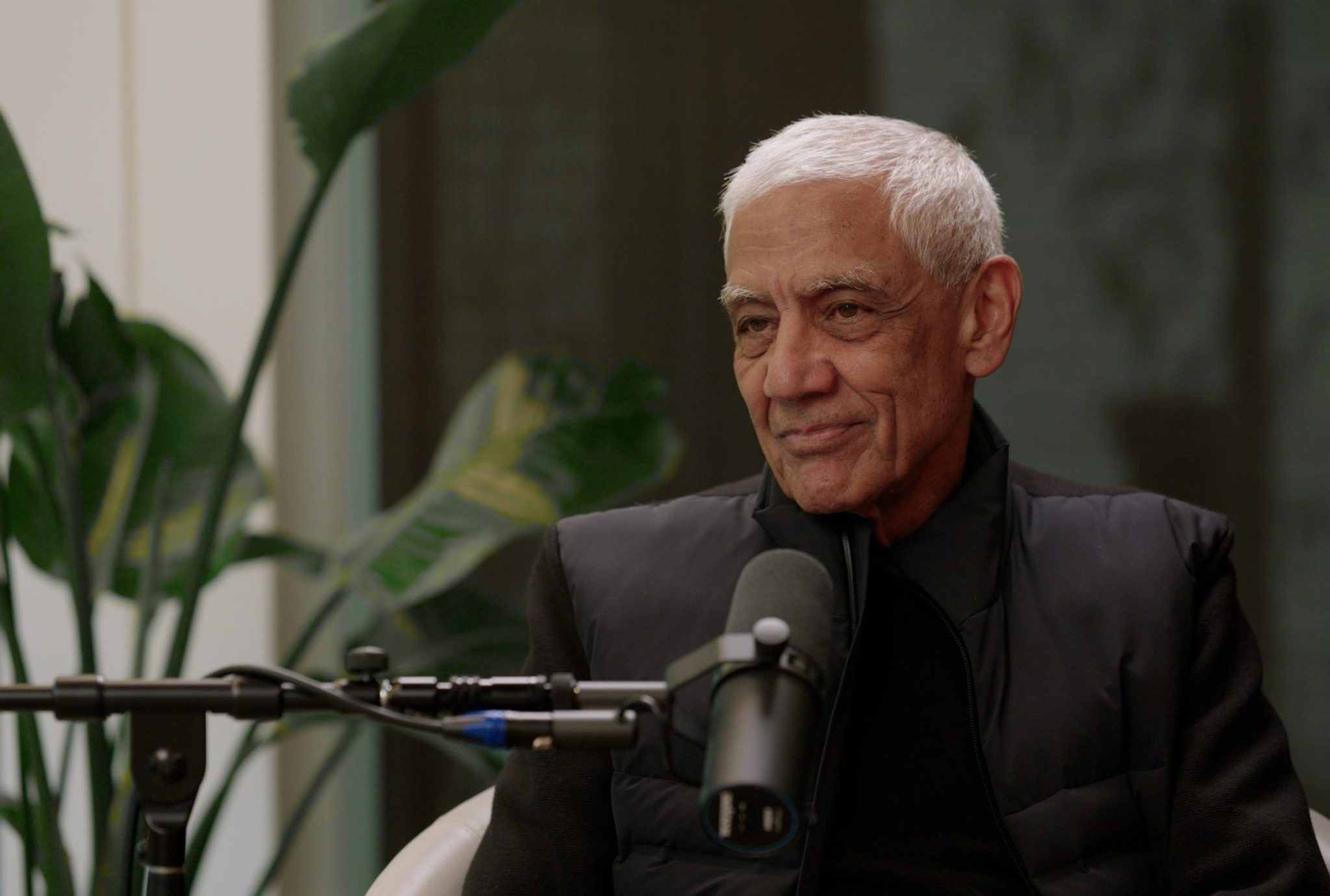
    When Vinod Khosla sat down with Fortune editor-in-chief Alyson Shontell in March and floated the idea of wiping out federal income taxes for the roughly 100 million-plus Americans earning less than $100,000 a year, it sounded like the kind of provocation only a billionaire with nothing left to prove could get away with. “I can’t be fired. I’ve never worried about a career. I don’t need more money at age 71,” Khosla said. 

    A month later, OpenAI has made it clear that Khosla’s thinking may be the emerging consensus of Silicon Valley’s most powerful voices on how to prevent artificial intelligence from tearing the social fabric apart.

    On Monday, OpenAI released a 13-page policy paper titled “Industrial Policy for the Intelligence Age: Ideas to Keep People First,” in which Sam Altman’s company laid out a sweeping blueprint for economic reform on a scale it compared to the Progressive Era of the early 1900s and Franklin Roosevelt’s New Deal of the 1930s. The central thrust: as AI systems approach superintelligence—defined as capabilities that surpass the smartest humans—the existing tax code, labor market, and social safety net are all dangerously unprepared for what’s coming.

    The overlap with Khosla’s vision is hard to miss.

    The tax code as a battleground

    Khosla’s March proposal on Fortune’s Titans and Disruptors of Industry podcast was elegant in its simplicity: eliminate the preferential tax rate on capital gains, tax all income—whether earned from a paycheck or an investment portfolio—at the same rate, and use the windfall to exempt everyone earning under $100,000 from federal income taxes entirely. He estimated that 40% of all capital gains taxes are paid by people earning more than $10 million annually, making the math work without increasing the overall tax burden.

    OpenAI’s blueprint lands in the same territory, albeit through a slightly different door. The company’s paper calls for shifting the tax base away from payroll and labor income—the very revenue streams that AI threatens to hollow out—and toward corporate income and capital gains. It also floats what many have termed a “robot tax,” proposing levies on automated labor to capture a share of the productivity gains that would otherwise flow exclusively to capital owners.

    Both Khosla and OpenAI framed the need for a major policy overhaul around the massive change arising from the implications of the exponential improvement in AI tools. OpenAI warns that as AI automates more work, the wage and payroll tax revenue that funds Social Security, Medicaid, SNAP, and housing assistance could collapse. Shifting to capital-based taxation isn’t just equitable, it argues, it’s fiscally necessary.

    Both visions converge on the same uncomfortable assertion: the American tax system was designed for an economy where most value was created by human labor. That economy is disappearing.

    From one billionaire’s idea to a corporate blueprint

    Khosla is not a passive observer of OpenAI’s trajectory—he was an early investor in the company. His argument that AI could automate 80% of current jobs by 2030 provides the economic backdrop against which OpenAI’s policy paper reads less like corporate positioning and more like an alarm bell.

    During his Fortune interview, Khosla situated the problem in terms that go beyond tax policy. In an AI-driven economy, he argued, the traditional balance of income between labor and capital will tilt dramatically. “Capitalism was about economic efficiency,” he said, “but if the need for efficiency goes away because of extreme abundance, then why focus on efficiency?”

    OpenAI’s paper echoes that logic almost beat for beat. Its most radical proposal is a nationally managed public wealth fund, seeded in part by AI companies themselves, that would invest in diversified assets across the AI economy and distribute returns directly to American citizens—a mechanism designed to give every person a stake in the technology that might otherwise render their skills obsolete.

    Khosla himself has endorsed the idea of a national wealth fund, and the symmetry between his individual advocacy and OpenAI’s institutional proposal suggests that a policy framework is crystallizing within the AI industry’s upper echelons.

    Critics aren’t buying it

    Still, the fact that a major VC and the company he invested in are singing the same tune hasn’t silenced the skeptics. Anton Leicht, a visiting scholar with the Carnegie Endowment for International Peace, called OpenAI’s paper “comms work to provide cover for regulatory nihilism”—big ideas floated to project responsibility while the company builds at full speed. The paper landed on the same day The New Yorker published a lengthy investigation raising questions about Altman’s trustworthiness on safety issues, a timing that did not go unnoticed.

    And the political headwinds are fierce. Taxing capital gains at ordinary income rates is a proposal that pushed Marc Andreessen to back Donald Trump after President Biden floated a plan to tax unrealized gains in 2024. OpenAI’s paper conspicuously avoids specifying a corporate tax rate, a diplomatic omission that suggests the company knows where the political landmines are buried.

    The California experiment

    The irony of Khosla’s position is that he’s making a case for bold federal tax reform while fighting a rearguard action in his home state against what he considers a catastrophically misguided local experiment. California’s proposed Billionaire Tax Act would levy a one-time 5% tax on residents worth more than $1 billion—a measure Khosla has called the behavior of “a junkie” chasing a one-time fix while permanently damaging the state’s tax base.

    By some estimates, more than $1 trillion in billionaire wealth has already left California in anticipation of the ballot measure. Google co-founders Larry Page and Sergey Brin have reportedly taken steps to sever ties with the state. Even Gov. Gavin Newsom has said the measure “makes no sense.”

    Khosla’s counter-vision—federal reform that taxes capital more aggressively while relieving the burden on working Americans—is designed to be a policy that billionaires can live with and workers can vote for. As he put it: “They will vote for a candidate who says no taxes if you make less than $100,000.”

    The clock is ticking

    Both Khosla and OpenAI agree on at least one thing: the window for action is narrowing. Khosla predicted that structural tax reform will arrive before 2040 and could become a defining issue in the next presidential campaign cycle. OpenAI’s paper calls for automatic safety-net triggers that would expand benefits when AI displacement hits preset thresholds, an acknowledgment that the disruption may arrive faster than any legislative process can handle.

    Goldman Sachs research has estimated that AI is already cutting roughly 16,000 U.S. jobs per month, with younger workers bearing a disproportionate share. OpenAI itself warns of scenarios where advanced AI systems become autonomous and self-replicating—systems that, in its own words, “cannot be easily recalled.”

    Against that backdrop, the question is no longer whether the tax code needs to change but whether Washington can move fast enough. Khosla, for his part, is betting the real battle will be fought in Congress, not in Sacramento. And now, with OpenAI’s 13-page document in hand, he has the most powerful company in AI essentially co-signing his thesis.

    Whether that amounts to genuine policy momentum or, as critics contend, an elaborate exercise in reputation management may be the defining question of the political economy of the AI age.

    For this story, Fortune journalists used generative AI as a research tool. An editor verified the accuracy of the information before publishing.

    [ad_2]

    Source link

  • Bitcoin slides with risk assets as Trump’s Iran ultimatum looms

    Bitcoin slides with risk assets as Trump’s Iran ultimatum looms

    [ad_1]

    Bitcoin slipped as cryptocurrencies were swept up in broader market volatility after a series of attacks on Iran’s infrastructure as President Donald Trump’s key ceasefire deadline approaches.

    The largest cryptocurrency fell as much as 2.5% before paring some losses in New York trading. The decline erased gains from the previous day, when Bitcoin briefly topped $70,000 for the first time since March. Ether, the second-largest token, dropped more than 3%. 

    Stocks retreated ahead of a Tuesday deadline set by Trump, who threatened to bomb civilian infrastructure in Iran unless the Strait of Hormuz was opened. The deadline marks the latest pivotal moment in the war, which has killed thousands of people and triggered the largest-ever disruption to the global oil market.

    “Cryptocurrencies remain in suspended animation, moving sideways over the last month,” said Chris Beauchamp, chief market analyst at investing and trading platform IG. “While equities seem content to ignore the looming energy crisis, at least until they do decide to focus on it, and oil prices continue to climb thanks to the ongoing Straits closure, cryptocurrencies seem to be just left to drift.”

    Escalation risks in the war with Iran have largely kept investors on the sidelines after it was reported that Iran had rejected a ceasefire proposal. Trump said that opening the strait, a critical trade waterway, would be part of any deal to end the war.

    Since the war started, oil prices have surged. Brent crude has made gains of roughly 50% from the start of the conflict at the end of February, while gold is down more than 10%.

    Bitcoin has been comparatively resilient, with signs that institutional selling pressure is easing. U.S.-listed spot Bitcoin exchange-traded drew $471.3 million in net inflows Monday, building on $22.3 million last week—a sharp reversal from nearly $300 million in outflows the week prior. March recorded about $1.3 billion in net inflows into the ETFs—a stabilization after the four straight months of net outflows that began in November 2025.

    “If we take a step back to see the bigger picture, it is easy to see that Bitcoin is doing relatively well,” said Alex Kuptsikevich, chief market analyst at FxPro. “It is trading within a fairly narrow range and above the levels seen in early March, unlike stock indices and gold.” 

    Bitcoin sentiment “remains bearish on the short-to-medium time frame,” said Rachael Lucas, an analyst at BTC Markets. The market is in wait-and-see mode, she added, with “bulls lacking sufficient conviction to sustain breakouts and bears unable to force a decisive breakdown.”

    Bitcoin has been stuck in a range between roughly $60,000 and $75,000 since the conflict in Iran began in late February, at one point jumping to a high of nearly $76,000 before tumbling. For much of the past two weeks, the token traded below $70,000. Now traders have eyes on an end to the war and new crypto legislation in the U.S. as potentially pushing digital assets higher.

    “The bull scenario hinges on two catalysts: A confirmed and sustained U.S.-Iran ceasefire that brings oil below $100, and passage of the U.S. Clarity Act, expected in late April, which institutional market participants are closely watching as a regulatory unlock,” Lucas said.

    [ad_2]

    Source link

  • Trump’s warning to Iran: ‘A whole civilization will die tonight, never to be brought back again’

    Trump’s warning to Iran: ‘A whole civilization will die tonight, never to be brought back again’

    [ad_1]

    President Donald Trump posted a dire warning on Truth Social Tuesday morning that Iran—one of the oldest civilizations on Earth, a country of 90 million people—may be destroyed within hours.

    “A whole civilization will die tonight, never to be brought back again,” Trump wrote. “I don’t want that to happen, but it probably will.”

    The post landed a little less than 12 hours before Trump’s 8 p.m. ET deadline for Iran to reopen the Strait of Hormuz and came after the U.S. conducted more than 50 strikes on military targets on Kharg Island early Tuesday, according to two U.S. officials cited by the Wall Street Journal. Kharg is Iran’s main oil export hub, responsible for shuttling through 20% of the world’s oil. 

    Trump then pivoted in the same post to suggest that Iran’s regime has already collapsed. “Now that we have Complete and Total Regime Change, where different, smarter, and less radicalized minds prevail, maybe something revolutionarily wonderful can happen, WHO KNOWS?” he wrote, before landing on: “47 years of extortion, corruption, and death, will finally end. God Bless the Great People of Iran!”

    Trump’s threatened targets—Iran’s power plants and bridges—would almost certainly constitute war crimes under international humanitarian law, which prohibits attacks on civilian infrastructure that isn’t directly serving a military purpose. The Geneva Conventions and their Additional Protocols explicitly bar strikes on objects “indispensable to the survival of the civilian population,” a category legal scholars say clearly includes electrical grids that power hospitals, water treatment, and food storage for 90 million people. But beyond the humanitarian costs, blacking out the entire nation would be economically catastrophic for the region and could trigger a global recession. 

    Leaders and markets respond

    Vice President JD Vance, speaking in Budapest alongside Hungarian Prime Minister Viktor Orbán, insisted the strikes did not represent a change in strategy and said “fundamentally the military objectives of the United States have been completed” in Iran. The ball, he said, is now in Tehran’s court.

    Even some of Trump’s closest allies expressed alarm at the apocalyptic rhetoric. Sen. Ron Johnson (R-Wisc.), a firm Trump supporter, told podcaster John Solomon he was “hoping and praying” Trump was “just using this as bluster.” Johnson added, “We are not at war with the Iranian people. We are trying to liberate them.”

    Qatar called for restraint on the President’s part.

    “Escalations left unchecked will get us in a situation where it can’t be controlled – and we are very close to that point,” Qatar’s Foreign Ministry spokesman Majed Al-Ansari said during a press conference. “There are no winners in the continuation of this war.”

    Inside Iran, officials called for human chains of young people to gather around power plants and bridges to physically protect them from U.S. airstrikes. Iran’s Islamic Revolutionary Guard Corps, meanwhile, warned Gulf states that its “considerable restraint” was ending and that it would no longer hesitate to target American-linked oil and gas infrastructure in ways that could disrupt the industry for years.

    Financial markets reacted immediately to the post. U.S. crude jumped another 3.2% to $116 a barrel, the VIX spiked more than 6%, and the S&P 500 opened negative.

    [ad_2]

    Source link

  • A J.P. Morgan analyst sees 60% downside to Tesla stock—and he may be too optimistic

    A J.P. Morgan analyst sees 60% downside to Tesla stock—and he may be too optimistic

    [ad_1]

    On Monday, J.P. Morgan analyst Ryan Brinkman issued a report on Tesla the likes of which Wall Street has seldom if ever seen. Brinkman asserting that at its current price of $361, the EV-maker is hugely overvalued. Based on where its fading financials will land by the end of this year, he says it’s worth just $145, and hence eventually headed for a drop of 60%.

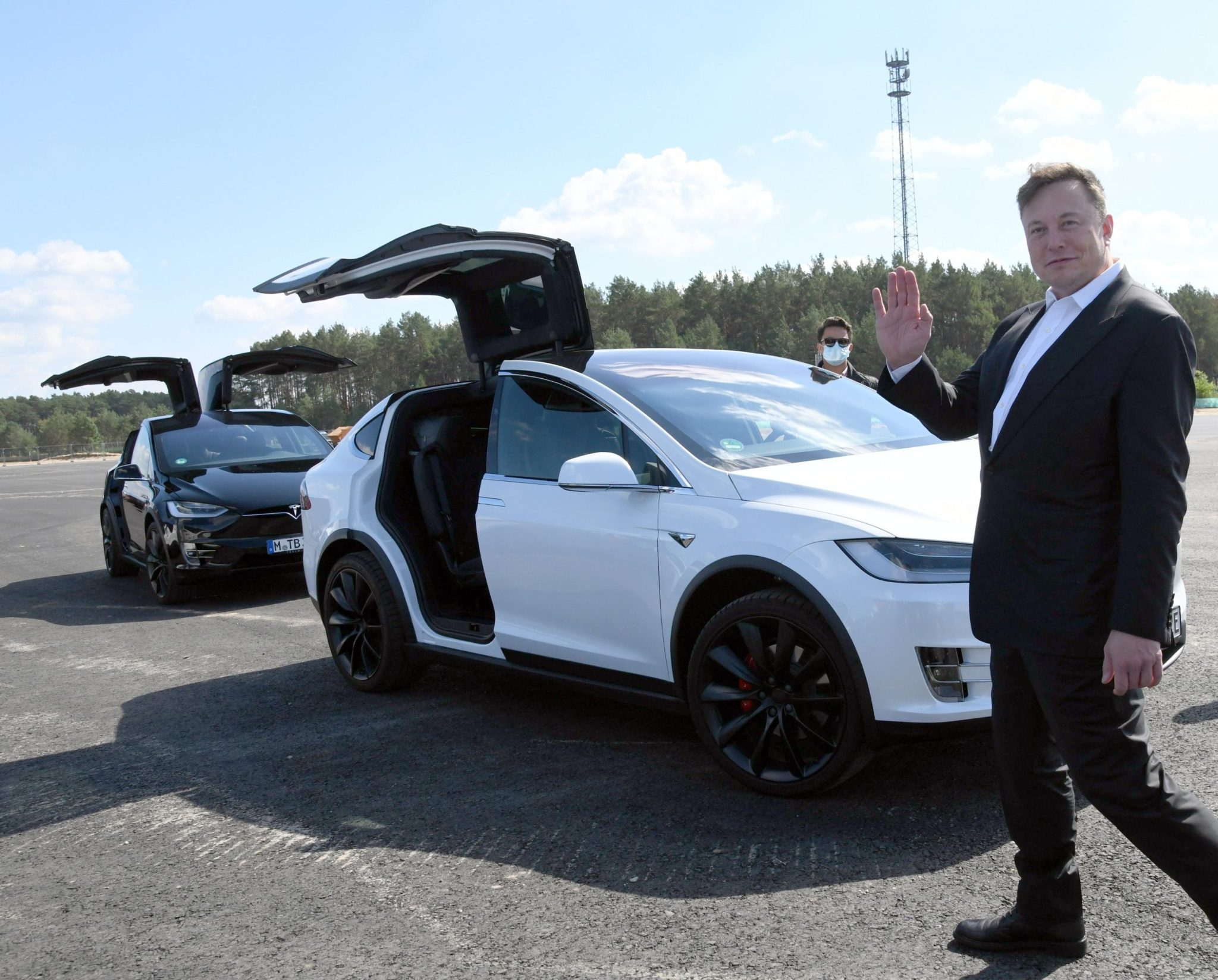
    For years, this writer has been arguing that Tesla owes its gigantic valuation—today standing at $1.3 trillion—arises almost entirely from the “Elon Musk magic premium,” created when his long-term fans buy into promises of fabulously profitable futuristic products that Musk and Tesla so far have failed to commercialize. Put simply, it looks impossible for Tesla to grow its current, minuscule profits nearly fast enough to justify a market cap starting at $1.3 trillion, since that number would need to grow rapidly from there to hand investors a decent return.

    That’s pretty much what Brinkman concludes as well, and to characterize his position as “contrarian” is an understatement. In his new report, Brinkman cites Tesla’s disappointing deliveries—just 358,000 vehicles for Q1—then uses that number to spotlight the giant and growing historical disparity between the market’s vast hyper-bullish expectations and Tesla’s actual underwhelming performance.

    In June of 2022, Brinkman points out, when the consensus forecast for its car sales reached its peak, the analyst community projected that unit deliveries would reach 1.366 million by the opening quarter of this year. The actual figure fell short by over 1 million, or 71%. Since that June 2022 prediction, Wall Street’s forecasts for revenues and profits have kept dropping, yet Tesla’s share price waxed by 50%. Today according to Bloomberg, the Wall Street analyst consensus reckons Tesla’s still cheap and that its shares will rise 15% from here to $416 over the next twelve months.

    Writes Brinkman, “We advise a high degree of caution, mindful of execution risk and the time value of money within the context of distant out-year earnings expectations implied by the rise in TSLA’s share price that has occurred alongside a collapse in consensus for all performance metrics.” The crux, he says, is that Tesla is pretty much pivoting away from the shrinking EV business and into two entirely new fields: autonomous driving that encompasses robotaxis and self-driving software, and robotics. That transformation, Tesla announced on its January earnings call, will require $20 billion in capex for 2026––and the number could be far higher, since it also plans to build its Terra-Fab plant in Fremont, Calif., to produce in-house advanced software for its new suite of products.

    As Brinkman states, it’s hard to know where the cash for all that planned investment will come from. Last year, Tesla spent $8.5 billion in capex. And about $1.6 billion of that total flowed from the sale of regulatory credits, a business that Musk acknowledges will fade from here, given changes in U.S. energy and tax policy under President Trump. Hence, it will need to fund at least $11 billion to $12 billion more in plant and equipment this year than last. Brinkman warns that Tesla risks earning puny returns on all the new capital piling on its balance sheet. The reason: Unlike EVs in the early days, both of its new franchises face stiff competition from rivals that arrived first. Alphabet’s Waymo has already spread robotaxis across America, and the ranks of robot producers is large, ranging from Apptronik and Boston Dynamics in the U.S. to Unitree and Agibot in China.

    Brinkman notes that in June of 2022, analysts projected that Tesla would book $35.7 billion in free cash flow this year. Today, they’re calling for an outflow of nearly $5 billion, due largely to the enormous new requirements for capex.

    Even Brinkman’s numbers may be too rosy

    Brinkman deserves great credit for at last bringing a sober, non-starstruck, numbers-centric analysis to Tesla’s prospects. But is it possible that even a price drop of more than two-thirds will be enough to make its shares a good deal, or even reasonably valued? Brinkman posits net earnings of $6.5 billion for this year. At his $145 share price, Tesla’s market cap would drop from the current $1.3 trillion to under $500 billion. But even that that reduced ticker, how many dollars in earnings would a new investor be getting for each $100 they bet on Tesla? Its price to earnings ratio would be way below today’s number of around 200, but still sit at a towering 77 ($500 billion market cap divided by $6.5 billion in net profits). You’d be getting just $1.30 in profit for every $100 in shares.

    That multiple would leave Tesla as far and away the most expensive member of the so-called Magnificent 7 stocks. To justify what investors paid, at a 10% annual return, it would need to re-reach the $1 trillion market cap threshold in seven years, and earn something like $40 billion a year. Should you follow the math, or Musk’s gauzy vision that’s a constantly retreating horizon? Brinkman says that though Musk’s charisma can create a temporary force field, the math always rules eventually. He’s got most of Wall Street against him, but the facts and numbers on his side.

    [ad_2]

    Source link

  • AI is moving fast. CFOs have a narrow window to shape its value

    AI is moving fast. CFOs have a narrow window to shape its value

    [ad_1]

    Good morning. AI is moving fast, but many companies still have not decided who should own the job of turning that momentum into measurable business value.

    At Fortune’s Modern CFO dinner in San Francisco last Thursday, sponsored by Deloitte and ServiceNow, Melissa Valentine, a senior fellow at Stanford Institute for Human-Centered Artificial Intelligence, delivered a clear message to CFOs: they have a narrowing window to take command of AI value creation.

    Valentine pointed to a recent Harvard Business Review article by the founders of the Return on AI Institute, citing survey findings that underscore this opening. Only 2% of the C-suite executives surveyed said CFOs were charged with capturing value from AI. Yet when CFOs were responsible, 76% reported generating substantial value, well ahead of other functions. Laks Srinivasan, coauthor of that report, told me that finance chiefs are uniquely positioned to define, evaluate, fund, and measure AI initiatives, then apply that framework across the company.

    Valentine, a tenured associate professor of management science and engineering at Stanford’s School of Engineering, told the room of finance chiefs that CFOs have a strategic opening to lead on AI if they are willing to quantify the value and be accountable for it. She argued that generative AI is moving out of its experimental phase and into something CFOs know well: systematic measurement. Two years ago, she said, rigorous accountability would have been premature. Today, it’s essential.

    On the question of guardrails, Valentine pointed to a recent incident in which Anthropic inadvertently exposed internal source code for its Claude coding tool, offering a rare public glimpse into how frontier AI labs protect their models. She called attention to the concept of “harness engineering,” the infrastructure surrounding models to make them usable and safe, including secondary AI systems designed to monitor primary ones. Her advice to CFOs: Study that architecture because leaders must understand whether the system around a model is robust enough to govern, monitor, and trust at enterprise scale.

    That example reinforced a broader point in Valentine’s remarks: the requirements for safe, production-grade AI are fundamentally different from those for everyday employee experimentation. She drew a sharp distinction between two very different forms of AI transformation. One begins at the frontline, where employees use tools such as Gemini or NotebookLM and discover practical applications through experimentation. The other is driven from the top, where production-grade use cases demand robust data infrastructure, engineering rigor, and governance. Both matter. Each requires a distinct operating model.

    The main takeaway for finance leaders is that AI accountability is becoming a CFO-level competency. As AI moves from novelty to operating imperative, the executives who impose discipline will be the ones best positioned to capture its value.

    Sheryl Estrada
    sheryl.estrada@fortune.co

    Leaderboard

    Marcel Teunissen was appointed CFO of Expand Energy Corporation (Nasdaq: EXE), effective April 6. Teunissen most recently served as president of North America for Parkland Corporation. He previously served as Parkland’s CFO where he led the company’s financial strategy, capital markets, and investor engagement. Before Parkland, Teunissen spent more than 20 years with Shell plc in roles, including as VP of finance for Integrated Gas Ventures and EVP of finance for Global Integrated Gas and New Energies. 

    Steven E. Pfanstiel will step down from his role of EVP, CFO and treasurer of Neuronetics, Inc. (Nasdaq: STIM), a medical technology company. Pfanstiel is pursuing an opportunity outside the company. He will remain through May 1. Neuronetics has launched a search to identify his successor.

    Big Deal

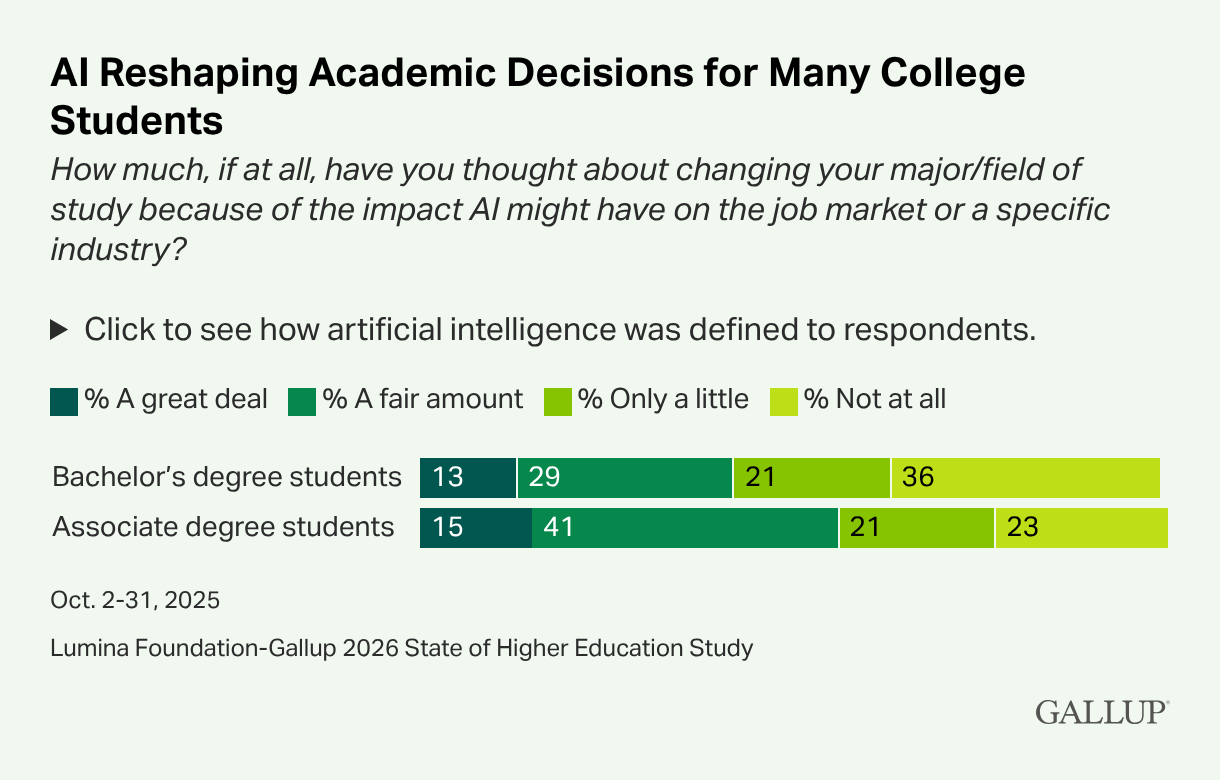
    As companies build talent pipelines for the next generation of employees, AI is shaping how college students think about their academic paths, according to the findings of a Lumina Foundation-Gallup 2026 State of Higher Education Study. Forty-two percent of bachelor’s degree students surveyed say AI has led them to consider changing their major, including 13% who have thought about it a great deal. Among associate degree students, that share rises to 56%, with 15% giving it serious consideration.

    Another key finding is that while traditional motivations — including gaining skills, higher pay and career fulfillment — remain far more common, about one in seven bachelor’s degree students (14%) and associate degree students (13%) say preparing for AI and other technological advances is an important reason they enrolled.

    Courtesy of Gallup

    Going deeper

    The State of AI in Manufacturing is a report by Digit, based on an analysis of U.S. Census Bureau Business Trends and Outlook Survey, looking at data from manufacturing firms from July 2022 to February 2026. AI adoption in U.S. manufacturing has grown four times since 2023. Enterprises are also 2.3 times more likely to adopt than small manufacturers.

    But that growth is slow and cautious — 87% of manufacturers still haven’t adopted it. Uncertainty around adopting AI has grown from 9.2% to 14.4%. A factor contributing to slow adoption is the lack of clarity about AI’s ROI.

    What manufacturers are missing is a clear problem to solve to move from planning to execution, according to the report.

    Overheard

    “Most organizations trying to deploy AI are discovering that the hardest problems are not technological. Data readiness, security, integrations, workflow redesign, and building human skills remain stubborn bottlenecks for true AI implementation.”

    —Omar Abbosh, CEO of Pearson, a global education company, writes in a Fortune opinion piece

    [ad_2]

    Source link

  • Lowe’s is investing $250 million to train plumbers, carpenters, and electricians

    Lowe’s is investing $250 million to train plumbers, carpenters, and electricians

    [ad_1]

    For decades, young people were told to go to college, with white-collar jobs like coding cast as the future. But as AI disrupts that career path, skilled trades are emerging as a more resilient route to stable, well-paying work—and Lowe’s is betting heavily in that future.

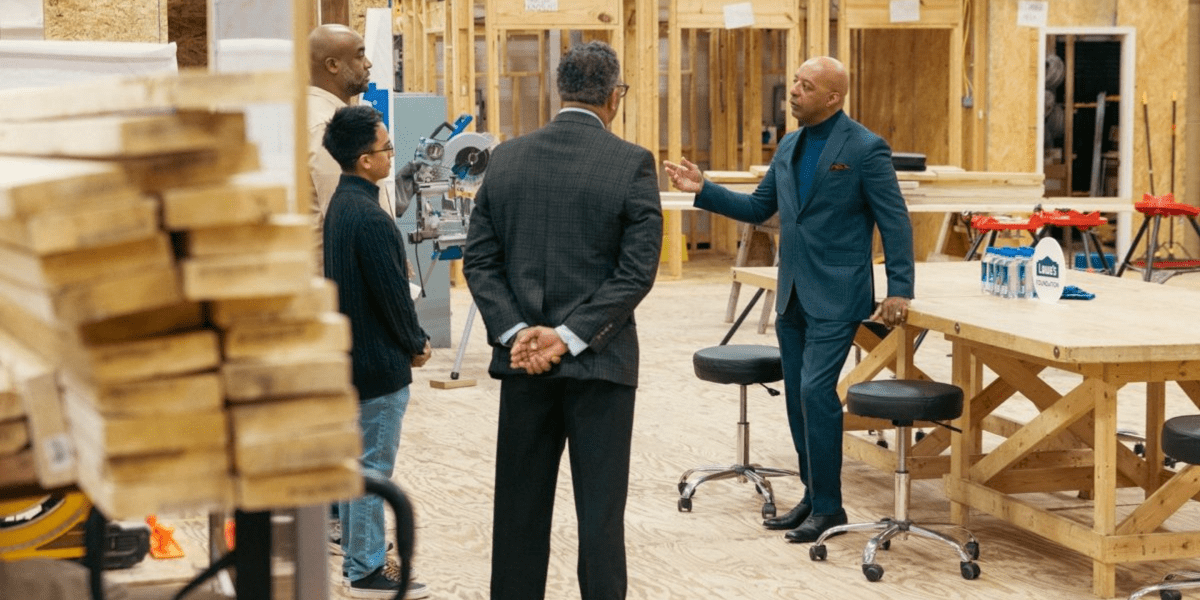
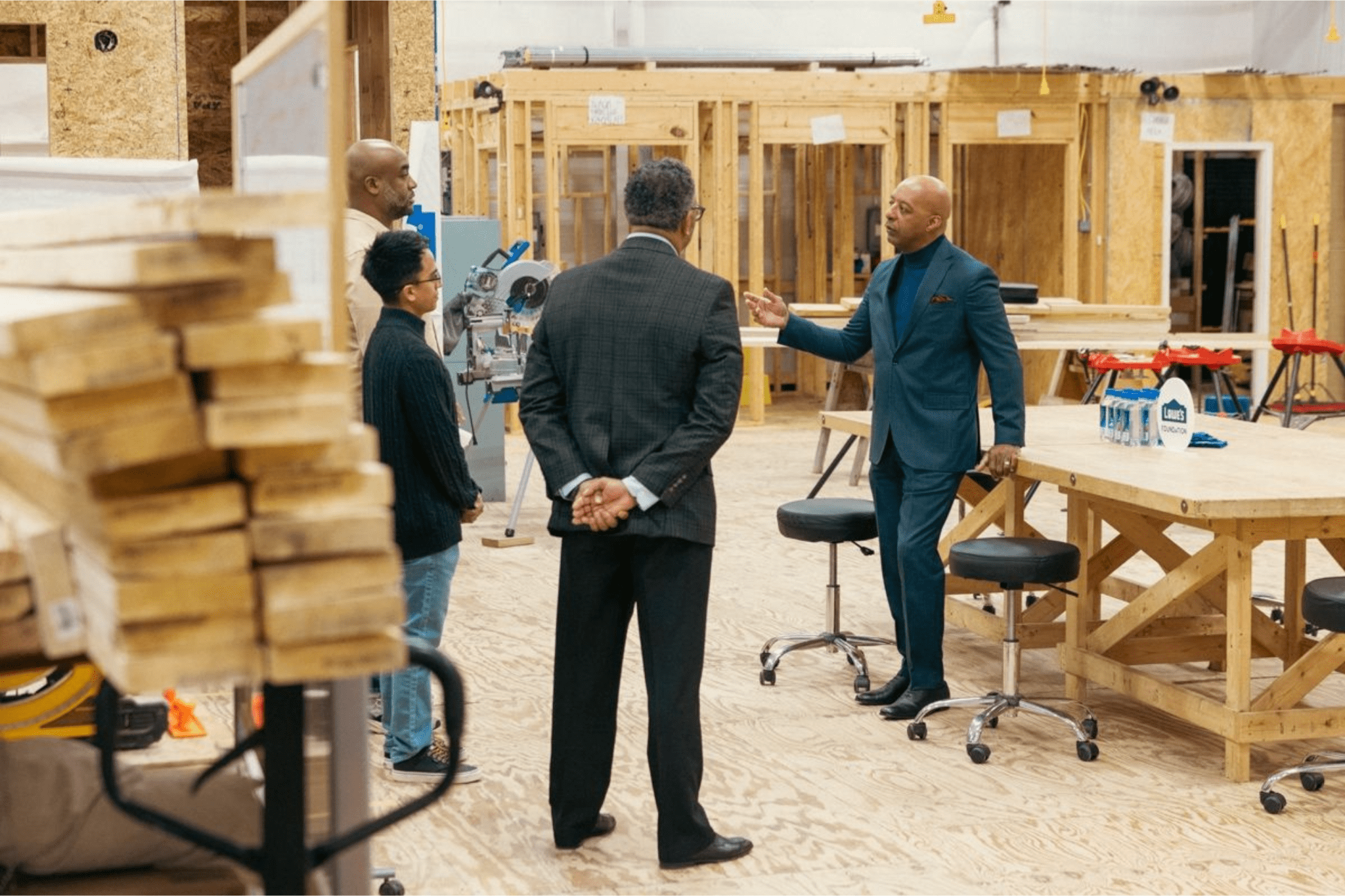
    The home improvement giant exclusively told Fortune that its foundation is investing $250 million over the next decade to help train 250,000 skilled trades workers in fields like plumbing, carpentry, and electrical work. The company had previously committed over $50 million to nonprofits and community college partners, but according to Lowe’s CEO Marvin Ellison, the shifting dynamics of the workforce have made skilled-trade funding essential to the country’s future.

    “We’re a company that believes strongly in the future of AI, but in a world where administrative and analytical occupations are going to be increasingly dominated with the acceleration of AI, we think the skilled trades initiative is going to be even more important here in the near future,” Ellison told Fortune

    AI, he noted, has clear limits. It can write code, draft emails, and analyze spreadsheets—but it can’t show up to fix what’s broken or build the physical infrastructure, such as data centers, that powers the future digital economy.

    “As powerful as AI will become, AI can’t climb a ladder to change the batteries in your smoke detector,” Ellison added. “It can’t change your furnace filter; it can’t clean your dryer vent; it can’t repair a hole on your roof.”

    That urgency is underscored by a growing labor gap. The Associated Builders and Contractors estimates the U.S. will need roughly 350,000 additional workers in 2026 to meet demand for construction services alone—a figure that rises to 456,000 in 2027. Electricians, plumbers, and carpenters are facing similarly steep shortages. While demand is strong and wages are rising, the training pipeline hasn’t kept pace.

    The college-skilled trades divide was a personal one for Lowe’s CEO

    For Ellison, the shifting dynamics of the workforce is deeply personal. 

    He grew up in Brownsville, Tennessee—a small town northeast of Memphis—where he said the message was clear: go to college to achieve the American dream. Yet many of the most respected professionals in his community were tradespeople—plumbers, electricians, and mechanics who owned their own businesses.

    “I was taught growing up that it was important for me to go to college because that was the way I could achieve the American dream,” he said.

    Ellison went on to earn a business degree from the University of Memphis and an MBA from Emory University. His brother took a different route, attending vocational school and building a career as a welder. But for too long, Ellison added, careers like his brother’s have been treated as second-tier options.

    “There’s not that one option is better or worse; it’s all about that there are different paths to trying to obtain prosperity, and we all, me included, need to do a better job of presenting skilled trades as rewarding, viable careers, not just backup plans,” he said. “These trades are really a way to create meaningful wealth for yourself, and it’s a way to earn a very dignified living, and you can do it with a lot less debt.”

    That shift is already happening inside Lowe’s. Ellison noted that even some of the company’s top executives are steering their children toward trade careers instead of four-year degrees, drawn by the strong earning potential and the rising cost of college.

    Ellison’s advice to young people is simple: don’t be afraid to use your hands—but follow a path that fits your skills and interests.

    “Don’t succumb to peer pressure that one career is better, more impressive, or more valuable than another,” he said.

    “Choose your career path, not from pressure around what you think is the most valuable career or most prestigious, but choose it based on your natural interest in your skill set.”

    From diesel mechanic to carpentry entrepreneur 

    The skilled trades have offered Cleveland Roberts more than stability—they’ve brought him independence.

    Roberts graduated from the carpentry and cabinetry program at Columbus Technical College—which received a grant from the Lowe’s Foundation—while working full time as a diesel mechanic. In 2024, he won a gold medal in cabinetmaking at the state level in the SkillsUSA competition. Today, he runs his own business, CR Woodworx, in Columbus, Georgia.

    “I realized I wanted a career where I could build something tangible, work with my hands, and have more control over my future,” he told Fortune. “Carpentry stood out because it offered both creative satisfaction and a clear pathway to entrepreneurship.”

    The path isn’t without its challenges, Roberts added. Running a business takes discipline, careful time management, and the ability to balance the craft itself with the demands of operating a company—from client relationships to finances and scheduling. The work can also be physically taxing, and staying ahead requires constantly honing your skills. Collectively, though, it opens doors to what he calls a more “fulfilling long-term path.”

    But for every success story like Roberts’, Ellison said scaling that kind of opportunity will take a broader push. He pointed to BlackRock’s $100 million investment announced earlier this year as a step in the right direction. Google has also invested $15 million and partnered with the Electrical Training Alliance to expand the pipeline of electricians.

    Still, more needs to be done. Without it, the shortage of skilled trades workers risks becoming not just an economic challenge, but a broader national one.

    “We know we can’t do it alone,” he said.

    “This is going to be so critical to the future, not only of our company, but to our country.”

    [ad_2]

    Source link

  • CEOs are lining up behind the $1,000 Trump Accounts for babies

    CEOs are lining up behind the $1,000 Trump Accounts for babies

    [ad_1]

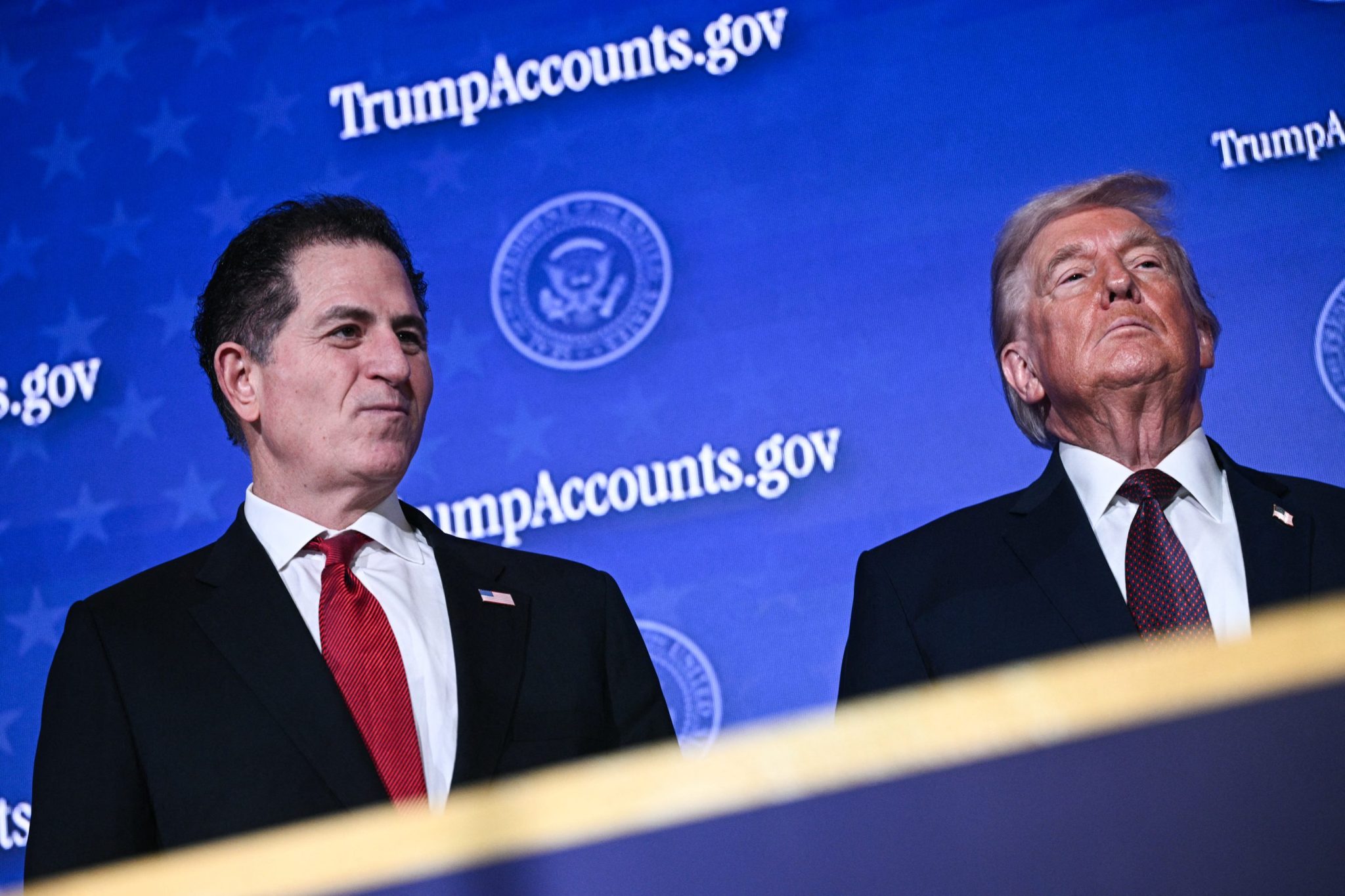
    Good morning. The Treasury Department announced yesterday that BNY Mellon and Robinhood will build and run the app for Trump’s tax-deferred investing accounts for kids, which is due to launch in July and be seeded with $1,000 of federal money for babies born between 2025 and 2028. While critics say there are better places to deploy that cash, investing early is a time-tested way to build wealth. That may be why companies like Nvidia, JPMorgan Chase, BlackRock, Intel, Citigroup, Chipotle, Delta Air Lines, and Coinbase have pledged to match the Treasury grant for employees’ children. It’s why Dell Technologies CEO Michael Dell and his wife Susan stepped up to donate $6.25 billion to fund the accounts. Amid growing concerns about AI job loss and the wealth gap, should other leaders promote this product, too? A few things to consider:

    A way to promote financial wellness: Saddled with debt, stagnant wages and rising home costs—and tools that enable impulse investing—younger investors gravitate towards risky bets. “We could afford a house at 27 or 28. These kids can’t, so they look to quick‑buck flips, and that’s just not how markets work,” says Bill Capuzzi, CEO of Apex Fintech Solutions, which runs the infrastructure for many investing apps, reaching 41 million consumers. While the typical age for first-time home buyers has risen to 40, Gen Z is saving earlier for retirement. The Trump accounts could show the next generation of parents (and their kids) the power of prudent investing early on. Said Capuzzi: “Take this $1,000, don’t touch it, watch it compound over 18 years and learn how the markets really work.” (With parental contributions, Trump Account holders could have $270,000 by the age of 18.)

    A family-friendly signal to talent: Some companies offer scholarships for employees’ children, but that can turn out to be a tax headache or source of resentment. Turns out it’s also not so easy to do a company match on Trump Accounts, which enable employers to deposit up to $2,500 into an account for each employee’s eligible child. Seventy percent of employers polled by Plan Sponsor Council of America last year said they didn’t plan to participate, citing the administrative burden, concerns about favoritism and lack of clarity around implementation. (Some already contribute to state 529 accounts.) BNY CEO Robin Vince signed on in December, praising the accounts as “a head start” for employees’ children. When I asked another leader yesterday about their plans, they waved away the topic, saying “we’re focused on improving what we already have.”

    A long-term bet: Four million children have already signed up, according to IRS figures. The Dells plan to put $250 in accounts for 25 million kids, with Michael Dell telling me he hopes it “inspires children to want to learn more about compound interest.” I hope so, too. But any account bearing the name of a sitting president does carry another risk. As US Bank CEO Gunjan Kedia noted when I asked her about it yesterday: “Whether this survives after three years, the next Congress will have a point of view on that.” Indeed. With national debt topping $39 trillion, future presidents may decide to deploy that capital in a different way.

    Contact CEO Daily via Diane Brady at diane.brady@fortune.com

    Top leadership news

    In conversation with H&R Block’s new CEO

    H&R Block’s new CEO Curtis Campbell told Fortune that his path to the top had less to do with being the smartest person in the room and more to do with persistence and a driven mindset. He argues that emotions like fear of rejection, intimidation, and self-restraint are what separates people from being “caught in mid-level management and getting to higher levels of the organization.”

    Jamie Dimon’s annual letter

    In his annual shareholder letter, JPMorgan CEO Jamie Dimon said his army of 300,000 employees work best when they are on “small and authorized” teams where they can act like “Navy SEALs or the Army’s Delta Force.” He also reiterated that AI will eventually “reduce the workweek.”

    Where AI can automate

    These are the industries most exposed to AI automation, and the industries where AI can get a lot better. Anthropic’s top economist told Fortune that vulnerability to the technology isn’t the end of the world.

    The markets

    S&P 500 futures are up 0.08% this morning. The last session closed up 0.44%. The STOXX Europe 600 was up 0.69% in early trading. The U.K.’s FTSE 100 was up 0.38% in early trading. Japan’s Nikkei 225 was up 0.03%. China’s CSI 300 was flat. Hong Kong’s Hang Seng was down 0.70%. South Korea’s KOSPI was up 0.82%. India’s NIFTY 50 is up 0.28% today. Bitcoin is at $69K.

    Around the watercooler

    Commentary: America’s CEOs have become reluctant guardians of democracy by Jeffrey Sonnenfeld and Stephen Henriques

    ‘No one’s raising their hand’: Japan’s labor crisis is making the case for robots taking the jobs that you don’t want by Catherina Gioino

    Trump threatens to ‘take out’ all of Iran in one night. From blackout bombs to ‘discombobulators,’ here’s what that could actually mean by Eva Roytburg

    AI is cutting 16,000 U.S. jobs a month—and Gen Z is taking the brunt, Goldman Sachs says by Nick Lichtenberg

    Massive debt makes the U.S. one of the world’s most vulnerable countries in the energy crisis, market veteran warns by Jason Ma

    CEO Daily is curated and edited by Joey Abrams, Claire Zillman and Lee Clifford.

    [ad_2]

    Source link